

Blog
What Does a Kids Jodhpuri Suit Mean for Parents

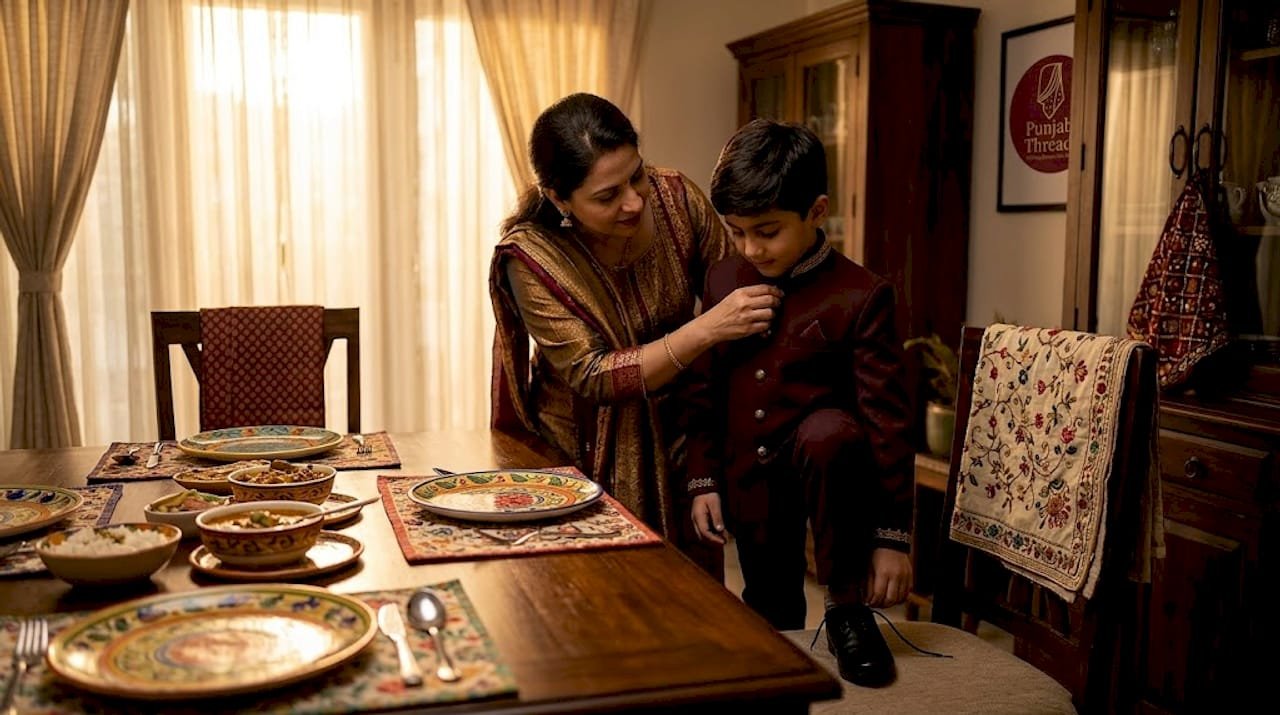
You’ve spotted the term “kids Jodhpuri suit” while shopping for your child’s wedding outfit, and now you’re wondering what exactly sets it apart from a regular boys’ blazer set. Understanding what does kids jodhpuri suit mean goes well beyond the label on a clothing tag. This is a garment with centuries of royal Indian heritage behind it, specific design features that make it instantly recognizable, and a cultural weight that makes it the right choice for certain occasions and a poor fit for others. This guide covers all of it, so you can shop with confidence.
Table of Contents
- Key Takeaways
- What does kids jodhpuri suit mean, exactly?
- Origins and cultural significance
- Defining design features of a kids Jodhpuri suit
- When parents choose kids Jodhpuri suits
- How kids Jodhpuri suits compare to other ethnic formalwear
- Tips for selecting and styling the right suit
- My take on what kids Jodhpuri suits actually represent
- Finding the right kids Jodhpuri suit for your next occasion
- FAQ
Key Takeaways
| Point | Details |
|---|---|
| Rooted in royal heritage | The Jodhpuri suit traces back to the princely state of Jodhpur and blends Mughal, Rajput, and British tailoring traditions. |
| Collar is the defining feature | The high, closed bandhgala collar that buttons to the top is what separates a true Jodhpuri suit from a generic ethnic coat. |
| Shorter than a sherwani | The jacket ends just below the hips, making it more practical for kids while keeping a formal silhouette. |
| Best for ceremonial occasions | Weddings, receptions, festive celebrations, and formal cultural functions are where this suit makes the strongest impression. |
| Fit matters more than embroidery | Proper jacket length and a structured collar preserve the formal look; prioritize these over color or decoration when choosing. |
What does kids jodhpuri suit mean, exactly?
The kids Jodhpuri suit explanation starts with a single garment category: the bandhgala. The word “bandhgala” literally translates from Hindi as closed neck, which describes the high standing collar that buttons all the way to the top of the jacket. No open lapels. No V-shaped neckline. Just a clean, unbroken line from the collarbone up. That one structural detail is what defines a Jodhpuri suit and separates it from every other form of kids ethnic formalwear.
The term “Jodhpuri” and “bandhgala” are often used interchangeably, and that causes real confusion for parents shopping online. Many sets labeled “Jodhpuri” are actually just blazers with ethnic embroidery. The fastest way to verify authenticity is to check the collar first. If it stands upright, closes completely at the top, and has no lapels flaring outward, you are looking at a genuine bandhgala construction.
For kids specifically, the suit typically comes as a coordinated set: a structured jacket paired with matching trousers and sometimes a vest. Kids sets range from sizes 4-5Y all the way through 13-14Y. Parents shopping for a complete, polished look for their child benefit from buying the full coordinated set rather than mixing separate pieces.
Origins and cultural significance
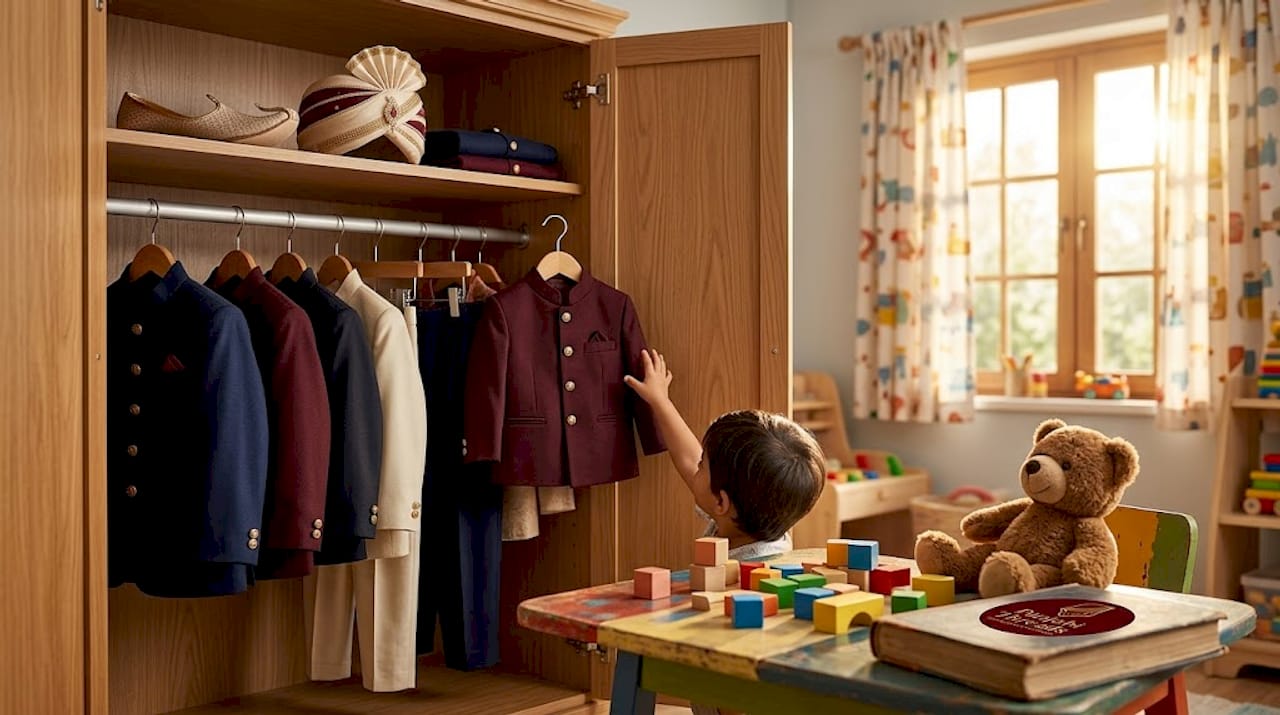
The Jodhpuri suit did not appear overnight. It grew out of the princely state of Jodhpur in Rajasthan, gaining traction from the mid-19th century through the mid-20th century. The Maharajas and nobles of Jodhpur sat at the intersection of two powerful style traditions: the Mughal court’s love of structured, high-collared coats and the Rajput warrior class’s preference for garments that were dignified yet functional. When British colonial influence arrived, Western tailoring techniques were woven into this mix, producing a silhouette that felt both distinctly Indian and formally universal.
That three-way blend is exactly what gives the Jodhpuri suit its lasting cultural weight. Here is what that heritage means in practical terms for parents choosing this suit today:
- Status and formality. The suit carries court and aristocratic connotations. Dressing a child in a Jodhpuri suit communicates respect for the occasion and pride in Indian tradition.
- Cultural continuity. Choosing this style connects the child to a lineage of royal Indian dress that predates modern fashion by centuries.
- Ceremonial appropriateness. The royal and aristocratic heritage of the design makes it especially suited to ceremonial events rather than casual gatherings.
- Cross-cultural recognition. Even guests unfamiliar with South Asian fashion recognize the formality and intentionality of the silhouette.
Historically, the Jodhpuri suit evolved from Mughal era garments shaped by Rajput warrior styles and British tailoring. That combination is a key reason the style has endured. It was never purely traditional in a rigid sense. It was always a thoughtful fusion, and that flexibility is part of why it translates so well to kids’ formalwear today.
Defining design features of a kids Jodhpuri suit
If you know what to look for, identifying a genuine kids Jodhpuri suit takes about ten seconds. Here is a numbered breakdown of the core design elements, in order of their importance to the suit’s authenticity:
- The bandhgala collar. This is non-negotiable. The high standing collar buttons all the way to the top, creating a clean vertical line. No lapels, no open V at the chest. This is the feature that earns the suit its name.
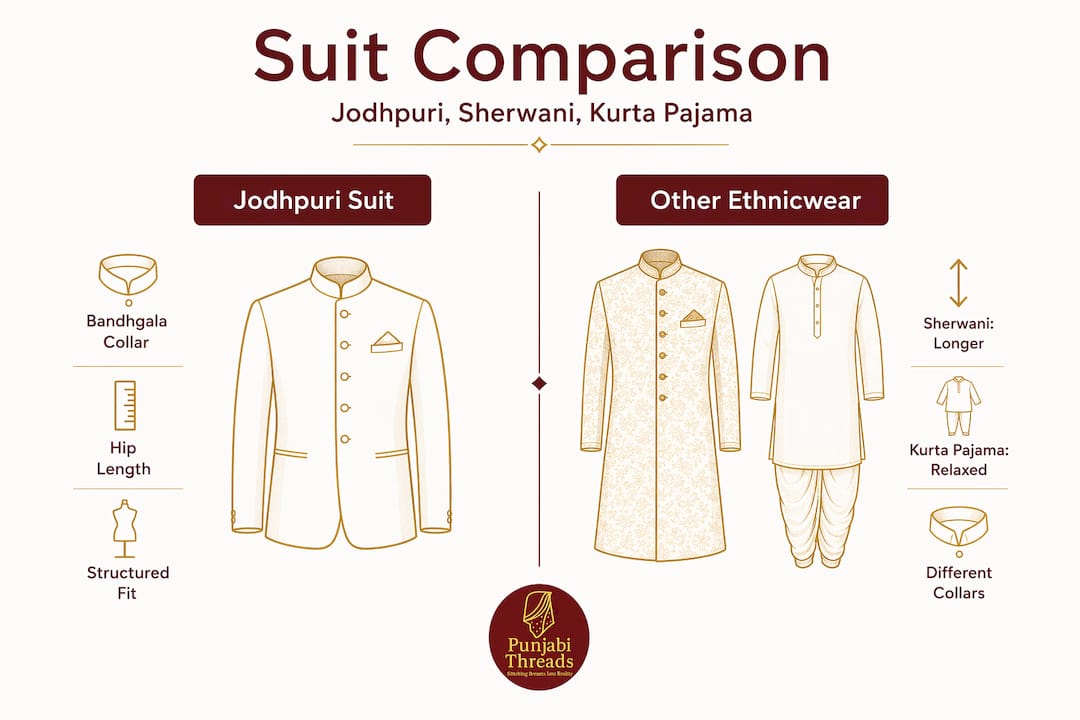
- Jacket length. The coat ends just below the hips, similar in length to a Western suit jacket. This is notably shorter than a sherwani, which typically falls to the knees or below. That shorter length is part of what makes the Jodhpuri suit more practical for kids during long event days.
- Button-front construction. The jacket closes with a straight button line down the front, with no overlapping panels or complex layering. The result is a clean, structured silhouette.
- Matching trousers. A proper kids Jodhpuri set includes coordinated trousers in the same fabric and color as the jacket. The trouser cut is typically straight and formal.
- Optional vest. Some sets include a third piece: a matching vest worn between the jacket and the shirt. This adds a layered, ceremonial look without significantly adding bulk for younger children.
The balance between Indian tradition and Western tailoring in this design produces a silhouette that reads as formal and intentional without being overly restrictive. For kids, that combination matters. They need to move, sit, eat, and occasionally run at weddings.
Pro Tip: When shopping online, zoom into the collar area of product photos before adding anything to your cart. A floppy or open collar means the garment is not a true bandhgala construction, regardless of what the listing says.
When parents choose kids Jodhpuri suits
Parents and guardians reach for the kids Jodhpuri suit for specific types of events. The structured silhouette is designed for formal occasions, and it photographs exceptionally well under event lighting. That combination makes it a go-to choice for:
- Weddings and receptions. The suit’s royal heritage makes it perfectly calibrated for the grandeur of South Asian weddings, whether as a ring-bearer outfit, a guest ensemble, or even attire for a young family member of the couple.
- Festive and cultural celebrations. Eid, Diwali, Baisakhi, and similar occasions call for elevated ethnic wear. The Jodhpuri suit fits naturally into these settings without feeling excessive.
- Birthday parties and milestones. For milestone birthdays, particularly first birthdays and big cultural celebrations, parents often want attire that looks striking in photographs and signals the significance of the moment.
- Cultural and community functions. Formal gatherings where cultural pride and presentation matter call for something with genuine heritage behind it, not just a decorative blazer.
For accessories, the traditional pairing includes mojri shoes (embroidered slip-ons), a turban or safa for older boys, and minimal jewelry. Mixing casual pieces like sneakers or a graphic tee under the jacket weakens the cultural impact significantly. The suit is a complete cultural statement. Treat it that way.
Pro Tip: If your child is attending a wedding as part of the wedding party, coordinate the Jodhpuri suit color with the bridal party’s palette. Deep jewel tones like maroon, navy, and emerald photograph beautifully and age well across the wedding album.
How kids Jodhpuri suits compare to other ethnic formalwear
Parents often ask how the Jodhpuri suit compares to a sherwani or a kurta pajama when thinking through kids ethnic wear options. The distinctions are meaningful and affect both the occasion and the comfort of the child.
| Feature | Kids Jodhpuri suit | Kids sherwani | Kids kurta pajama |
|---|---|---|---|
| Collar style | High, closed bandhgala | Mandarin or open neck | Open, no formal collar |
| Jacket length | Hip length | Knee length or below | Varies, often thigh length |
| Formality level | High, ceremonial | Very high, ceremonial | Moderate to high |
| Comfort for kids | Good with proper tailoring | Can restrict movement | Most comfortable |
| Photography presence | Strong, structured | Grand, dramatic | Elegant, relaxed |
| Typical occasions | Weddings, festive events | Weddings, groom’s family | Festivals, casual functions |
The Jodhpuri suit occupies an interesting middle ground. It is more structured and culturally specific than a kurta pajama, but slightly less dramatic and physically restrictive than a full sherwani. For parents who want their child to look genuinely formal without spending the entire event managing a long coat or heavy embroidery, the Jodhpuri suit is often the smarter call. You can explore how this style fits into broader Indian kids formalwear options when you are ready to compare choices side by side.
Tips for selecting and styling the right suit
Getting the kids Jodhpuri suit right means thinking through fit, fabric, and styling before you buy. Here is what to prioritize:
- Jacket length first. The hem should fall just below the hips. Too long and it mimics a sherwani and loses its distinct silhouette. Too short and it looks like a casual blazer.
- Collar structure. The collar must hold its shape when buttoned. A floppy or soft collar collapses the entire formal look. Feel the fabric at the collar before purchasing if you are buying in person.
- Fabric for long event days. Cotton silk blends and light brocades work well for warmer seasons. Pure silk or velvet is stunning but can become uncomfortable for children over a long wedding day.
- Embellishment moderation. Some embroidery at the collar and cuffs is traditional and adds elegance. Heavy all-over embellishment can overwhelm a child’s frame and make the suit look costumey rather than formal.
- Maintenance. Dry clean the jacket after each formal use and store it on a padded hanger to maintain the collar’s shape. Never fold the jacket flat in a drawer.
Pro Tip: For custom-tailored options, always provide the child’s measurements at the time of order rather than estimating by age. Kids grow unevenly, and a collar that fits poorly at the neck ruins the entire look.
My take on what kids Jodhpuri suits actually represent
I’ve worked with families across Melbourne looking for heritage clothing for their children, and one thing I see repeatedly is parents underestimating the cultural signal a well-chosen Jodhpuri suit sends. It is not simply formalwear. It tells a story about where a family comes from and what they consider worth honoring.
What I’ve learned is that parents who invest in understanding the garment before they buy always end up happier with the result. They are not just buying a suit. They are choosing to put their child in something that carries the weight of Rajput and Mughal courts, of royal Jodhpur tailoring traditions, and of Indian ceremonial life stretching back generations. That is a meaningful thing to put on a child at a wedding or festival.
The common pitfall I see is prioritizing color and embroidery over structure. A beautifully embroidered jacket with a floppy collar and wrong jacket length will look wrong in every photograph. A simpler suit with a perfectly structured bandhgala will look sharp in every single one. Structure first, decoration second. Always.
I also think parents often overlook how the Jodhpuri suit fits a child’s need for practicality. Unlike a floor-length sherwani that restricts movement, a properly tailored Jodhpuri jacket gives kids enough freedom to actually enjoy the event. That balance of cultural authenticity and practical comfort is what makes this style worth understanding properly before you buy.
— Punjabi
Finding the right kids Jodhpuri suit for your next occasion
At Punjabithreads, we work with families across Melbourne who want their children dressed in ethnic formalwear that actually fits and actually means something. A kids Jodhpuri suit is one of the most requested pieces we handle, and the difference between a suit that looks right and one that falls flat almost always comes down to fit and construction quality.
If you are looking for authentic ethnic formalwear with proper bandhgala tailoring for your child, we offer both ready-made and custom-stitched options based on your child’s exact measurements. Not sure whether to go custom or off-the-rack? Our guide to custom vs ready-made suits walks you through the decision clearly. Reach out to us directly so we can help you find the right fit before the big occasion.
FAQ
What is a Jodhpuri suit for kids?
A kids Jodhpuri suit is a formal Indian outfit consisting of a structured jacket with a high closed bandhgala collar and matching trousers, sometimes paired with a vest. It is a children’s version of the traditional adult bandhgala and is worn at weddings, festivals, and ceremonial occasions.
How is a kids Jodhpuri suit different from a sherwani?
The Jodhpuri suit features a shorter jacket that ends at the hips and a distinctive bandhgala collar, while a sherwani has a longer coat that falls to the knee or below. The Jodhpuri suit also allows more freedom of movement, making it more practical for younger children at long events.
What occasions call for a kids Jodhpuri suit?
Kids Jodhpuri suits are suited for weddings, receptions, birthday milestones, cultural festivals, and formal community functions where traditional Indian attire is appropriate and appreciated.
How do I know if a kids Jodhpuri suit is authentic?
Check the collar first. An authentic bandhgala jacket has a high, standing collar that buttons completely to the top with no lapels. If the collar is open or floppy, the garment is not a true Jodhpuri suit regardless of its label.
What size range do kids Jodhpuri suits come in?
Kids Jodhpuri suits are widely available in sizes from approximately 4-5 years through 13-14 years, typically sold as complete coordinated sets with the jacket and matching trousers included.


