

Blog
Why Cotton Blend Suits for Children Work Best


Cotton blend suits for children are defined as garments combining cotton and polyester fibers to deliver softness, breathability, and shape retention in a single fabric. The most common ratios are 60/40 or 70/30 cotton-polyester, giving parents the best of both fibers without sacrificing comfort or practicality. Retailers like Nordstrom and Johnnie Lene have made cotton blend boys’ suits a staple for school events, weddings, and festive occasions precisely because the fabric performs well under real-world conditions. This guide explains the science behind the blend, how to compare your options, and how to keep these suits looking sharp wash after wash.
Why cotton blend suits for children outperform single-fiber options
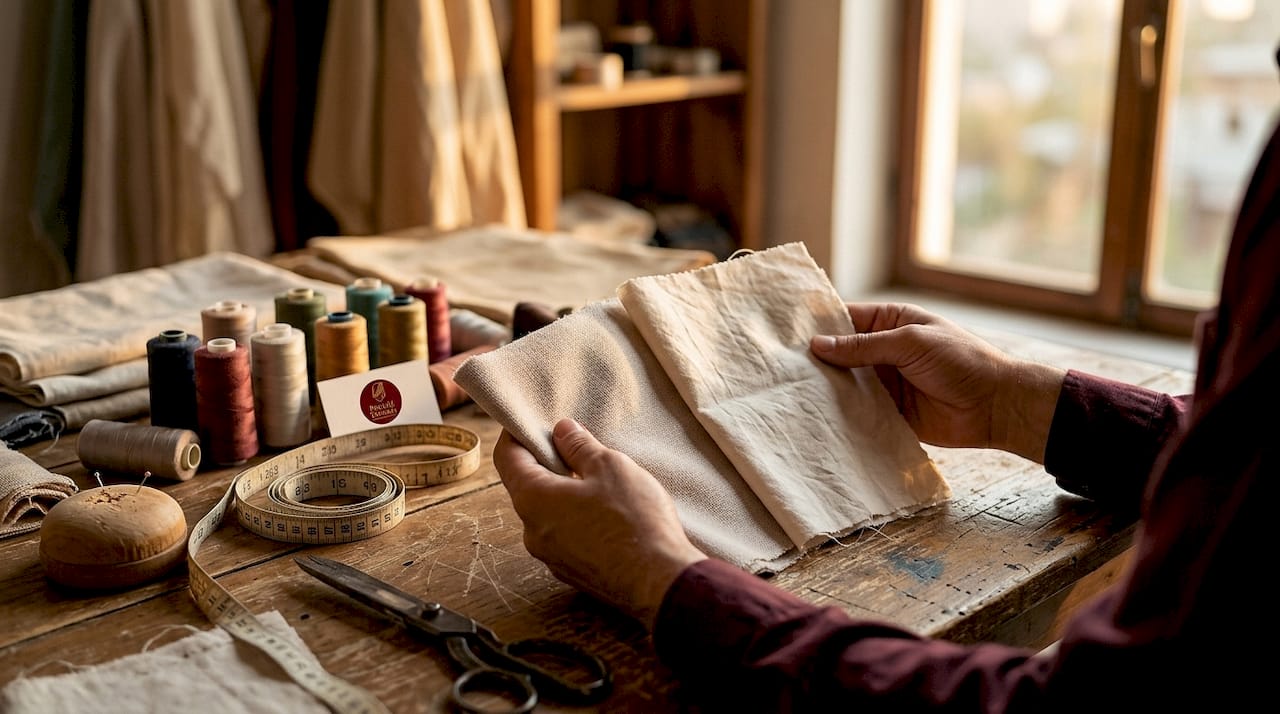
Cotton blend suits work because neither pure cotton nor pure polyester alone meets every demand a child’s day places on clothing. Cotton provides softness, moisture absorption, and breathability. Polyester adds wrinkle resistance, dimensional stability, and faster drying. Together, they create what fabric engineers call a polycotton blend, an engineered textile that performs beyond what either fiber can achieve on its own.
How blend ratios change the feel
The ratio you choose determines how the suit behaves. A 70/30 cotton-polyester blend keeps the fabric soft and breathable, making it better for warm weather and sensitive skin. A 60/40 blend shifts slightly toward polyester, improving wrinkle resistance and reducing drying time. Cotton absorbs moisture at roughly 8.5% versus polyester’s 0.4%, so blends with 60% or more cotton still breathe well enough to keep kids comfortable during long events.
Why shrinkage matters for kids’ suits
Shrinkage is one of the most practical concerns parents face. Pure cotton can shrink 3–5% on the first wash, which is enough to turn a well-fitted jacket into something unwearable. Preshrunk cotton-polyester blends shrink under 1%, thanks to a manufacturing process that uses steam compression and high-pressure rollers to lock garment dimensions before the suit ever reaches your hands. That stability means the suit your child wears to a Diwali celebration in October still fits correctly in december.
- Softness and skin comfort: Higher cotton content keeps fabric gentle against a child’s skin during all-day wear.
- Moisture management: Cotton’s absorption rate keeps sweat away from the skin, reducing irritation.
- Wrinkle resistance: Polyester content means fewer creases after sitting through a long ceremony or school event.
- Shape retention: Polyester stabilizes the drape and structure of the jacket, so it holds its form in photos.
- Easier care: Blends dry faster than pure cotton and require less ironing after washing.
Pro Tip: When shopping, look for the exact fiber percentage on the care label. A tag that says “cotton blend” without a ratio tells you nothing useful. Aim for at least 60% cotton to preserve breathability.
Cotton vs. polyester for children: which fabric wins?
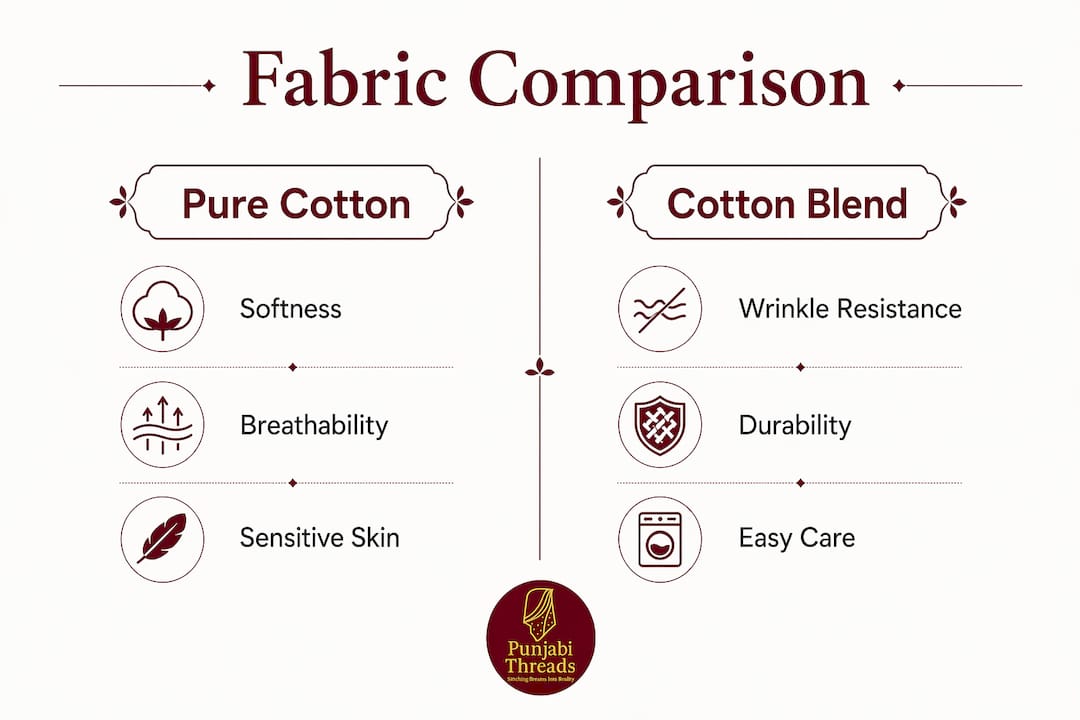
Pure cotton and cotton blend suits each have a clear use case. Understanding the difference helps you buy the right suit for the right occasion rather than compromising on both.
Pure cotton is the better choice for children with sensitive skin or eczema. The American Academy of Dermatology recommends loose 100% cotton for children with skin sensitivities, because polyester can trap heat and cause irritation. Pure cotton also feels noticeably softer against bare skin, which matters for toddlers and younger children who are still adjusting to formal wear.
Cotton blends, however, win on almost every practical measure for school-age children. They resist wrinkles, retain their shape through active use, and dry faster after washing. A pure cotton suit worn to a four-hour wedding reception will look visibly creased by the second hour. A cotton blend suit in the same situation holds its structure through the entire event.
| Feature | Pure Cotton | Cotton Blend (60/40 or 70/30) |
|---|---|---|
| Softness | Excellent | Very good |
| Breathability | Excellent | Good to very good |
| Wrinkle resistance | Poor | Good to excellent |
| Shape retention | Moderate | Strong |
| Drying time | Slow | Faster |
| Color retention | Moderate | Better |
| Sensitive skin suitability | Best | Good (higher cotton ratio) |
| Care difficulty | Moderate | Low |
| Shrinkage risk | High (3–5%) | Low (under 1% preshrunk) |
Pro Tip: For children with no skin sensitivities, a 65/35 or 70/30 cotton-polyester blend gives you the comfort of cotton with the practicality of polyester. Reserve pure cotton suits for children who genuinely need them for skin health reasons.
For a deeper look at how cotton performs specifically in warm weather, the science behind cotton suits is worth reading before you buy.
How to care for cotton blend suits to make them last
Proper care is the single biggest factor in how long a child’s suit stays wearable. Most parents wash suits too hot or dry them incorrectly, and the garment loses its shape within a few washes.
- Read the care label first. Every cotton blend suit carries washing instructions specific to its fiber ratio. Follow them exactly. A 60/40 blend and a 70/30 blend may have different temperature recommendations.
- Wash in cool or warm water, not hot. Heat is the primary cause of shrinkage and color fading in cotton blend fabrics. Cool water (below 86°F) protects the fibers and preserves the garment’s dimensions.
- Use a gentle cycle. Aggressive machine cycles stress the fabric weave and accelerate wear, especially at seams and collar edges.
- Air dry when possible. Dryer heat triggers shrinkage even in preshrunk blends. Hanging the suit to dry on a shaped hanger preserves the jacket’s structure and shoulder line.
- Iron on a medium setting with a pressing cloth. Direct high heat on polyester content can cause sheen or damage. A pressing cloth between the iron and fabric protects the surface.
- Store on a wide-shoulder hanger. Wire hangers distort the shoulder seams over time. A wooden or padded hanger keeps the jacket’s shape between wears.
Following these six steps consistently adds months to the life of a cotton blend suit, which matters when you are buying for a growing child who may wear the suit only a handful of times per season.
Are cotton blend suits good for festive occasions and everyday wear?
Cotton blend suits are the practical standard for both festive occasions and regular school or family events. The reasons come down to three fabric properties: wrinkle resistance, durability, and comfort during extended wear.
Polyester in blends improves wrinkle resistance and shape retention, which means a suit worn to a Vaisakhi celebration or a school concert looks presentable from the first photo to the last. Pure cotton suits require ironing between events and often look disheveled by midday. For parents managing a busy schedule, that difference is significant.
Durability through repeated washing is equally important. Cotton blend suits are common for school uniforms and festive wear because they maintain their appearance through frequent laundering. A suit worn to three or four events per season and washed after each one needs to hold its color and shape reliably. Blends do this better than pure cotton.
- Festive events: Wrinkle resistance keeps the suit looking structured through ceremonies, dinners, and photo sessions.
- School events: Easy care means parents can wash and re-wear without special treatment between uses.
- Warm weather occasions: High cotton content (60% or above) maintains breathability so children stay comfortable outdoors.
- Active children: Polyester’s dimensional stability means the suit holds its shape even when kids are moving, sitting, or playing between formal moments.
- Frequent washing: Preshrunk blends survive repeated laundering without losing fit, which is critical for garments worn by growing children.
For special occasion inspiration, the kids’ Jodhpuri suit guide at Punjabithreads covers how fabric choice affects the look and feel of traditional festive wear.
Key takeaways
Cotton blend suits for children work because they combine cotton’s breathability with polyester’s wrinkle resistance, delivering comfort and durability that neither fiber achieves alone.
| Point | Details |
|---|---|
| Blend ratio determines performance | Choose 60% or more cotton to preserve breathability and skin comfort. |
| Preshrunk blends shrink under 1% | Preshrunk cotton-polyester suits hold their fit far better than pure cotton after washing. |
| Pure cotton suits sensitive skin best | Children with eczema or skin sensitivities benefit from 100% cotton or high-cotton blends. |
| Cool wash and air dry extends suit life | Avoid dryer heat to prevent shrinkage and preserve the jacket’s structure. |
| Blends outperform pure cotton at events | Wrinkle resistance and shape retention keep suits looking neat through long festive occasions. |
What i’ve learned after years of dressing kids for festive occasions
Most parents walk into a store, see “cotton blend” on a tag, and assume the job is done. The blend ratio is what actually matters. I have seen parents buy a suit labeled cotton blend only to find it feels stiff and traps heat because the polyester content was 50% or higher. That is not a comfortable suit for a child sitting through a three-hour ceremony.
The other mistake I see constantly is ignoring preshrunk labeling. Parents buy a suit that fits perfectly, wash it once without checking the care label, and the jacket comes out a full size smaller. Preshrunk blends exist specifically to prevent this. If the label does not say preshrunk, wash the suit in cold water the first time and air dry it before the child wears it to any event.
My honest recommendation is to prioritize fabric quality and blend ratio over brand name or price point. A well-made 65/35 cotton-polyester suit from a boutique that understands fabric will outlast and outperform a poorly blended suit from a major retailer. At Punjabithreads, we work with families to select the right fabric weight and blend for the specific occasion, whether that is a Diwali party, a school concert, or a weekend wedding. That level of attention to detail is what separates a suit that looks great all day from one that needs ironing by noon.
— Punjabi
Dress your child right with Punjabithreads kids’ wear
Punjabithreads carries a curated range of kids’ suits and ethnic wear in quality cotton blends, designed for festive occasions and everyday use. Each piece is selected for fabric performance, comfort, and style so your child looks sharp from the first moment to the last.

Whether you need a suit for a wedding, a school event, or a family celebration, Punjabithreads offers expert guidance on fabric selection and custom stitching options to get the fit exactly right. Browse the latest kids’ collection or reach out to the team for personalized advice. You can also explore custom versus ready-made options to decide which approach suits your child’s needs and your timeline best.
FAQ
What is a cotton blend suit for children?
A cotton blend suit for children is a garment made from a mix of cotton and polyester fibers, typically in a 60/40 or 70/30 ratio. The blend combines cotton’s softness and breathability with polyester’s wrinkle resistance and shape retention.
What blend ratio is best for a child’s suit?
A 60/40 or 70/30 cotton-polyester blend is the most practical choice for most children. Ratios with 60% or more cotton maintain better breathability and skin comfort, while the polyester content reduces wrinkling and speeds up drying.
Are cotton blend suits safe for children with sensitive skin?
Children with sensitive skin or eczema do better in higher-cotton or pure cotton garments. The American Academy of Dermatology recommends loose 100% cotton for sensitive skin, as higher polyester content can trap heat and cause irritation.
How do i wash a cotton blend suit without shrinking it?
Wash in cool water on a gentle cycle and air dry on a shaped hanger instead of using a dryer. Preshrunk cotton-polyester blends shrink under 1%, but dryer heat can still cause distortion even in preshrunk fabrics.
Why do cotton blend suits hold their shape better at events?
Polyester in the blend stabilizes the fabric’s drape and structure, helping the suit maintain a neat, structured appearance through long ceremonies and active wear. Pure cotton suits wrinkle easily and lose their shape within a few hours of wear.


