
Blog
How to Dress Your Family for a Punjabi Wedding


Dressing your family for a Punjabi wedding means selecting vibrant, coordinated traditional attire that honors cultural rituals while keeping every family member comfortable and photo-ready. From the groom’s father in a silk sherwani to a five-year-old girl in a miniature lehenga choli, every outfit choice carries cultural weight and visual impact. The formal term for this category of clothing is ethnic wear or traditional Indian attire, and getting it right requires planning across three variables: ceremony type, family role, and age group. This guide covers all three, with specific style, fabric, and coordination advice for men, women, and children.
How to dress your family for a Punjabi wedding: men’s attire
The three core silhouettes for male family members are the sherwani, the kurta pajama, and the bandhgala. Each serves a different level of formality, and choosing between them depends on the wearer’s role in the wedding party.
The sherwani is the most formal option and belongs on the groom, the groom’s father, and the bride’s father at the main wedding ceremony. Silk and brocade sherwanis with gotta patti or zardozi embroidery signal high status and are appropriate for the Anand Karaj and the reception. Custom tailoring is the better choice for central roles like these because it enhances both comfort and cultural authenticity. Ready-made options work for uncles, cousins, and guests who need a polished look without the lead time.
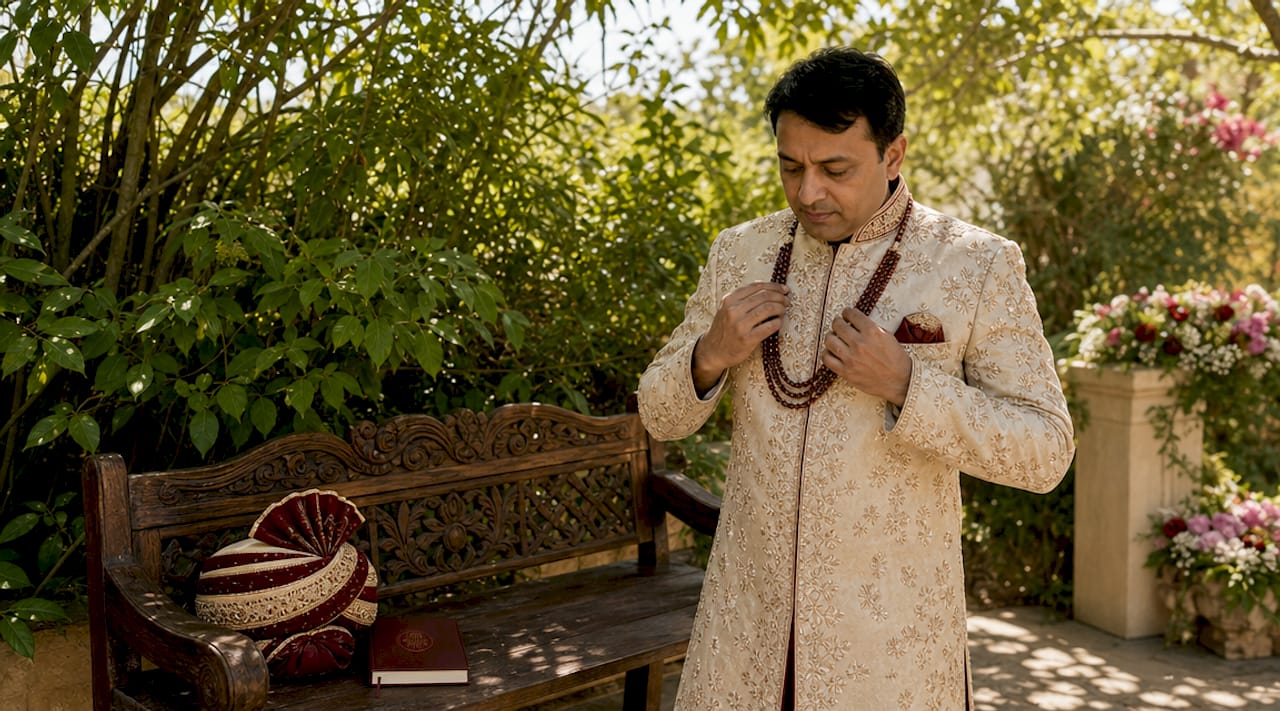
Kurta pajama sets are the practical workhorse of Punjabi wedding menswear. A well-fitted kurta in chanderi, cotton silk, or georgette works across the Mehndi, Sangeet, and even the reception when paired with a Nehru jacket. Wedding attire price ranges run from $100 for machine-embroidered kurtas to over $900 for premium hand-embroidered sherwanis. That spread means families can allocate budget by role without compromising the overall look.
Head coverings are non-negotiable at Gurudwara ceremonies. Men must wear a turban or at minimum a handkerchief over their head when entering a Sikh place of worship. Turbans in coordinating colors tied to the family’s palette add a striking visual element to group photos.
Pro Tip: For young boys aged 6 to 14, a mini kurta pajama with a matching Nehru jacket in the family’s primary color creates a cohesive look without requiring the full formality of a sherwani. Keep the fabric lightweight so they can move freely during Bhangra.
| Garment | Best for | Formality level |
|---|---|---|
| Sherwani | Groom, fathers, close male relatives | High (wedding, reception) |
| Kurta pajama | Uncles, cousins, male guests | Medium (Mehndi, Sangeet) |
| Bandhgala | Older male relatives preferring structured fit | Medium-high (reception) |
What are the best outfit choices for women and girls?
Women’s Punjabi wedding attire covers a wider range of silhouettes than men’s, and the right choice depends on age, ceremony, and how much dancing is on the agenda.
The lehenga choli is the most recognized silhouette for weddings, but it is not always the most practical. Sharara and gharara suits are preferred by stylists for high-energy Punjabi celebrations because they blend tradition with freedom of movement. For the Sangeet and Mehndi, where Bhangra and Giddha are expected, a sharara in georgette or crepe is a smarter pick than a heavily structured lehenga.
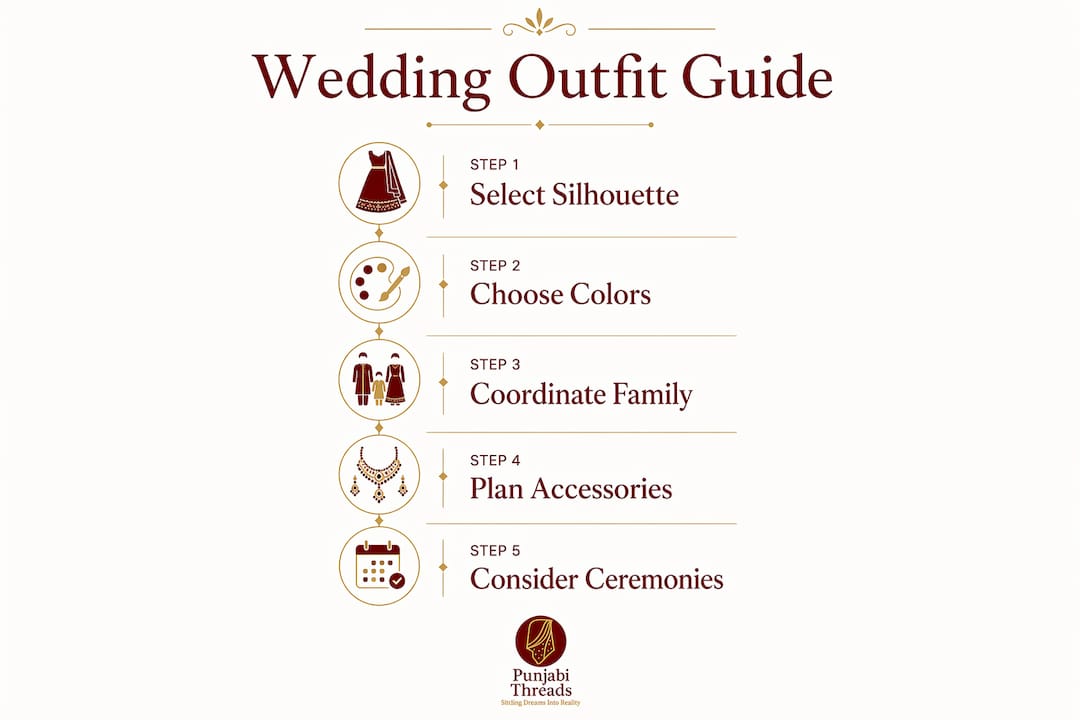
Sarees and Anarkali suits work well for mothers, aunts, and older female relatives who want elegance without the effort of a lehenga blouse. Banarasi silk sarees are a classic choice for the wedding ceremony, while lighter georgette Anarkalis suit the Sangeet. Color selection carries cultural meaning: avoid wearing the same color as the bride, and check with the immediate family before committing to red, pink, or ivory.
Embellishment level matters as much as silhouette. Heavy zardozi or mirror work on every family member creates visual noise in photos. Reserve the most elaborate embroidery for the bride’s mother and the groom’s mother, then scale down to lighter thread work or sequin borders for other female relatives.
- Lehenga choli: best for reception and wedding ceremony
- Sharara suit: best for Sangeet and Mehndi
- Anarkali suit: best for older relatives across most events
- Banarasi saree: best for mothers at the wedding ceremony
- Salwar kameez with dupatta: appropriate for all ceremonies including Gurudwara
Pro Tip: For girls aged 4 to 12, a lehenga choli in a breathable cotton blend or light georgette lets them participate in dancing without overheating. Skip heavy embroidery on children’s outfits and use colorful prints or simple mirror work instead.
Older family members benefit from customized necklines and sleeve lengths that improve both modesty and comfort. A longer dupatta base also maintains head coverage throughout Sikh ceremonies without constant readjustment, which matters during long Anand Karaj services.
How do you coordinate family outfits for photos and ceremonies?
Visual harmony in family wedding photos comes from a shared color palette, not identical outfits. The 2026 trend in coordinated family attire is for each family unit to use two or three complementary hues planned two to three months ahead, with silhouette variety built in to suit different ages and body types.
The most common coordination mistake is sourcing fabrics from different suppliers. Different manufacturers’ versions of “maroon” or “gold” can clash visibly in photographs even when they look similar in person. Sourcing from the same dye lot is the single most effective step for color consistency across a large family group.
Embellishment alignment is the second coordination factor most families overlook. Balancing heavy and light embellishments across family members creates a cohesive presentation. If the groom’s mother wears heavy zardozi, the aunts should wear medium thread work, and the cousins can wear lighter sequin or printed fabrics. This creates a visual hierarchy that photographs beautifully.
Pro Tip: Create a shared color swatch group chat with all female family members at least eight weeks before the wedding. Ask everyone to photograph their fabric samples in natural daylight before purchasing. This one step prevents the most common coordination disasters.
| Coordination factor | Common mistake | Better approach |
|---|---|---|
| Color palette | Everyone picks independently | Agree on 2-3 shades as a family |
| Fabric sourcing | Different suppliers for same color | Source from one dye lot |
| Embellishment level | Uniform heavy embroidery | Scale by family role and proximity to couple |
| Silhouette variety | Identical outfits for all women | Match theme, vary silhouette by age |
Dressing children for a Punjabi wedding
Children’s Punjabi wedding attire follows the same cultural framework as adult clothing, scaled for practicality. The priority is fabric breathability and freedom of movement, because kids at Punjabi weddings are expected to dance, run, and participate fully in every ceremony.
For boys, a kurta pajama in cotton silk or linen blend is the standard choice. Pair it with a Nehru jacket in the family’s accent color and simple juttis (traditional flat shoes). Avoid heavy embroidery on boys’ kurtas because it adds weight and restricts movement. A matching safa (turban) or patka for Gurudwara ceremonies completes the look.
For girls, the lehenga choli and sharara set are both popular options. The sharara’s wide-leg silhouette is particularly well-suited to younger girls because it allows full movement during Bhangra without the risk of tripping on a heavy skirt. Choose fabrics like georgette, cotton silk, or light net with simple embellishments.
- Schedule a fitting session at least six weeks before the wedding to allow time for alterations
- Choose footwear with low or no heel and a secure strap for active participation
- Use heavy pins for dupattas on older girls to prevent wardrobe malfunctions during dancing
- Coordinate children’s colors with the family palette but keep their outfits slightly simpler in embellishment
- For toddlers, prioritize comfort over tradition and choose soft, stretchy fabrics
Sizing is the most overlooked practical issue. Children grow quickly, and an outfit purchased three months before the wedding may not fit on the day. Order one size up and plan for a final fitting two weeks before the event.
What should families wear to each Punjabi wedding event?
A full Punjabi wedding typically spans five to seven events, and attire formality shifts significantly between an intimate ritual and a grand reception. Wearing the wrong level of formality is the most common mistake families make.
The Roka and Chooda ceremonies are intimate family gatherings. Semi-formal salwar kameez or a simple Anarkali suit in warm colors like mustard, peach, or mint is appropriate. Heavy embroidery and formal sherwanis are out of place here.
The Mehndi and Sangeet are the most colorful and energetic events. Yellow, green, orange, and fuchsia are traditional Mehndi colors. Women can wear sharara sets, lehenga cholis, or printed Anarkalis. Men wear kurta pajamas in bright or jewel tones. This is the event where bold color choices shine.
The Anand Karaj (Sikh wedding ceremony) held at the Gurudwara requires the most modesty. Women must wear salwar kameez or sarees with a dupatta covering the head. Men must wear a turban or head covering. Avoid sleeveless blouses or short kurtas at this ceremony.
The reception is the most glamorous event and allows the most creative freedom. Heavily embellished lehengas, sarees, and sherwanis are all appropriate. This is also the event where families can wear their most coordinated and photogenic outfits.
Pro Tip: Plan outfit layering so you can reuse pieces across events. A heavily embroidered dupatta worn at the wedding ceremony can be swapped for a lighter one at the Sangeet, letting you get more value from a single garment.
| Event | Formality | Recommended colors | Head covering required |
|---|---|---|---|
| Roka / Chooda | Semi-formal | Pastels, warm tones | No |
| Mehndi / Sangeet | Festive | Yellow, green, orange, fuchsia | No |
| Anand Karaj | Formal, modest | Deep jewel tones, avoid white | Yes |
| Reception | Glamorous | All colors, heavy embellishment | No |
For a detailed breakdown of what to wear at each ceremony, the Punjabi wedding dress code guide from Punjabithreads covers event-specific recommendations with retail options.
Key takeaways
Dressing a family for a Punjabi wedding requires coordinating colors, embellishment levels, and silhouettes across all age groups and ceremony types, planned at least two to three months in advance.
| Point | Details |
|---|---|
| Plan by ceremony, not just by style | Attire formality and modesty requirements change significantly from Mehndi to Anand Karaj. |
| Source fabrics from one dye lot | Different suppliers produce inconsistent shades that clash in wedding photos. |
| Scale embellishment by family role | Reserve heavy embroidery for parents of the couple; use lighter work for extended family. |
| Prioritize movement for children | Sharara sets and kurta pajamas in breathable fabrics let kids participate fully in dancing. |
| Start custom tailoring early | Allow eight to ten weeks for custom orders to accommodate fittings and alterations. |
What I’ve learned from dressing families for Punjabi weddings
The families who arrive at their wedding looking genuinely coordinated are never the ones who planned the least. They are the ones who had one honest conversation early, agreed on two colors, and then gave everyone freedom within that framework.
The biggest trap I see is families trying to match too precisely. Identical outfits on ten adults look staged and uncomfortable. What photographs beautifully is a shared palette with individual silhouettes. The groom’s mother in a Banarasi saree, the bride’s mother in a heavy lehenga, and the aunts in Anarkalis, all in shades of burgundy and gold, create a picture that feels intentional without feeling uniform.
Comfort is the other thing families underestimate. Punjabi weddings are physically demanding. The Bhangra at the Sangeet is not optional. If someone’s outfit restricts their movement or requires constant adjustment, they will not enjoy the event. A well-fitted kurta pajama in a quality fabric beats a poorly fitted sherwani every time.
My honest advice: spend more on fit and fabric than on embellishment. A simple georgette suit cut to your exact measurements will photograph better and feel better than an over-embroidered ready-made outfit that doesn’t sit right. That is where Punjabithreads has made the biggest difference for Melbourne families. Custom stitching to your measurements is not a luxury. At a Punjabi wedding, it is the practical choice.
— Punjabi
Dress your whole family with Punjabithreads
Punjabithreads specializes in custom-stitched Punjabi and Pakistani suits for men, women, and children, with fabrics and embroidery styles suited to every wedding event from Mehndi to reception.
Whether you need a coordinated family palette or a single statement piece, Punjabithreads offers personalized service based on your exact measurements and fabric preferences. Melbourne families trust the boutique for its craftsmanship and its ability to match colors consistently across a full family order. Browse the men’s ethnic wear collection for sherwanis and kurta sets, explore kids’ traditional outfits for the youngest family members, and visit Punjabithreads to start your custom order today.
FAQ
What do men wear to a Punjabi wedding?
Men wear sherwanis, kurta pajama sets, or bandhgalas depending on their role and the ceremony. A turban or head covering is required at Gurudwara ceremonies for all male guests.
Can guests wear Western clothing to a Punjabi wedding?
Western clothing is generally not appropriate for traditional Punjabi wedding ceremonies. Salwar kameez, kurta pajamas, or other South Asian ethnic wear is expected and shows cultural respect.
How far in advance should families order custom outfits?
Allow eight to ten weeks for custom-tailored outfits to accommodate measurements, stitching, and at least one fitting session. Ready-made options need two to four weeks for any required alterations.
What colors should family members avoid at a Punjabi wedding?
Avoid wearing the same color as the bride, typically red, pink, or ivory. White is associated with mourning in Sikh culture and should not be worn to any wedding ceremony.
Are sharara suits appropriate for children at Punjabi weddings?
Yes. Sharara suits are one of the best choices for girls at Punjabi weddings because the wide-leg silhouette allows full movement during dancing while maintaining a traditional, festive appearance.


