
Blog
What Does Festive Ethnic Wear Mean for Celebrations


Festive ethnic wear is defined as culturally rooted traditional clothing worn specifically for celebrations, religious events, and special occasions, distinguished by vibrant colors, rich fabrics, and symbolic embellishments. The term “ethnic wear” is the recognized industry term for this category of dress, while “festive ethnic wear” narrows the definition to garments chosen for their ceremonial weight and visual impact. This clothing does more than cover the body. It communicates cultural identity, honors ancestral tradition, and signals participation in a shared community moment. Whether you are dressing for Diwali, a wedding, or a family puja, understanding what festive ethnic wear means helps you choose with intention rather than guesswork.
What does festive ethnic wear mean in terms of garments and styles?
Festive ethnic wear is clothing rooted in cultural identity, built around traditional Indian silhouettes that carry centuries of craft history. The core garments include sarees, lehengas, shararas, and kurta sets, each suited to different occasions and body types.
Women’s festive silhouettes cover a wide range of formality and movement:
- Lehenga choli: The go-to choice for opulent events like weddings and sangeets. Heavy silk or velvet fabric, paired with dense zari embroidery, creates the visual weight expected at major celebrations.
- Sharara sets: Regal and flowing, shararas suit formal gatherings where movement and grandeur both matter. The wide-leg silhouette reads as ceremonial without requiring the full commitment of a lehenga.
- Embroidered kurta sets: The most versatile category. A well-embroidered kurta with palazzo pants or a straight salwar works for Diwali parties, pujas, and family dinners alike.
- Sarees: The saree remains the definitive festive garment across most Indian communities. Silk sarees from Kanchipuram or Banarasi weaves signal maximum formality, while georgette and chiffon sarees suit lighter celebrations.
Men’s festive ethnic wear follows its own hierarchy. A kurta pajama in cotton or silk covers most festive occasions comfortably. A sherwani, often paired with churidar pants and a dupatta, is reserved for weddings and formal receptions. The men’s festive options available today range from understated embroidered kurtas to heavily worked sherwanis with gold thread detailing.
The fabrics define the festive register as much as the silhouette does. Silk, brocade, velvet, and organza signal celebration. Embellishments like zari (metallic thread weaving), mirror work, and hand embroidery are not decorative afterthoughts. They are the visual language of festivity, marking the garment as distinct from everyday wear.
How does festive ethnic wear vary by occasion and cultural context?
The right festive outfit is never one-size-fits-all. Occasion-based outfit selection is the single most practical framework for choosing what to wear, and it starts with understanding the formality and energy of the event.
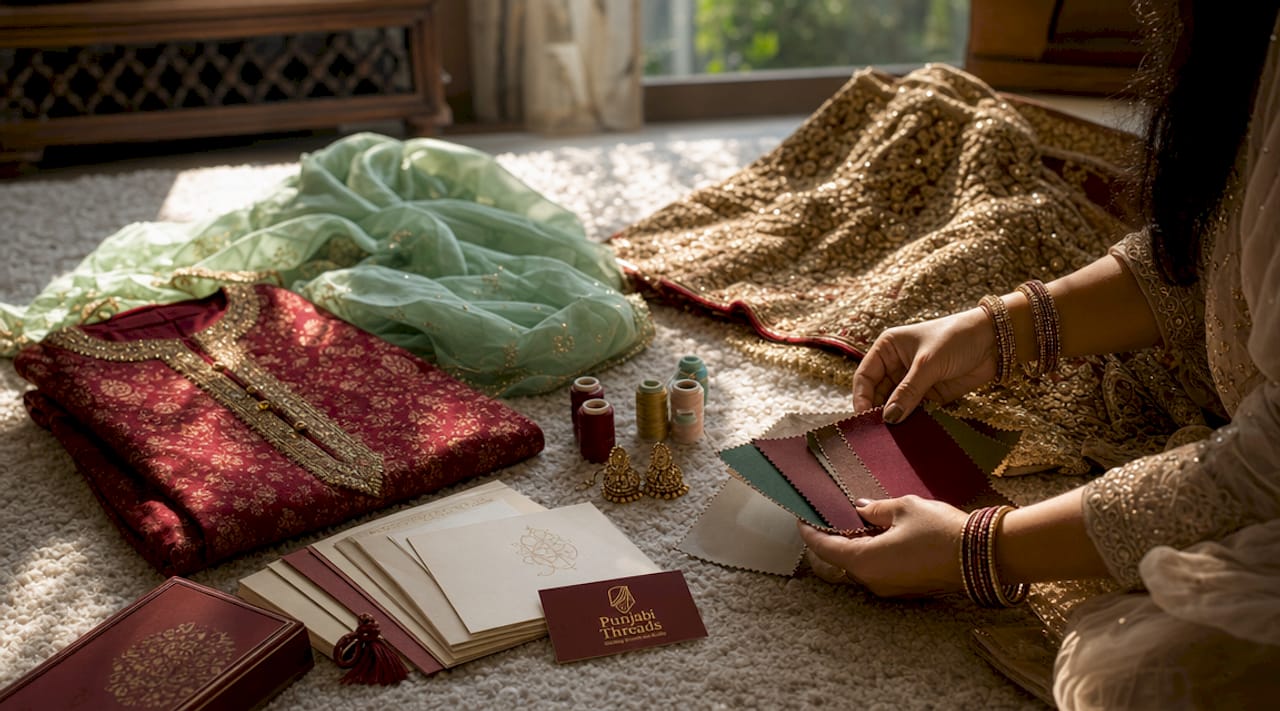
Diwali calls for jewel tones and metallic accents. Deep burgundy, emerald, royal blue, and gold are the dominant palette. The embellishment level sits at medium to high, reflecting the celebratory mood without requiring full bridal weight.
Navratri favors flowy ghagras designed for hours of garba dancing. Movement is the priority, so lighter fabrics and less structured silhouettes dominate. Color choices often follow the nine-night color calendar observed in Gujarat and Maharashtra.
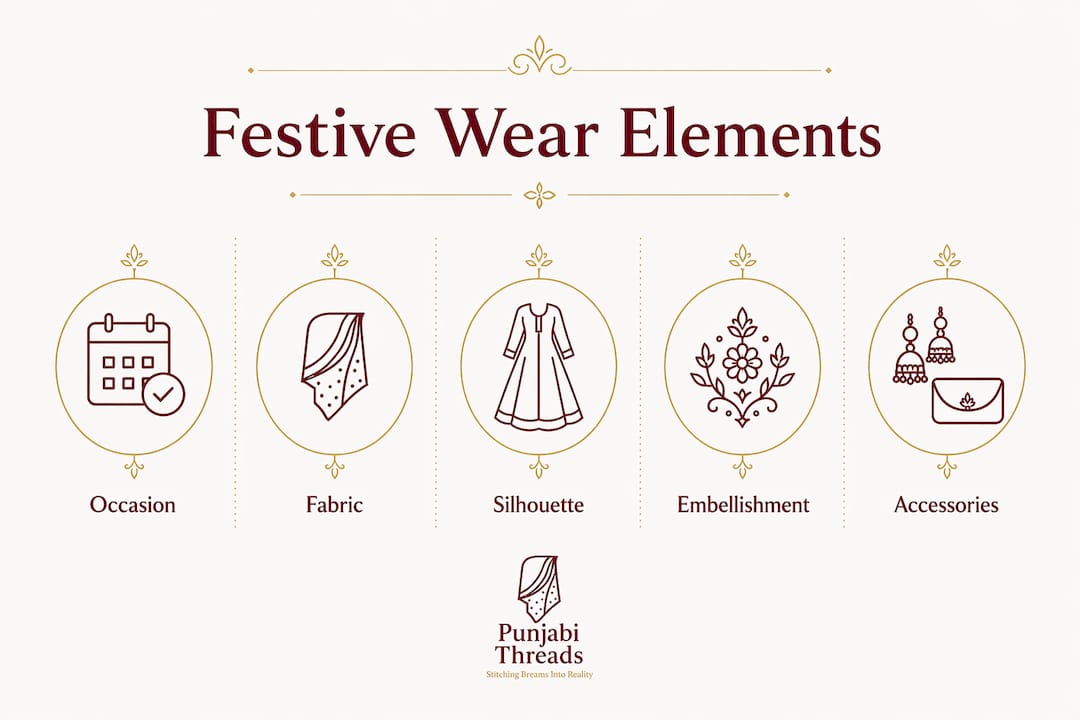
Weddings demand the highest formality. Lehengas, silk sarees, and heavily embroidered anarkali suits are all appropriate. The difference between a guest outfit and a close family member’s outfit is typically the density of embellishment and the richness of the fabric.
Pujas and home gatherings sit at the lighter end of the festive spectrum. A cotton-silk kurta set or a simple printed saree reads as respectful and celebratory without overdressing.
Regional variation matters significantly. A Punjabi family’s Baisakhi celebration calls for bright phulkari embroidery and vibrant colors. A Bengali Durga Puja outfit traditionally features white and red. A South Indian festival may center on Kanjivaram silk sarees in specific color combinations. Understanding these distinctions shows cultural awareness and genuine respect.
Pro Tip: If you are attending a celebration outside your own cultural background, observe the dress code of the host community rather than defaulting to your own festive traditions. A quick conversation with the host about appropriate colors and silhouettes is always welcome.
What are modern trends and adaptations in festive ethnic wear in 2026?
Festive ethnic wear in 2026 is not frozen in the past. Modern festive styling blends heritage craftsmanship with contemporary cuts, and the result is a category of clothing that moves between festival and everyday use with minimal adjustment.
The most significant shift is the rise of co-ord sets and fusion silhouettes. Here is how modern festive dressing has evolved:
- Co-ord sets with ethnic motifs: Matching top and bottom sets in block-printed cotton or embroidered silk offer the visual coherence of a traditional outfit with the ease of separates. They are formal enough for Diwali parties and relaxed enough for a festive brunch.
- Pre-draped sarees: The pre-draped saree solves the single biggest barrier to saree adoption: the draping process. These garments reduce preparation time without sacrificing the cultural authenticity of the silhouette.
- Fusion kurtas with Western bottoms: A heavily embroidered kurta worn over tailored trousers or wide-leg pants creates a look that reads as festive in Indian contexts and fashion-forward in multicultural settings.
- Artisan-crafted textiles: Consumer preference for handloom and artisan-crafted garments has grown steadily. Block printing, hand weaving, and natural dyes are now selling points rather than niche interests. Choosing these garments supports rural craft communities directly threatened by fast fashion.
Styling in 2026 follows one clear principle: focus on one elevated element like texture, shine, or silhouette to introduce festive energy while keeping the overall look grounded. A heavily embroidered skirt pairs with a simple blouse. A statement dupatta works with a minimal kurta. This approach prevents the costume-like appearance that comes from layering too many festive signals at once.
Pro Tip: When building a festive outfit around a statement piece like an embroidered lehenga or a Banarasi saree, keep your jewelry and accessories in a supporting role. One strong focal point reads as intentional. Three competing focal points read as noise.
For inspiration on blending traditional and contemporary looks, the Vaisakhi outfit ideas guide at Punjabithreads shows exactly how this balance works in practice across different formality levels.
What practical advice applies for selecting festive ethnic wear?
Selecting festive ethnic wear well requires thinking about three variables at once: fabric comfort, silhouette appropriateness, and embellishment level. Most styling mistakes come from optimizing for one while ignoring the others.
Fabric first. Breathable fabrics like Chanderi and fine cotton-silk blends deliver festive sheen without the heat retention of heavy brocades or synthetic materials. For celebrations that run four to six hours, fabric choice directly determines whether you are comfortable or miserable by the end of the evening. Chanderi in particular offers a natural sheen that photographs beautifully while remaining light enough for warm venues.
Silhouette for the activity. A heavily structured lehenga is appropriate for a seated reception but impractical for a celebration that involves dancing, outdoor movement, or active participation. Anarkali suits and sharara sets offer more mobility while maintaining the festive register. Pre-draped sarees and coordinated sets are the practical choice for events where you need to move freely.
Embellishment calibrated to the event. Over-styling is the most common mistake in festive dressing. Experts advise concentrating embroidery and shine in one part of the outfit, particularly for non-wedding events. An embroidered dupatta over a simpler suit, or a statement skirt with a plain blouse, creates a polished look without visual overload.
Accessorizing without overwhelming. Festive ethnic wear carries its own visual weight. Jhumkas (drop earrings) and bangles are traditional complements that add to the festive register without competing with the garment. Avoid stacking multiple statement jewelry pieces when the outfit itself is heavily worked.
Festive ethnic wear acts as a non-linguistic cultural communication tool, expressing cultural identity and honoring ancestral tradition in modern multicultural settings. This means your choices carry meaning beyond aesthetics. Wearing a garment with genuine craft history, in colors appropriate to the occasion, communicates respect and belonging in ways that words cannot.
Key takeaways
Festive ethnic wear is traditional cultural clothing defined by its occasion, fabric, silhouette, and embellishment level, and choosing it well requires understanding all four variables together.
| Point | Details |
|---|---|
| Core definition | Festive ethnic wear is culturally rooted traditional clothing for celebrations, defined by rich fabrics and symbolic embellishments. |
| Occasion drives the choice | Diwali, Navratri, weddings, and pujas each call for different silhouettes, colors, and embellishment levels. |
| Modern adaptations are legitimate | Co-ord sets, pre-draped sarees, and fusion kurtas maintain cultural authenticity while meeting contemporary lifestyle demands. |
| Fabric comfort is non-negotiable | Chanderi and cotton-silk blends outperform heavy brocades for long celebrations without sacrificing festive appearance. |
| One focal point, not three | Concentrating embellishment in one area of the outfit prevents over-styling and creates a more sophisticated result. |
Why festive ethnic wear means more than just dressing up
I have spent years working with families in Melbourne who are navigating the same tension: they want to honor their cultural roots through what they wear, but they also want to feel like themselves rather than wearing a costume. That tension is real, and it is worth naming directly.
What I have observed is that the most confident festive dressers are not the ones wearing the most expensive outfits. They are the ones who understand why they are wearing what they are wearing. A woman who chooses a phulkari dupatta because her grandmother embroidered one just like it carries that garment differently than someone who picked it because it was on trend. The meaning is visible, even if you cannot articulate exactly why.
The shift toward artisan-crafted festival attire is one of the most encouraging developments I have seen in this space. When you choose a hand-block-printed kurta over a machine-printed synthetic, you are making a choice that supports a craft family in Rajasthan or Punjab. That is not a small thing. Fast fashion has put enormous pressure on these communities, and consumer choices in the diaspora matter more than most people realize.
My honest advice for 2026: stop trying to wear everything at once. The most striking festive outfits I have seen in our studio are built around one extraordinary piece. A beautifully stitched Punjabi suit in the right fabric, fitted to your actual measurements, will outperform a heavily embellished outfit that does not fit properly every single time. Fit is the foundation. Everything else is decoration.
The significance of ethnic fashion in diaspora communities is growing, not shrinking. That is worth celebrating, and dressing for it with intention.
— Punjabi
Find your perfect festive ethnic wear at Punjabithreads
Punjabithreads is Melbourne’s trusted destination for authentic festive ethnic wear, offering both custom stitching and ready-made suits for women, men, and children. Every garment is crafted to your exact measurements and fabric preferences, solving the fit problem that plagues off-the-rack ethnic wear. Whether you need a heavily embroidered lehenga for a wedding or a lightweight Chanderi suit for Diwali, Punjabithreads delivers the craftsmanship and personalized service that Melbourne families rely on. Explore the full festive collection at Punjabithreads and find the outfit that fits your celebration and your body perfectly.
FAQ
What is the difference between ethnic wear and western wear?
Ethnic wear refers to clothing rooted in the traditional dress of a specific cultural or regional identity, such as sarees, kurtas, and lehengas in the Indian context. Western wear refers to clothing styles originating from European and American fashion traditions, including trousers, shirts, and dresses.
What fabrics are best for festive ethnic wear?
Chanderi, fine cotton-silk blends, and silk are the top choices for festive ethnic wear because they offer natural sheen and breathability for long celebrations. Heavy brocades and synthetics retain heat and reduce comfort over extended wear.
Can festive ethnic wear be worn for everyday occasions?
Modern co-ord sets and embroidered kurta sets are designed to work as both festive and everyday traditional wear with minor styling adjustments. Removing a statement dupatta or swapping heavy jewelry for simpler pieces shifts the outfit from festive to casual.
How do I avoid over-styling a festive ethnic outfit?
Concentrate embellishment in one area of the outfit, such as an embroidered dupatta or a statement skirt, and keep the remaining pieces simpler. This approach creates a polished look without the visual overload that comes from layering multiple heavily worked pieces.
What is the cultural significance of festive ethnic wear?
Festive ethnic wear functions as a non-linguistic cultural communication tool, expressing personal cultural identity and honoring ancestral tradition in modern multicultural settings. It connects wearers to their heritage community and signals participation in shared cultural celebrations.


