
Blog
How to Mix Modern Prints in Punjabi Suits for 2026

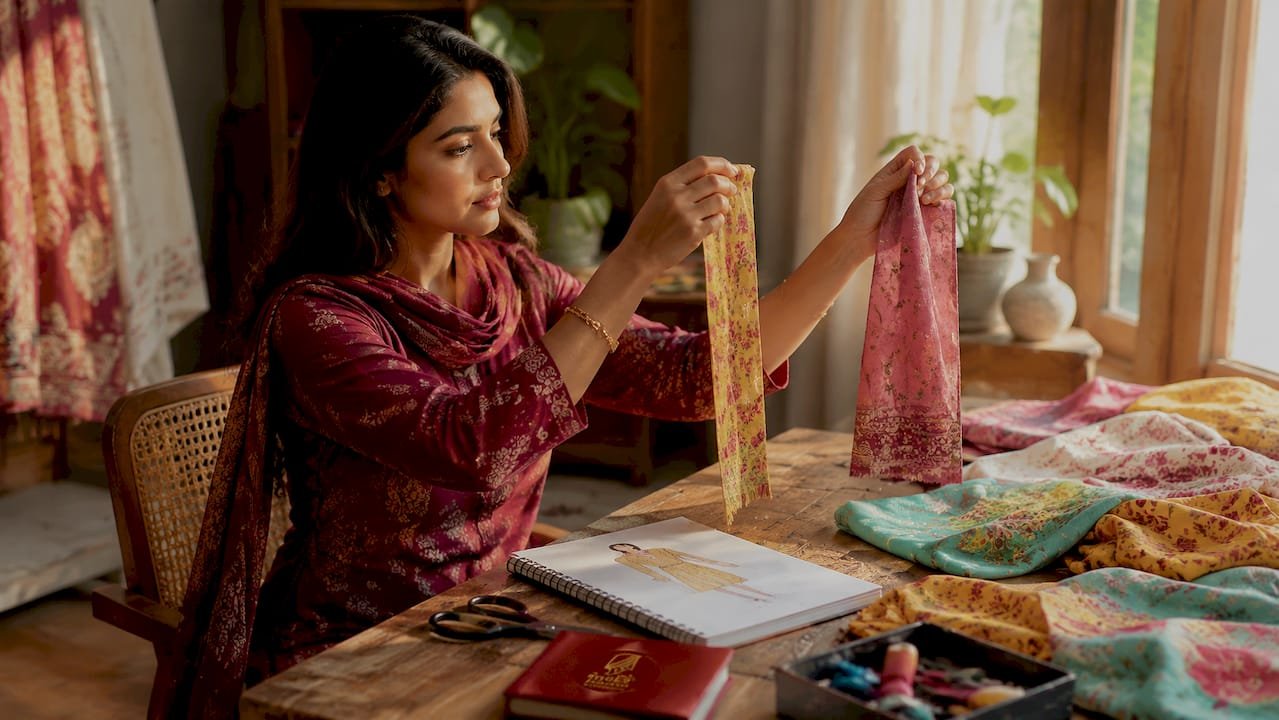
Mixing modern prints in Punjabi suits is defined as the practice of pairing printed kurtas, dupattas, or trousers with solids or complementary patterns to create visually balanced, culturally rich outfits. This styling approach has moved well beyond simple color coordination. Today, fashion-conscious women use it to express personality, honor tradition, and stay current with the latest Punjabi suit trends for both festive celebrations and everyday wear. When done right, mixed prints transform a standard three-piece suit into a statement outfit that photographs beautifully and feels entirely personal.
What are the key principles for mixing modern prints in Punjabi suits?
The single most reliable rule for mixing prints is the print-plus-solid approach. You pair one printed garment, whether a kurta or dupatta, with solid-color pieces so the print stays the focal point without overwhelming the eye. This method works because it gives your eye a place to rest while still delivering visual interest. Pairing a printed kurta with solid trousers or a solid dupatta consistently produces balanced, wearable results.
When you do want to layer two prints together, the rule is simple: share at least one color across both patterns. A floral kurta in dusty rose and sage green pairs naturally with a geometric dupatta that picks up either of those shades. Without that shared color thread, the outfit reads as accidental rather than intentional. Treating outfits as separates rather than fixed sets gives you the flexibility to rotate pieces and discover combinations that work.
Scale balance is the third principle most people overlook. A large, bold block print on a kurta needs a small, repetitive pattern on the dupatta, not another large motif competing for attention. Think of it as a visual conversation: one piece speaks loudly, the other listens. Keeping textures consistent across pieces also prevents the outfit from looking chaotic.
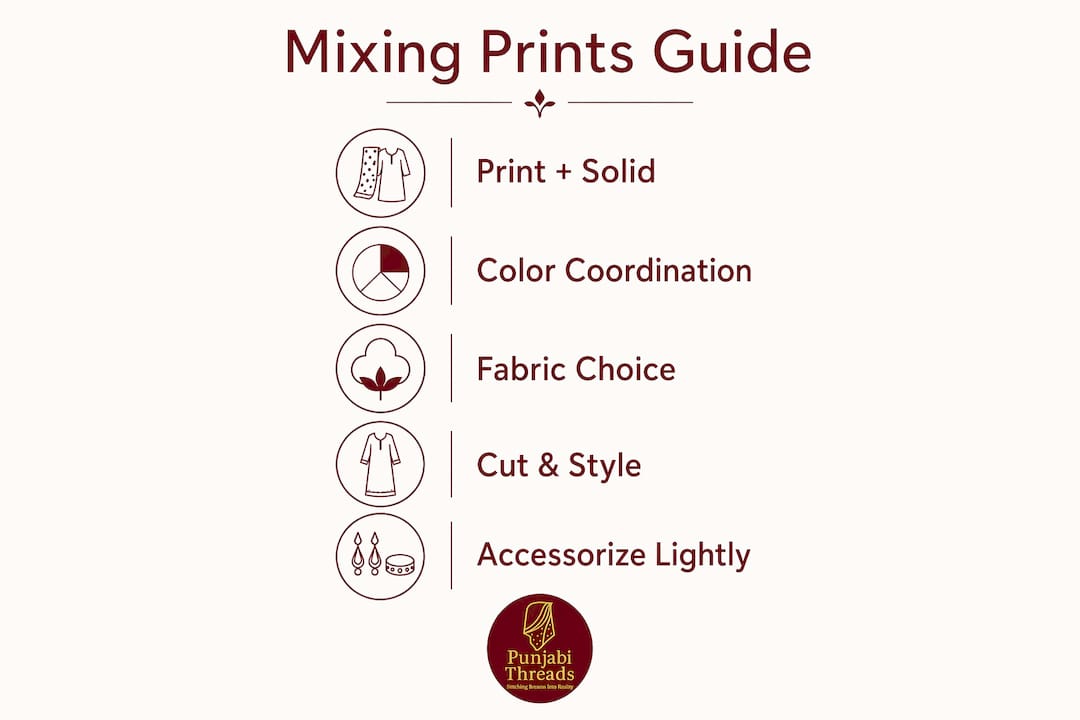
- Print + solid: One printed piece, one solid piece as the anchor
- Shared color: At least one hue appears in both printed garments
- Scale contrast: Large print paired with small or tonal repeat
- Texture harmony: Avoid mixing matte cotton with high-sheen silk in the same outfit
Pro Tip: If you are unsure whether two prints work together, photograph them side by side on your phone. The camera flattens depth and makes clashes immediately obvious.
How do fabric choices and cuts impact mixing prints for modern Punjabi suits?
Fabric is the silent partner in every mixed-print outfit. Lightweight fabrics like cotton silk blends, Chanderi, and linen-cotton improve drape and allow print details to read clearly rather than bunching or distorting. A crisp block print on stiff cotton loses its elegance the moment the fabric puckers. The same print on a Chanderi or cotton-silk blend flows with the body and photographs with far more depth.
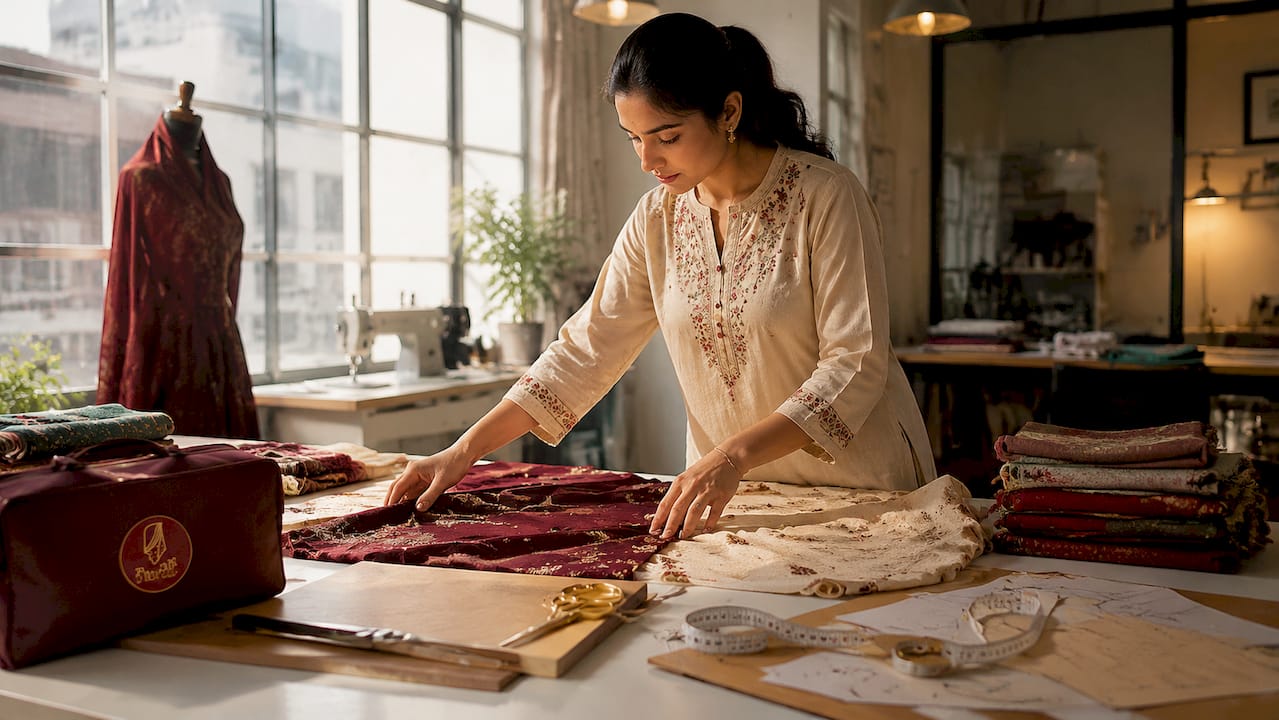
Heavy embroidery and stiff fabrics actively compete with printed patterns. Designers in 2026 emphasize comfort through minimal embellishments and soft, breathable fabrics, favoring organza dupattas with light embroidery over heavily worked pieces. This shift makes practical sense: when the print is the design statement, embellishment becomes noise rather than detail.
Modern cuts amplify the effect of mixed prints. Straight kurtas with side slits, asymmetric hemlines, and Angrakha-style drapes all create clean lines that let the print speak. A boxy or overly structured silhouette can make a vibrant print look heavy. Streamlined cuts keep the overall look modern and proportionate, which matters especially for festive occasions where you want the outfit to feel celebratory without being overwhelming.
| Fabric | Best for | Why it works with prints |
|---|---|---|
| Chanderi | Festive and semi-formal | Lightweight with natural sheen, enhances print clarity |
| Cotton-silk blend | Casual and daywear | Breathable, holds color well, drapes cleanly |
| Linen-cotton | Summer and outdoor events | Relaxed texture, pairs well with block and geometric prints |
| Organza | Dupatta layer | Adds dimension without competing with kurta print |
Pro Tip: Combining Chanderi with handblock cotton adds depth to a mixed-print outfit without visual overload. The contrast in texture reads as intentional and sophisticated.
What are effective ways to style mixed print Punjabi suits for every occasion?
The most underused styling trick is the dupatta swap. You likely own three or four suit sets, each with its own dupatta. Swapping dupattas between sets immediately creates new outfits without buying anything new. A printed dupatta from one set can transform a plain kurta-trouser combination into a festive look in under a minute. This is how vibrant print Punjabi outfits get their versatility.
For festive occasions, color blocking with complementary shades produces the most striking results. Pairing a deep pink kurta with a mustard yellow dupatta and solid trousers in either shade creates a look that photographs brilliantly and reads as intentional rather than loud. Contrasting color pairings like pinks, mustard yellow, and deep reds define festive Punjabi suits in 2026 and are specifically chosen for their photographic vibrancy.
For casual summer wear, solid palazzos or cigarette trousers in a neutral shade anchor even the busiest print. Emerald green trousers under a white floral kurta, for example, create a fresh, modern look that works for college, brunch, or a casual family gathering. Ready-made print-on-print sets, like Lakshita’s Mehr Navy printed suit set, take the guesswork out by offering pre-coordinated block-print motifs with contrasting solid dupattas.
Styling steps for a festive mixed-print look:
- Choose your statement piece, either the kurta or the dupatta, and commit to it as the print anchor.
- Select a solid in one of the print’s secondary colors for the remaining garment.
- Add a contrasting dupatta in a complementary shade if you want a third element.
- Choose accessories that echo one color from the outfit without introducing a new pattern.
- Keep footwear neutral or tonal so it does not compete with the print.
For accessories:
- Jhumkas or chandbalis in gold or oxidized silver complement most prints without clashing
- Kolhapuris or block-heeled sandals in tan or nude keep the focus on the outfit
- Avoid heavily embellished bags when the kurta print is already bold
- A jewelry styling guide can help you match metal tones to specific color palettes
How to avoid common mistakes when mixing prints in Punjabi suits
The most common mistake is stacking multiple bold prints without a solid anchor. When every piece of a three-part suit carries a different pattern, the outfit loses focus and reads as busy rather than expressive. Prints read as intentional rather than random when fabric finishes are harmonized and at least one piece stays solid.
Competing textures are the second pitfall. Mixing a matte handblock cotton kurta with a high-sheen brocade dupatta creates friction that the eye registers as discomfort. The prints themselves may be beautiful individually, but the texture clash undermines the whole look. Stick to fabrics with similar drape or finish when combining two printed pieces.
Disproportionate scale is subtler but just as damaging. Two large-scale prints worn together create visual noise that no amount of color coordination can fix. The fix is always to introduce a smaller, quieter pattern or a solid to restore balance.
- Avoid three or more competing prints in one outfit
- Do not mix clashing textures like stiff brocade with soft cotton
- Never pair two large-scale prints without a solid buffer
- Limit heavy jewelry when the outfit already carries significant color and pattern
- Keep print placement intentional: a busy hemline on a kurta with a busy dupatta leaves no visual rest point
Pro Tip: Minimalism in Punjabi prints is about confident editing. One bold print, one solid, and a controlled color palette consistently produces more refined results than layering every pattern you love.
What are the trending print patterns and color combinations for Punjabi suits in 2026?
Block prints, florals, geometric motifs, and subtle gota accents define the most popular patterns for modern Punjabi suits this year. Block prints in particular have crossed from craft tradition into mainstream fashion, appearing on everything from casual cotton kurtas to festive Chanderi sets. Their handmade quality adds authenticity that machine prints cannot replicate, which is exactly why they pair so well with contemporary silhouettes.
“The most wearable 2026 Punjabi suit looks combine cultural print motifs with modern color confidence. A traditional phulkari-inspired geometric on a kurta paired with a solid emerald dupatta is simultaneously rooted and current.”
Color combinations tell the full story of 2026 festive fashion. Pinks paired with mustard yellow, emerald green against ivory, and deep red with gold tones are the combinations appearing most consistently across collections. Tonal matching, where the kurta and dupatta share the same color family in different shades, is gaining traction for women who want elegance over drama. This approach works particularly well for daytime events and office celebrations.
| Print pattern | Best color pairing | Occasion fit |
|---|---|---|
| Block print | Mustard yellow + ivory | Casual, daywear, college |
| Floral | Pink + emerald green | Festive, weddings, Eid |
| Geometric | Deep red + gold | Formal, evening events |
| Tonal repeat | Sage green + dusty rose | Semi-formal, brunch |
Seasonal wardrobe planning for 2026 confirms that ethnic attire with prints is moving toward controlled palettes rather than maximalist layering. The shift reflects a broader fashion preference for outfits that feel considered and personal rather than trend-driven and loud.
Key takeaways
Mixing modern prints in Punjabi suits works best when one piece anchors the look as a solid, prints share at least one color, and lightweight fabrics like Chanderi or cotton-silk blends allow patterns to drape and read clearly.
| Point | Details |
|---|---|
| Print + solid rule | Always anchor a printed piece with at least one solid garment to maintain visual balance. |
| Shared color principle | Two prints only work together when they share at least one common color. |
| Fabric matters | Chanderi, cotton-silk, and linen-cotton improve drape and print clarity for modern looks. |
| Scale contrast | Pair a large bold print with a small or tonal repeat to avoid visual noise. |
| 2026 color trends | Pinks, mustard yellow, emerald green, and deep red define festive Punjabi suit palettes this year. |
Why I stopped being afraid of mixing prints
When I first started working with mixed-print Punjabi suits at Punjabithreads, the instinct was always to play it safe. One print, solid everything else. It worked, but it never felt like the full expression of what Punjabi fashion is capable of. The turning point came when a customer brought in two separate suit sets and asked if we could combine elements from both. The kurta from one, the dupatta from another, solid trousers in a shared color. The result was genuinely stunning, and she wore it to three different events.
What I have learned since is that the fear of mixing prints is really a fear of making a mistake in public. But the rules are not complicated. Share a color. Balance the scale. Choose fabrics that drape similarly. Once you internalize those three principles, the combinations become obvious rather than risky. The women who wear mixed prints most confidently are not the ones with the most fashion knowledge. They are the ones who have stopped waiting for permission.
Modern Punjabi fashion is at its best when it reflects the person wearing it. Traditional motifs like block prints and florals carry cultural weight that no Western print can replicate. Pairing them with contemporary cuts and color confidence is not a departure from tradition. It is tradition evolving on its own terms. Build a wardrobe of separates, experiment with dupatta swaps, and trust that a shared color palette will hold the look together even when the prints are bold.
— Punjabi
Find your perfect mixed-print Punjabi suit at Punjabithreads
Punjabithreads carries a curated selection of modern printed Punjabi suits designed for exactly this kind of styling flexibility. Every piece is chosen with fabric quality and print clarity in mind, from lightweight Chanderi sets to cotton-silk blends that drape beautifully for festive and casual wear alike.
Whether you want a ready-made printed suit set or a fully custom outfit stitched to your measurements, Punjabithreads offers both. The team provides personalized styling advice so you leave with pieces that actually work together in your wardrobe. Visit Punjabithreads to browse the latest collections and book a fitting at the Melbourne boutique.
FAQ
What is the easiest way to mix prints in a Punjabi suit?
The easiest method is the print-plus-solid approach: pair one printed garment with solid-color pieces so the print stays the focal point. This works for both casual and festive occasions without requiring advanced styling knowledge.
Which fabrics work best for mixed-print Punjabi suits?
Chanderi, cotton-silk blends, and linen-cotton are the top choices because they drape cleanly and allow print details to read clearly. Heavy or stiff fabrics compete with the print and reduce the overall polish of the look.
Can you mix two different prints in one Punjabi suit outfit?
Yes, but only when the two prints share at least one color and differ in scale. A large floral kurta pairs well with a small geometric dupatta in a matching shade. Avoid combining two large-scale prints without a solid anchor piece.
What colors are trending for printed Punjabi suits in 2026?
Pinks, mustard yellow, emerald green, and deep red are the dominant festive colors for 2026. Tonal combinations within the same color family are also gaining popularity for daytime and semi-formal events.
How do I accessorize a mixed-print Punjabi suit without overdoing it?
Choose gold or oxidized silver jhumkas that echo one color from the outfit, and keep footwear neutral or tonal. Avoid heavily embellished bags or statement necklaces when the kurta print is already bold, as the print itself is the focal point.


