
Blog
What Is a Festive Salwar Kameez: Style Guide


A festive salwar kameez is defined as a traditional three-piece South Asian outfit, consisting of a kameez (tunic), salwar (trousers), and dupatta (scarf), specifically constructed from luxurious fabrics and adorned with intricate embellishments for celebrations, weddings, and festivals. The term “festive salwar kameez” is a descriptive phrase used by shoppers and stylists; the recognized garment category in South Asian fashion is simply the salwar kameez, with the “festive” qualifier signaling a specific tier of fabric, embroidery, and silhouette. Understanding this distinction matters because it shapes every choice you make, from the silk you select to the way you drape your dupatta. This guide breaks down exactly what separates a celebration-ready suit from an everyday one, and how to wear it with confidence.
What is a festive salwar kameez and how does it differ from everyday wear?
A festive salwar kameez is a three-piece outfit chosen specifically for celebratory occasions, using ornate materials and embellishments that elevate it far beyond daily cotton wear. The core structure remains the same as any salwar kameez, but every element gets upgraded simultaneously. The kameez carries the heaviest embroidery as the visual centerpiece, the salwar complements the silhouette with volume or precise tailoring, and the dupatta is made from a richer fabric with matching embellishments to unify the formal festive look.
The shift from everyday to festive hinges primarily on fabric luster and finish. Luxurious materials like silk, georgette, and velvet visually signal celebration readiness in a way that plain cotton simply cannot. A cotton salwar kameez worn to run errands and a georgette Anarkali worn to a wedding share the same basic silhouette but communicate entirely different occasions through texture and sheen alone.
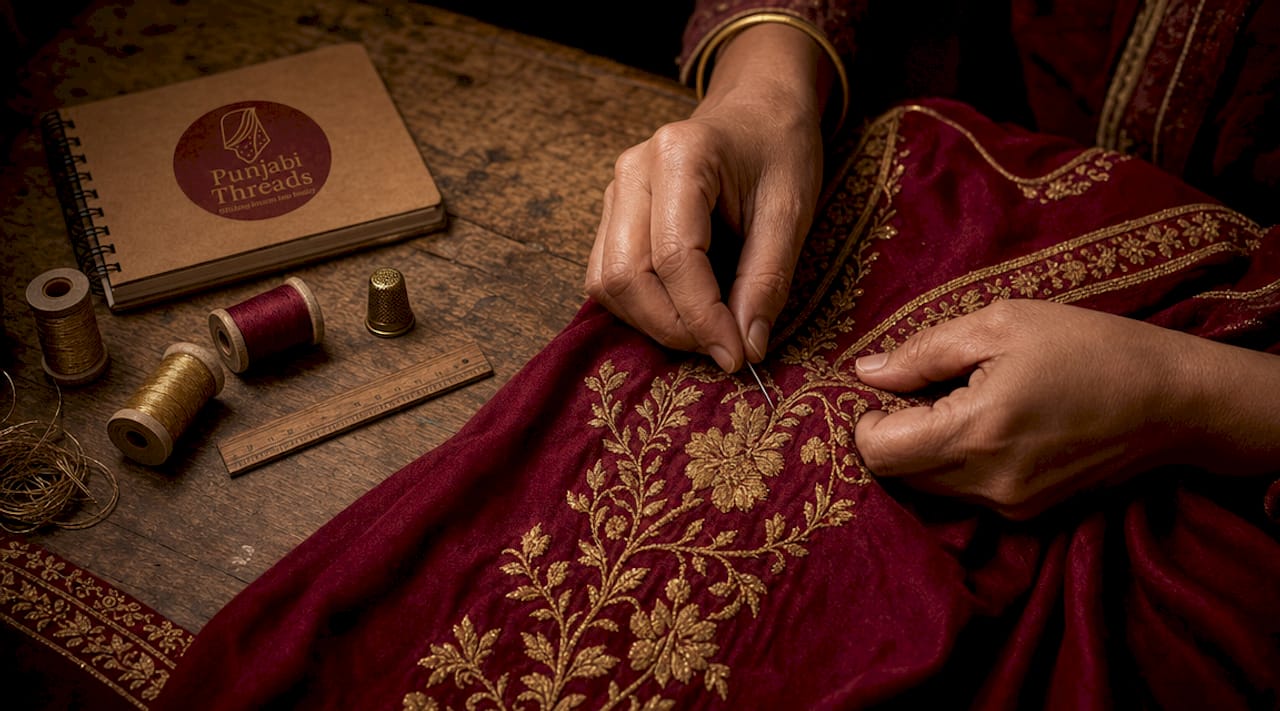
Embellishments are the second major differentiator. Festive suits use zari, sequins, mirror, and aari embroidery to catch light and draw attention. Zari work uses metallic threads woven directly into the fabric, while aari embroidery creates fine, looped patterns by hand. Mirror work, popular in Rajasthani and Gujarati traditions, reflects light dramatically and suits high-energy events like Navratri or Garba nights.
Color also plays a defining role. Everyday salwar kameez tend toward muted, practical tones. Festive versions lean into deep jewel tones like ruby red, royal blue, and emerald green, or rich pastels like blush and gold. These colors photograph well under event lighting and carry cultural significance in celebrations across Punjab, Rajasthan, and beyond.
Pro Tip: When assessing festive quality, check the dupatta weight before anything else. A heavy, embellished dupatta made from georgette or net signals a genuinely festive suit. A thin, plain dupatta on an otherwise ornate kameez is a common sign of a budget cut that undermines the whole look.
What are the main types of festive salwar kameez styles?
Festive salwar kameez includes multiple silhouettes such as Anarkali, Sharara, Churidar, Patiala, and Palazzo, each serving different stylistic and comfort needs for celebrations. Choosing between them is not just an aesthetic decision. It is a practical one based on the event type, your body proportions, and how much you plan to move.
| Style | Silhouette | Best for | Movement level |
|---|---|---|---|
| Anarkali | Long flared kameez with fitted bodice | Weddings, formal receptions | Moderate |
| Sharara | Wide-flared pants with short kameez | Mehndi, sangeet, Eid | High |
| Churidar | Fitted trousers with gathered ankles | All formal events | Moderate |
| Patiala | Pleated, voluminous trousers | Bhangra, casual festivals | Very high |
| Palazzo | Wide-leg straight trousers | Daytime events, outdoor festivals | High |
The Anarkali suit takes its name from the legendary Mughal courtesan Anarkali, and its dramatic flared silhouette creates graceful, flowing motion suited to weddings and formal receptions. The flare begins at the waist or chest, producing a princess-like sweep that photographs beautifully. It is the go-to choice for guests attending a wedding reception or a formal puja ceremony.
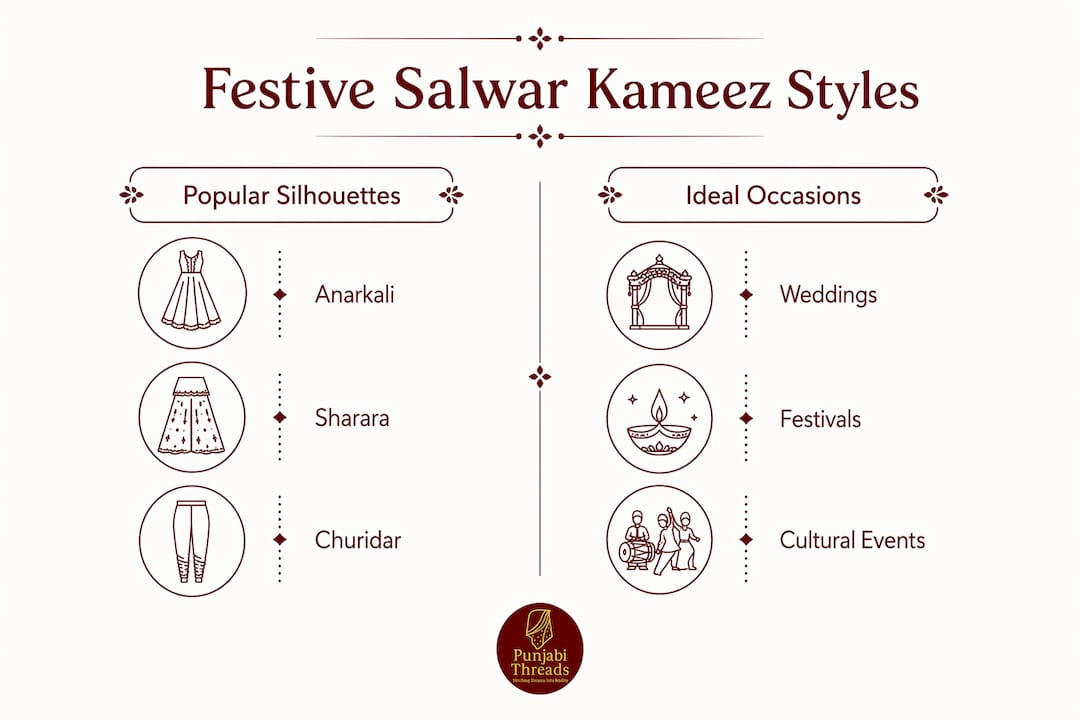
Sharara pants are wide-legged trousers that flare dramatically from the knee, paired with a short kameez. They originate from Mughal court fashion and have seen a strong revival in contemporary festive wear. For active events like sangeet or Mehndi nights, Sharara suits allow full freedom of movement while maintaining a highly formal appearance.
Churidar trousers are fitted along the entire leg and gather in soft folds at the ankle, creating a clean, elongated line. They suit nearly every body type and work across formal and semi-formal festive occasions. Patiala salwar, with its deep pleats and voluminous drape, is the most distinctly Punjabi silhouette and is ideal for Bhangra performances or casual Lohri celebrations.
Pro Tip: For active festival events like Garba or Mehndi nights, prioritize silhouettes that support fluid movement. A flared Anarkali or wide-legged Sharara will serve you far better than a heavily beaded but restrictive design. You can explore a detailed breakdown of cuts at the salwar kameez style guide from Punjabithreads.
How to style a festive salwar kameez for cultural celebrations
Styling a festive salwar kameez for celebrations means coordinating the dupatta, jewelry, and footwear with the outfit’s mood and the event’s energy. The outfit itself is only half the picture. Statement jewelry and coordinated dupatta draping complete the festive appearance and signal the level of formality you intend to project.
Follow these steps to build a polished festive look from the ground up:
-
Match the outfit’s embroidery to your jewelry metal. Gold zari work pairs with gold-toned jewelry like Kundan sets, jhumkas, and bangles. Silver or mirror work suits oxidized silver or antique jewelry. Mixing metals with embroidery tones creates visual conflict that dilutes the outfit’s impact.
-
Choose your dupatta draping style based on the event. For formal weddings, drape the dupatta over one shoulder and pin it at the chest for a composed, elegant look. For sangeet or Mehndi nights, a loose, flowing drape over both shoulders allows more freedom and a relaxed energy. A net or chiffon dupatta drapes more softly; a silk or brocade dupatta holds structure and suits formal occasions.
-
Scale your jewelry to the embellishment level of the kameez. A heavily embroidered kameez needs minimal jewelry, perhaps just earrings and bangles, so the embroidery remains the focal point. A simpler kameez with subtle embellishments invites a full jewelry set including a necklace, earrings, maang tikka, and stacked bangles.
-
Select footwear that matches the silhouette’s hem length. Churidar and Anarkali suits with floor-length hems suit heeled juttis or block-heeled sandals. Patiala and Palazzo suits with higher hems work well with flat juttis or embellished kolhapuris.
-
Align the outfit’s color and weight with the event’s mood. Deep, saturated colors and heavy embroidery suit evening weddings and formal receptions. Lighter pastels and delicate embroidery work better for daytime events like a morning puja or an outdoor Vaisakhi celebration. You can find specific outfit ideas for seasonal events at the Vaisakhi outfit ideas guide from Punjabithreads.
Pro Tip: Relying solely on embroidery to judge festive quality is one of the most common shopper mistakes. Fabric type and the weight of the dupatta contribute equally to the effectiveness and authenticity of a festive salwar kameez. A plain silk suit with a heavy brocade dupatta often reads as more festive than a heavily embroidered polyester set.
Why construction and comfort matter in festive salwar kameez
A festive salwar kameez is built for extended wear across multi-hour celebrations, and its construction reflects that practical reality. The most important structural feature is the open side seam below the waist, known as the chaak. This deliberate opening in the kameez allows the wearer to move freely without the fabric pulling or restricting the hips and thighs.
The chaak is not a design accident. It is a centuries-old solution to the challenge of wearing a long tunic during active movement. At a Garba night or a Bhangra performance, the difference between a kameez with and without a chaak is immediately felt. Without it, the fabric tightens across the hips with every step. With it, the kameez moves with the body rather than against it.
Fabric choice also determines comfort over a long event. Consider these practical points:
- Georgette drapes beautifully and stays cool, making it ideal for summer weddings and outdoor festivals. It is lightweight enough for extended wear without causing fatigue.
- Silk carries natural temperature-regulating properties and feels smooth against the skin, but heavier silk variants can feel warm in humid conditions.
- Velvet is best reserved for winter celebrations and evening events. Its weight and warmth make it unsuitable for summer or outdoor daytime wear.
- Net and organza work well as dupatta fabrics and kameez overlays because they add visual drama without adding significant weight.
The balance between ornamentation and ease of movement is what separates a well-designed festive suit from one that looks impressive on a hanger but becomes uncomfortable within an hour of wearing. When shopping or commissioning a custom suit, always ask about the chaak placement and fabric weight relative to the event duration.
Key takeaways
A festive salwar kameez succeeds when fabric luster, embellishment quality, silhouette choice, and dupatta richness all work together to create a cohesive, celebration-ready look.
| Point | Details |
|---|---|
| Fabric defines festivity | Silk, georgette, and velvet signal celebration in ways cotton cannot. |
| Silhouette matches the event | Anarkali suits formal weddings; Sharara and Patiala suit active events like sangeet and Garba. |
| Construction enables comfort | Open side seams (chaak) allow free movement during extended celebrations. |
| Dupatta completes the look | A heavy, embellished dupatta is as important as the kameez in achieving a festive appearance. |
| Jewelry scales to embroidery | Heavily embroidered suits need minimal jewelry; simpler suits invite a full statement set. |
Why I think most people shop for festive salwar kameez backwards
Most shoppers walk into a boutique or browse online and head straight for the most heavily embroidered kameez they can find. The logic seems sound: more embroidery equals more festive. In my experience, that approach produces outfits that look impressive in photographs but feel exhausting to wear by the second hour of a wedding reception.
The smarter approach starts with the event and works backward. A sangeet night calls for a different suit than a formal wedding ceremony, even if both are “festive.” The sangeet demands movement, energy, and a silhouette that lets you dance without thinking about your outfit. The ceremony calls for structure, weight, and the kind of presence that holds up under scrutiny and camera flashes.
The other misconception I see constantly is treating festive salwar kameez as a single-occasion investment. A well-chosen Anarkali in a versatile jewel tone, with quality fabric and restrained embroidery, can work across multiple events over several years. A heavily embellished, trend-specific piece often feels dated within a season. Investing in festive ethnic wear that balances timelessness with cultural richness is always the better long-term decision.
The most underrated element in any festive salwar kameez is the dupatta. I have seen stunning kameez pieces completely undermined by a thin, afterthought dupatta. Get the dupatta right and the entire outfit reads as intentional and polished. Skimp on it and even the finest embroidery on the kameez loses its impact.
— Punjabi
Find your perfect festive salwar kameez at Punjabithreads
Punjabithreads specializes in exactly the kind of festive salwar kameez this guide describes, with custom stitching services that account for your measurements, fabric preferences, and the specific celebration you are dressing for.
Whether you are looking for a dramatic Anarkali for a wedding reception, a fluid Sharara for a sangeet night, or a Patiala suit for a Vaisakhi celebration, Punjabithreads carries the fabrics and silhouettes to match. Every garment is stitched to your exact measurements, so the chaak falls correctly, the kameez drapes as intended, and the salwar fits without alteration. Browse the full festive suits collection or explore the custom vs. ready-made options to find the right approach for your next celebration.
FAQ
What is a festive salwar kameez made of?
Festive salwar kameez are made from richer fabrics such as silk, georgette, velvet, or net, adorned with embellishments like zari, sequins, mirror work, or aari embroidery. These materials distinguish them from everyday cotton or linen salwar kameez.
What are the most popular types of festive salwar kameez?
The most popular types include Anarkali, Sharara, Churidar, Patiala, and Palazzo styles, each offering different silhouettes and movement levels suited to specific celebrations. Anarkali suits are favored for formal weddings, while Sharara and Patiala styles suit active events like sangeet and Garba.
How do you wear a dupatta with a festive salwar kameez?
For formal occasions, drape the dupatta over one shoulder and pin it at the chest for a structured look. For active or semi-formal events, a loose drape over both shoulders allows more freedom of movement.
What is the chaak in a salwar kameez?
The chaak is an open side seam below the waist of the kameez that allows freedom of movement during active celebrations like Garba or Bhangra. It is a traditional construction feature that makes the outfit practical for extended festive wear.
Can a festive salwar kameez be worn to a wedding?
A festive salwar kameez is one of the most appropriate choices for South Asian weddings, particularly styles like Anarkali or Churidar in silk or georgette with zari or aari embroidery. The Punjabi wedding dress code guide from Punjabithreads provides detailed guidance on matching specific suit styles to each wedding event.


