
Blog
What Is a Dhoti Style Salwar: Your Style Guide


If you’ve spotted a garment that flows like a saree but wears like pants, you’ve likely encountered what is a dhoti style salwar. Commonly mistaken for oversized or baggy trousers, this silhouette is actually one of the most culturally layered pieces in contemporary Indian fashion. It borrows its shape from the traditional male dhoti, but reimagines it as a tailored, stitched bottom that women can slip into without the complexity of hand draping. This guide unpacks its origins, construction, and exactly how to style it for any occasion worth dressing up for.
Table of Contents
- Key Takeaways
- From Traditional Dhoti to Modern Dhoti Style Salwar
- What defines the dhoti salwar design
- How to wear dhoti salwar suits for every occasion
- Contemporary trends in dhoti salwar fashion
- My honest take on the dhoti salwar
- Find your perfect dhoti salwar at Punjabithreads
- FAQ
Key Takeaways
| Point | Details |
|---|---|
| Cultural roots matter | The dhoti style salwar draws its drape aesthetic from the traditional male dhoti, a garment with deep historical significance across India. |
| Pre-stitched for modern wear | Unlike a traditional dhoti, the salwar version is fully stitched and structured, so no hand draping is needed. |
| Distinct silhouette | Wide, flowing panels and front pleating set this style apart from straight-leg or tapered salwar cuts. |
| Versatile occasion wear | Dhoti salwar suits work for weddings, festivals, and formal cultural events when paired thoughtfully. |
| Custom fit makes a difference | Because of the garment’s structured drape, custom stitching delivers a far more flattering result than a standard size. |
From Traditional Dhoti to Modern Dhoti Style Salwar
To understand the dhoti style salwar, you first need to know the garment it was inspired by. A traditional dhoti is an unstitched rectangular cloth, roughly four yards long, wrapped and pleated around the waist and legs. It has been worn by men across the Indian subcontinent for thousands of years, and it carries enormous cultural and ceremonial weight.
The draping method is not uniform across India. Regional dhoti styles from South India, Bengal, Maharashtra, and Gujarat each produce a distinct aesthetic, with different pleating arrangements and leg widths. Some drapes create a wide, flowing silhouette. Others produce a more fitted, tapered effect.
The dhoti is not just clothing. It represents ritual purity, cultural identity, and regional pride, making it one of the most symbolic garments in South Asian dress history.
Fashion designers noticed that this flowing, structured drape had something that modern ethnic wear was missing: drama. The wide, layered panels and front pleating created a silhouette that felt simultaneously traditional and theatrical. So they took the look of the dhoti and built it into a stitched women’s garment.
The result is the dhoti style salwar, also called dhoti pants in fashion contexts. The key features borrowed from its ancestor include:
- Wide, flowing leg panels that taper or gather toward the ankle
- Front pleating that mimics the wrapped appearance of a hand-draped dhoti
- A structured waistband that anchors the drape without hand wrapping
- A silhouette that reads as both ceremonial and fashion-forward
The transition from unstitched wrap to tailored garment meant that contemporary dhoti pants could be worn by women across body types without the years of practice required to drape a traditional dhoti correctly. That accessibility is a big part of why the style spread so quickly through the Indian fashion market.
What defines the dhoti salwar design
The standard industry term you’ll see used interchangeably is “dhoti pants” or “dhoti salwar.” Both refer to the same type of stitched bottom. What separates them from other salwar styles is a very specific set of construction choices.
How it compares to other salwar styles
| Feature | Dhoti style salwar | Regular salwar | Patiala pants |
|---|---|---|---|
| Leg shape | Wide, draped panels | Straight or tapered | Full, gathered volume |
| Pleating | Front pleats mimicking dhoti drape | Minimal pleating | Heavy gathering at hip |
| Ankle finish | Tapered or cuffed | Open hem | Open hem |
| Silhouette feel | Structural and flowing | Classic and fitted | Casual and voluminous |
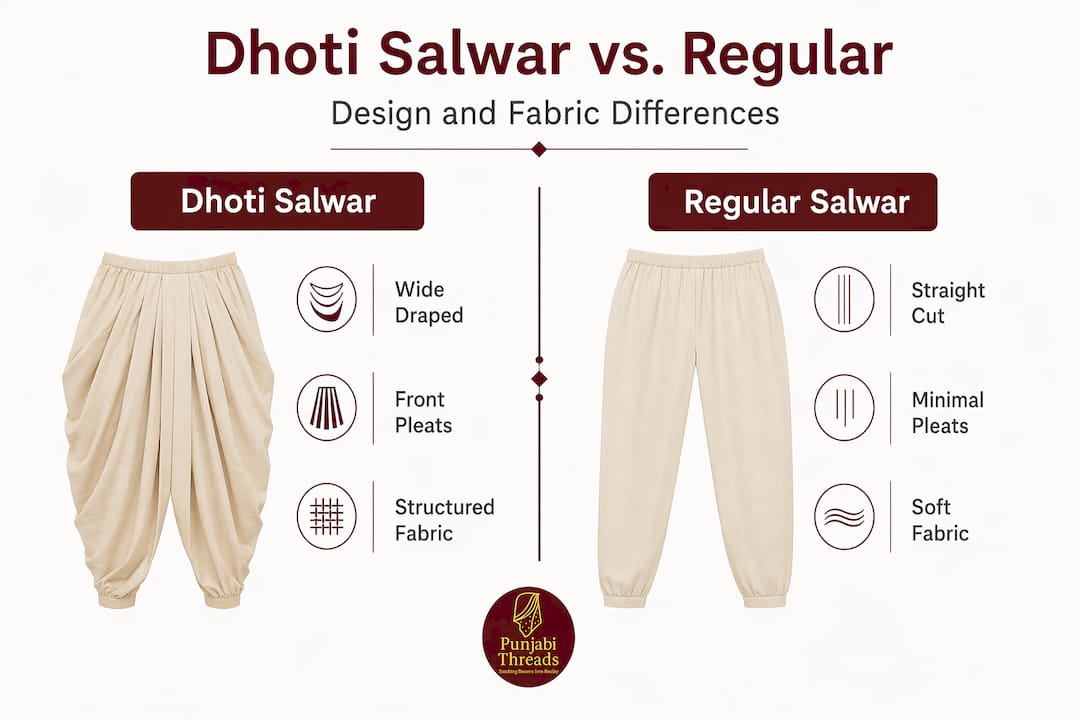
The dhoti style salwar gets its distinctive shape from wide, draped panels sewn with front pleating, while a regular salwar has tapered or straight legs without that forward draping structure. That distinction is what gives the dhoti silhouette its theatrical quality.
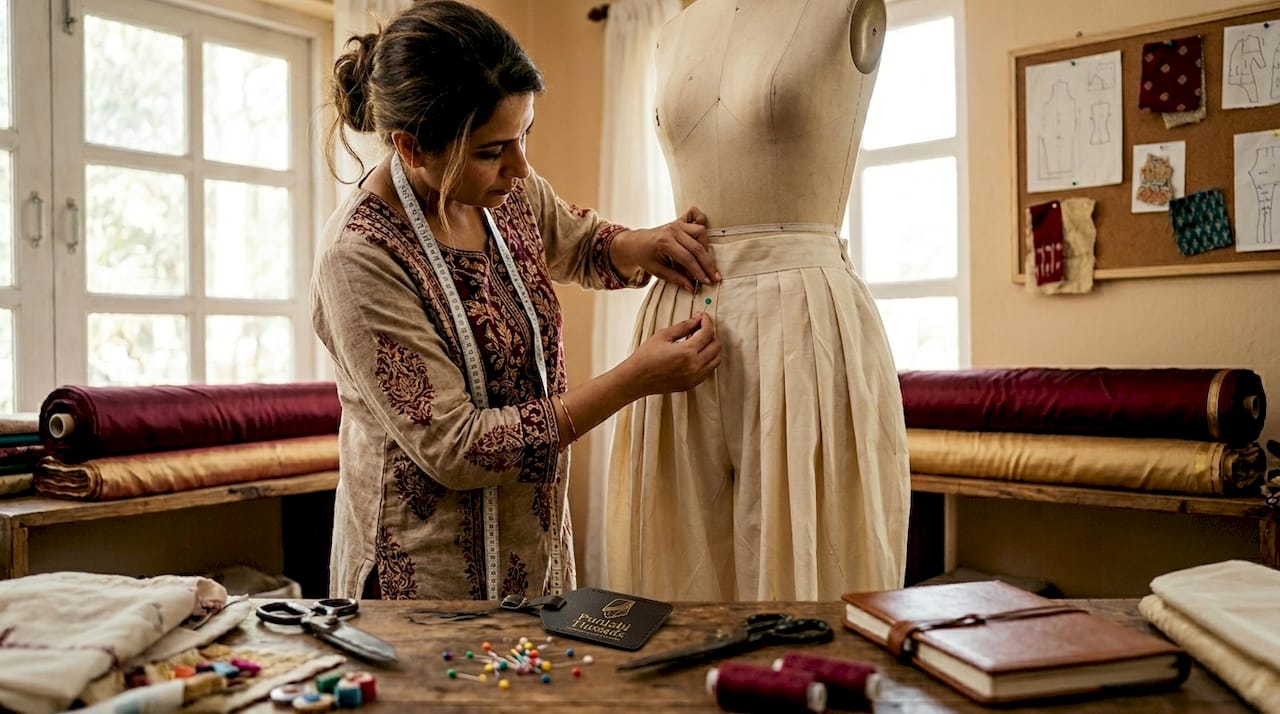
Fabric choice is not a small detail here. For the drape to hold its shape through a full wedding or festival day, medium-stiffness fabrics with lining are the standard recommendation. Georgette, silk blends, and structured cotton are popular. Limp fabrics like chiffon alone will cause the pleats to collapse within an hour of wear.
Pro Tip: When selecting fabric for a dhoti salwar, do a quick fold test. Fold the fabric in thirds and let it go. If it springs back with some body, it will hold pleats well. If it just falls limp, ask for a lining to be added.
Modern tailoring also brings something the traditional dhoti never had: a fitted waistband. Modern dhoti salwars use precise waist shaping to make the garment flattering across all body types, so the volume of the leg panels reads as intentional and elegant rather than overwhelming.
How to wear dhoti salwar suits for every occasion
Knowing what the garment is gets you halfway there. Knowing how to wear a dhoti salwar for specific occasions is where most people need real guidance. The good news is that the silhouette is more adaptable than it looks.
Here is a practical guide to pairing and wearing dhoti style outfits for cultural events:
-
Choose the right kurti length. A dhoti salwar with a kurti works best when the top hits at hip level or slightly below. Avoid very long anarkali-style tops that cover the front pleating, because you lose the visual drama that makes the garment worth wearing.
-
Match the neckline to the occasion. For a wedding, go with a deeper neckline or heavy embroidered yoke to balance the statement bottoms. For a festival like Vaisakhi or Diwali, a round neck or V-neck in a bright fabric keeps the look festive without being overdone. Check out some Vaisakhi outfit ideas for direct inspiration on this.
-
Drape the dupatta with intention. One of the most common styling guidelines is to drape the dupatta over one shoulder rather than both. This keeps the waist and front pleat visible, which is where the garment earns its attention.
-
Select shoes that let the ankle finish breathe. Heeled juttis or block heels work best. Flat chappals work for casual festivals. Avoid chunky sandals that compete visually with the tapered ankle of the pant.
-
Keep accessories proportionate. Statement earrings pair well because the neckline is often visible. Heavy necklaces can clash with an embroidered neckline. Choose one focal point and build around it.
A fashionable dhoti salwar worn correctly moves beautifully. The freedom of movement and comfort in this silhouette make it genuinely practical for long events, which is something you cannot always say about equally formal ethnic wear options.
Contemporary trends in dhoti salwar fashion
The traditional dhoti salwar has not stayed static. In 2026, designers are pushing the garment into new territory with fabric innovations, embellishment techniques, and Indo-western fusions that respect the original silhouette while making it unmistakably modern.
Some of the most interesting directions in trending dhoti salwar looks right now:
- Embroidered panel work: Placing embroidery directly on the draped panels rather than the top creates a visual hierarchy that feels fresh and unexpected.
- Monochrome tonal sets: Wearing the dhoti salwar and kurti in the same color family but different textures is a popular choice for wedding guests who want elegance without being loud.
- Crop top pairings: Indo-western takes on the dhoti style outfit often combine a structured crop top with the wide-leg pant, pulling the aesthetic toward contemporary fashion while keeping the bottom traditionally anchored.
- Handloom and sustainable fabrics: Khadi, linen blends, and organic silk are replacing heavily synthetic fabrics in premium dhoti salwar collections.
The question of ready-made versus custom stitching is particularly relevant for dhoti pants. Ready-made options are convenient and widely available for younger buyers who want to try the style without a major investment. But the structured nature of a dhoti salwar means fit precision matters more here than in simpler styles.
Pro Tip: If you are buying a dhoti salwar ready-made, always check the waist-to-hip ratio against your measurements before ordering. The front pleating adds visual width at the hip, and a poorly fitted waistband will disrupt the entire silhouette.
Current popular colors in ethnic wear markets for best dhoti salwar styles include deep jewel tones like teal, burgundy, and emerald for formal events, with mustard, rust, and peacock blue remaining strong choices for festival wear. You can browse current ethnic wear trends in Australia to see what is selling well locally.
My honest take on the dhoti salwar
I’ve worked with hundreds of clients choosing ethnic wear for weddings and cultural events, and I’ve noticed that the dhoti salwar tends to intimidate people who haven’t worn it before. The volume feels unfamiliar. The pleating looks complicated. Women assume it will make them look wider or harder to dress.
Here is what I’ve actually seen: when this garment is cut correctly for your body and paired with the right top, it does something no regular salwar can. It gives you presence. Not in an overstated way. In the way that a well-draped saree does, where the garment becomes part of how you carry yourself.
What I tell clients who are hesitant is this. The mistakes I see most often are not about the garment being wrong for someone’s body. They are about proportion. A too-long top erases the silhouette. A heavy dupatta draped over both shoulders buries the pleating. Get those two things right and the rest follows.
Culturally, this garment carries real weight. It blends traditional roots with modern wearability in a way that feels respectful rather than appropriative, because the design lineage is transparent. You are wearing something that acknowledges where it came from.
If you have been on the fence, try it for a festival occasion first before committing to a wedding look. You’ll understand why people keep coming back to this silhouette.
— Punjabi
Find your perfect dhoti salwar at Punjabithreads
At Punjabithreads in Melbourne, we carry a curated selection of dhoti style salwar suits for weddings, festivals, and formal events. Whether you are looking for a ready-made piece to try the style or want a completely custom-tailored set built to your exact measurements and fabric preferences, we can help.
Our salwar kameez collection includes dhoti sets in silk blends, georgette, and handloom fabrics across a full range of embellishment levels. For those weighing their options on fit and construction, our breakdown of custom versus ready-made suits is a good place to start. We work with families across Melbourne who want ethnic wear that fits right the first time, not after three rounds of alterations.
FAQ
What is a dhoti style salwar exactly?
A dhoti style salwar is a stitched women’s bottom garment that replicates the wide, pleated, draped silhouette of a traditional Indian dhoti. Unlike the original, it is pre-stitched for easy wear and typically paired with a kurti or tunic.
How does dhoti salwar differ from regular salwar?
A dhoti salwar has wide, flowing panels and front pleating that mimics dhoti draping, while a regular salwar has straight or tapered legs with minimal pleating.
What fabric works best for a dhoti salwar?
Medium-weight fabrics with some stiffness, like silk blends, structured georgette, or lined cotton, hold the pleating and maintain the garment’s shape best throughout extended wear.
Can you wear a dhoti salwar to an Indian wedding?
Yes. A dhoti salwar for weddings is a popular and appropriate choice when made in a rich fabric with embellishment and paired with a well-fitted embroidered kurti and statement accessories.
Is a dhoti salwar suitable for all body types?
Yes. Modern dhoti salwar tailoring uses fitted waist shaping to balance the wide leg volume, making the silhouette flattering and proportionate for different body types when cut to accurate measurements.


