
Blog
Embroidery Styles for Wedding Suits: 2026 Guide


Embroidery styles for wedding suits define the character, elegance, and personal story of your wedding attire more than any other single detail. In 2026, the dominant direction is subtle over saturated: tonal threadwork, delicate zari accents, and understated sequins that enhance a suit’s silhouette without competing with it. Whether you are planning a traditional South Asian ceremony or a modern fusion celebration, the embroidery you choose signals your taste before you say a word. This guide covers every major technique, placement, design, and budget consideration so you can make that choice with confidence.
1. Trending embroidery techniques for wedding suits in 2026
The most significant shift in wedding suit embroidery right now is the move away from dense, all-over coverage toward lighter, tonal embroidery that keeps the suit’s structure visible and photograph-friendly. This means the fabric itself becomes part of the design rather than a canvas to be covered.
The main techniques worth knowing:
- Tonal threadwork: Thread color matches or closely mirrors the base fabric. The result is texture without contrast, which reads as quiet luxury in person and in photos.
- Zari accents: Fine metallic thread, traditionally gold or silver, woven into specific motifs. Zari catches light naturally, making it ideal for evening ceremonies.
- Satin and chain stitch: Textured embroidery stitches like satin and chain stitch create richer tactile depth and outlast printed or surface-applied embellishments. This matters for a garment you may wear again.
- Delicate sequin work: Single-layer sequins placed along seams or motif edges add shimmer without bulk. Avoid multi-layer sequin panels, which photograph as visual noise.
- Bead embroidery: Small seed beads add dimension and weight. Best reserved for focal areas like the lapel or cuff rather than full panels.
Hand embroidery carries more irregularity and depth than machine embroidery, which produces uniform, flatter results. Hand work costs more and takes longer, but the tactile difference is noticeable at close range, exactly where wedding guests and photographers will be.
Pro Tip: Ask your tailor to show you a swatch of the actual embroidery thread under natural light before committing. Zari and metallic threads can shift dramatically between indoor studio lighting and outdoor ceremony light.
2. Which embroidery placements make the most impact
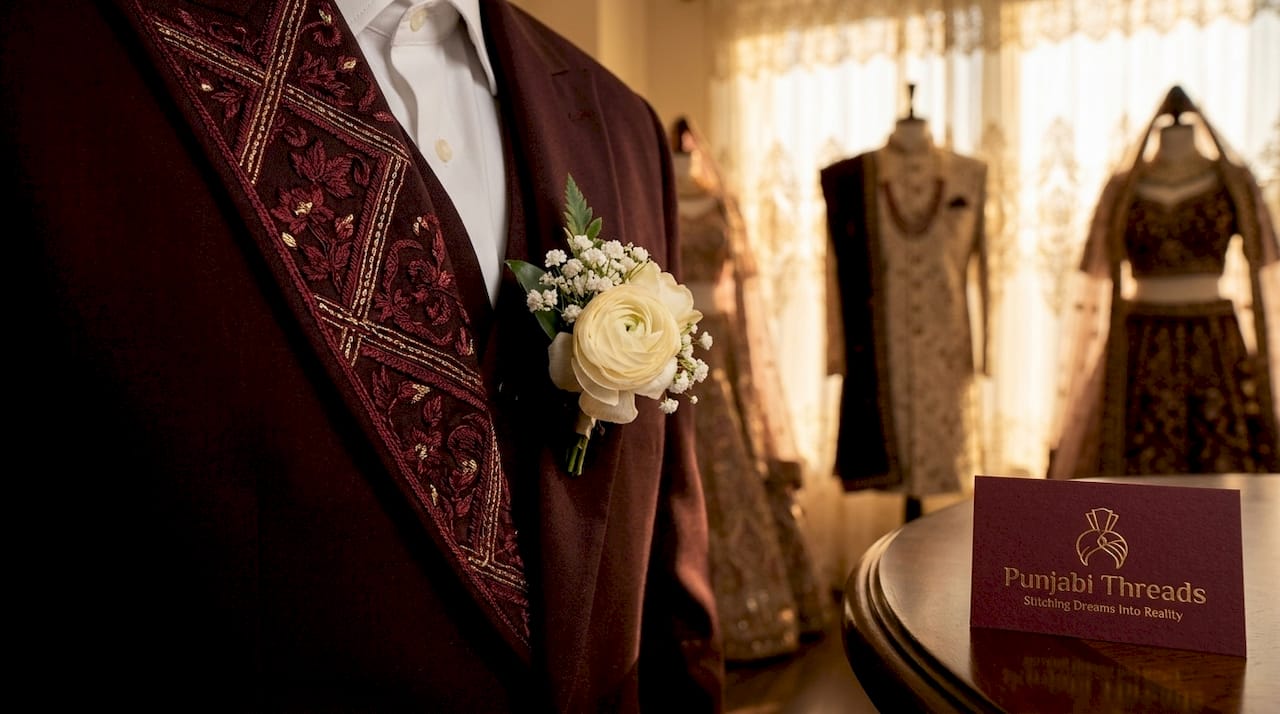
Placement determines whether your embroidery reads as intentional design or afterthought. Strategic placement enhances impact depending on the specific moments of your wedding day, from ceremony close-ups to the jacket-opening reveal.
The most effective placements, ranked by visual impact:
- Lapels and collar: The highest-visibility zone in any photograph. Gold or metallic thread on a satin shawl lapel, as seen in the ivory-and-green floral tuxedo style, creates immediate visual impact without requiring embroidery anywhere else.
- Front panels: Vertical embroidery along the front placket or chest panel draws the eye upward and elongates the torso. Best executed in tonal or single-color thread.
- Cuffs: Cuff embroidery appears in handshakes, ring exchanges, and close-up shots. A single band of geometric or floral embroidery here is one of the most cost-effective ways to add detail.
- Back yoke: Visible when you walk away or during first-look moments. A bold motif here surprises guests who expect embroidery only at the front.
- Inside lining: This is the private detail. Embroidered initials, a wedding date, or a meaningful phrase inside the jacket is visible only when you choose to show it. It is the most personal placement on this list.
Pro Tip: If your wedding includes a lot of outdoor photography, prioritize lapel and front panel embroidery. Natural light hits these surfaces directly and brings out metallic thread in ways that indoor lighting cannot replicate.
3. Matching embroidery designs to your wedding aesthetic
The design of the embroidery, meaning the actual motif and color palette, should reflect the overall tone of your wedding. A mismatch between suit embroidery and venue or ceremony style creates visual dissonance that photographs poorly.
| Wedding aesthetic | Recommended embroidery design | Thread type |
|---|---|---|
| Traditional South Asian | Floral and vine motifs, paisley, mango buta | Gold zari, silk thread |
| Old money / quiet luxury | Herringbone-integrated tonal motifs, minimal crest | Tonal silk, muted silver |
| Modern minimalist | Single geometric line or abstract motif | Tonal or monochrome thread |
| Regal / black-tie | Baroque floral, scrollwork on lapel and cuff | Metallic gold or silver |
| Fusion / destination | Botanical prints, abstract cultural symbols | Mixed metallic and matte |
The old money aesthetic specifically rejects flashy embellishment coverage in favor of restrained accents integrated into regal fabrics like flannel and herringbone. This approach treats embroidery as a whisper rather than a statement, which is exactly what makes it memorable. Bold metallic threads work best for evening receptions with warm lighting, while matte tonal embroidery performs better in daylight ceremonies where subtlety reads as sophistication.
Cultural influences remain strong in 2026 wedding suit embroidery designs. Punjabi and Pakistani wedding suits frequently use dense floral threadwork on the chest and sleeves, while contemporary interpretations pull those same motifs into smaller, more deliberate placements on otherwise minimal suits. The result honors tradition without looking costume-like.
4. How to personalize your wedding suit with embroidery
Personalization through embroidery transforms a well-made suit into a one-of-a-kind garment. Small, meaningful embroidery details combined with unique buttons and custom linings elevate a wedding suit beyond generic fashion trends.
The most popular personalization options:
- Monogrammed initials on the cuff: A classic choice. Two or three initials in a clean serif or script font, embroidered in thread that matches the suit color, adds identity without decoration.
- Wedding date inside the jacket: Placed above the inside breast pocket or along the inner hem. This detail is invisible to guests but meaningful to the wearer.
- Meaningful symbols: A family crest, a cultural motif, or a symbol tied to the couple’s story. These work best as small, contained designs rather than large panels.
- Coordinated lining embroidery: A custom lining with an embroidered pattern that echoes the outer suit embroidery creates a cohesive, designed-from-the-inside-out feel.
- Button coordination: Embroidered or engraved buttons that repeat a motif from the suit’s embroidery tie the whole garment together.
On timelines: custom embroidered suits can be completed in as few as 15 days for standard hand-embroidered pieces, but complex personalization with multiple placements typically requires 4 to 6 weeks. Book your consultation at least two months before the wedding date to allow for fittings and any adjustments.
The difference between custom and ready-made suits matters most here. A custom-stitched suit allows you to specify every embroidery detail, placement, and thread color. Ready-made options offer speed but no flexibility on personalization.
5. Embroidery styles by budget and season
Budget and season are two practical filters that narrow your choices quickly. Hand embroidery costs significantly more than machine embroidery because of the labor involved, but the difference in quality is visible and tactile. Machine embroidery produces consistent, clean results at a lower price point and suits grooms who want a polished look without the premium.
| Embroidery type | Relative cost | Best season | Fabric pairing |
|---|---|---|---|
| Hand zari embroidery | High | Fall / Winter | Velvet, brocade, heavy silk |
| Hand floral threadwork | High | Spring / Fall | Silk, georgette, linen blends |
| Machine tonal embroidery | Medium | All seasons | Cotton blends, linen, light wool |
| Machine sequin panels | Medium | Evening / Winter | Satin, crepe, jacquard |
| Minimal machine monogram | Low | All seasons | Any fabric |
For summer weddings, lightweight fabrics like linen and cotton blends pair best with minimal machine embroidery or tonal threadwork. Heavy zari or dense bead embroidery adds weight and heat retention, which is uncomfortable in warm outdoor settings. Winter weddings support heavier embellishments because velvet and brocade fabrics carry the weight naturally and the embroidery adds visual warmth.
Budget-conscious grooms get the most value from a single well-placed hand-embroidered detail, such as a lapel motif or cuff band, combined with machine embroidery elsewhere. This hybrid approach delivers the tactile richness of hand work where it matters most while keeping overall costs manageable. Punjabithreads offers dress material options across fabric weights and embellishment levels, which makes it easier to match your embroidery ambition to your actual budget.
Key takeaways
The most effective embroidery styles for wedding suits balance personal meaning with photo-friendly subtlety, using strategic placement and quality stitching over maximum coverage.
| Point | Details |
|---|---|
| Subtlety outperforms coverage | Tonal threadwork and delicate zari photograph better than dense all-over embellishment. |
| Placement drives impact | Lapels, cuffs, and front panels deliver the highest visibility at ceremony moments. |
| Design must match aesthetic | Old money styles need restrained motifs; traditional South Asian suits suit floral zari. |
| Personalization adds lasting value | Initials, dates, and symbols inside the jacket make the suit uniquely yours. |
| Budget shapes technique | Hand embroidery on one focal area plus machine work elsewhere balances cost and quality. |
What I’ve learned about embroidery after years of wedding fittings
Most grooms walk in wanting more embroidery than they actually need. The suits that look best in wedding albums are almost never the most heavily embellished ones. They are the suits where one or two details are done exceptionally well, and everything else steps back.
The detail I see overlooked most often is the inside lining. Grooms focus entirely on what guests will see and forget that the jacket-opening moment, whether at the altar or in a candid photo, is one of the most intimate and memorable shots of the day. An embroidered date or a small motif inside the jacket creates a story that no external embellishment can match.
On the question of tradition versus modern trends: you do not have to choose. A Punjabi sherwani with full chest embroidery is a statement of cultural pride, and it photographs beautifully when the embroidery is executed in quality thread with clean motifs. A modern slim-cut suit with a single embroidered lapel motif is equally valid. What fails is the middle ground: a modern cut with heavy embroidery that fights the silhouette. Pick a direction and commit to it.
One practical note on accessories: embroidery on the suit should not compete with embroidery on the pocket square, tie, or shoes. If your lapel carries a floral motif, keep accessories solid or textured without pattern. The suit is the statement. Everything else supports it.
— Punjabi
Custom embroidered wedding suits at Punjabithreads
Punjabithreads brings together expert tailoring and personalized embroidery for wedding suits that fit your measurements, your story, and your style. Every suit is built from your fabric choice and your design preferences, with options for monogrammed cuffs, embroidered linings, and motifs drawn from traditional Punjabi and Pakistani craft traditions.
Whether you want a classic cream kurta pajama with understated embroidery or a bold sea blue embroidered suit set for a festive reception, Punjabithreads handles the full process from consultation to final fitting. Browse the full range of Punjabi suits in Melbourne or contact the team directly to discuss custom embroidery options for your wedding date.
FAQ
What are the most popular embroidery styles for wedding suits?
Tonal threadwork, zari accents, and floral hand embroidery are the most popular wedding suit embroidery designs in 2026. Placement on lapels, cuffs, and front panels delivers the highest visual impact.
How do I choose between hand and machine embroidery for my suit?
Hand embroidery offers richer texture and depth, making it ideal for focal areas like the lapel or cuff. Machine embroidery is more affordable and works well for tonal or monogram details across the full suit.
How far in advance should I order a custom embroidered wedding suit?
Standard custom embroidered suits can be completed in as few as 15 days, but complex personalization with multiple placements requires 4 to 6 weeks. Booking two months ahead allows time for fittings and adjustments.
What embroidery works best for a summer wedding?
Lightweight tonal machine embroidery or a minimal monogram on linen or cotton blends suits summer weddings best. Heavy zari and bead embroidery add weight and heat, which is uncomfortable in warm outdoor settings.
Can I add personal details like initials or a wedding date to my suit?
Yes. Embroidered initials on the cuff and wedding dates inside the jacket lining are among the most requested personalization options for 2026 wedding suits. These details are subtle, meaningful, and built to last.


