

Blog
How to Wear Punjabi Suit College Style in 2026


Wearing a Punjabi suit in college style means choosing breathable fabrics, modern cuts, and minimal accessories that keep you looking sharp without slowing you down. The term “Punjabi suit” covers the salwar kameez family of garments, and the college-ready version of this look is defined by lightweight cotton, hip-length kurtas, and smart pairings with contemporary bottoms. Gen Z campus fashion has moved decisively away from heavy, embroidered sets toward versatile separates that work from a 9 a.m. lecture to an evening hangout. Punjabithreads, a Melbourne-based custom stitching boutique, sees this shift firsthand with students requesting simpler, more wearable cuts every season.
How to wear Punjabi suit college style: fabric and cut basics
The foundation of any great college ethnic outfit is fabric. Breathable fabrics like Jaipur cotton and cotton-linen blends are the top choices for campus wear because they handle sweat, movement, and repeated washing without losing shape. This matters more than most students realize. A suit that survives a hostel washing machine and still looks crisp after three wears is worth far more than a delicate silk piece you can only wear once a month.
When it comes to cuts, the hip-length kurta is the clear winner for college. It sits at the most flattering point on the body, pairs with almost any bottom, and does not restrict movement when you are rushing between buildings. Mandarin collar kurtas add a structured, professional edge that reads like a Western shirt in a formal setting, making them ideal for presentations and seminars. Straight cuts and A-line silhouettes are the next best options for daily wear.
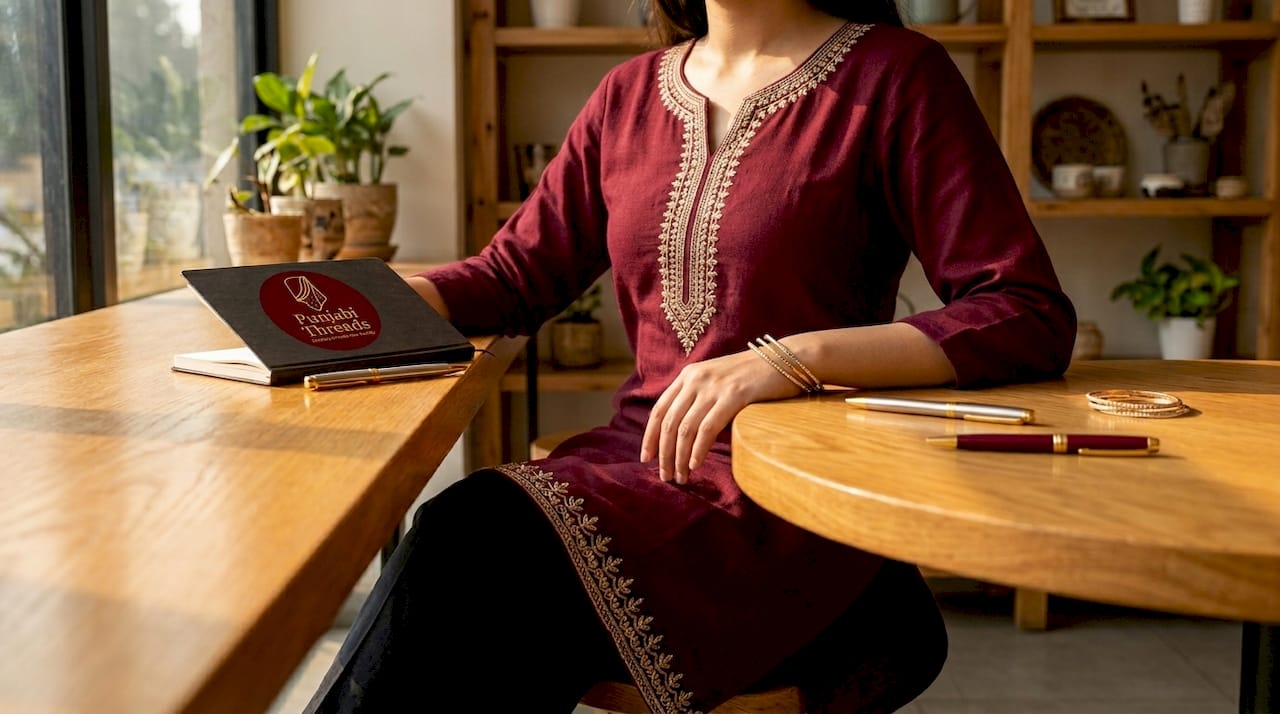
Heavy silk, georgette with dense embroidery, and mirror-work sets belong at weddings, not lecture halls. These fabrics trap heat, snag on chairs, and demand careful handling that college life simply does not allow. The practical rule is this: if you cannot fold it into a backpack without worrying, it is not a college suit.
Key fabric and cut options at a glance:
- Jaipur cotton: Lightweight, colorfast, and machine-washable. Best for hot weather and daily wear.
- Cotton-linen blend: Slightly more structured than pure cotton. Holds its shape through long days.
- Straight-cut kurta: Clean lines, easy to layer, works with pants and palazzos equally well.
- A-line kurta: Flattering on most body types. Pairs well with cigarette pants.
- Mandarin collar: Formal enough for presentations, casual enough for class.
Pro Tip: Avoid any fabric labeled “dry clean only” for college wear. Stick to cotton or cotton-blend suits that you can wash at home and wear the next day.
How to style Punjabi suits with modern bottoms and accessories
The biggest shift in college ethnic outfits right now is the move away from matching sets. Mixing separates to build personalized, functional outfits is the defining approach of 2026 campus style. This means you buy a kurta you love and pair it with bottoms you already own, rather than wearing a three-piece set that only works as one outfit.
High-waisted cargo pants paired with a hip-length kurta create a silhouette that is both flattering and practical. The high waist defines the figure and balances the volume of the kurta, while the cargo pockets add genuine utility for a student carrying a phone, keys, and earbuds. Cigarette pants give a sleeker, more polished result for days when you want to look put-together without extra effort. Dhoti pants work well for cultural events or college fests where a more ethnic aesthetic fits the occasion.
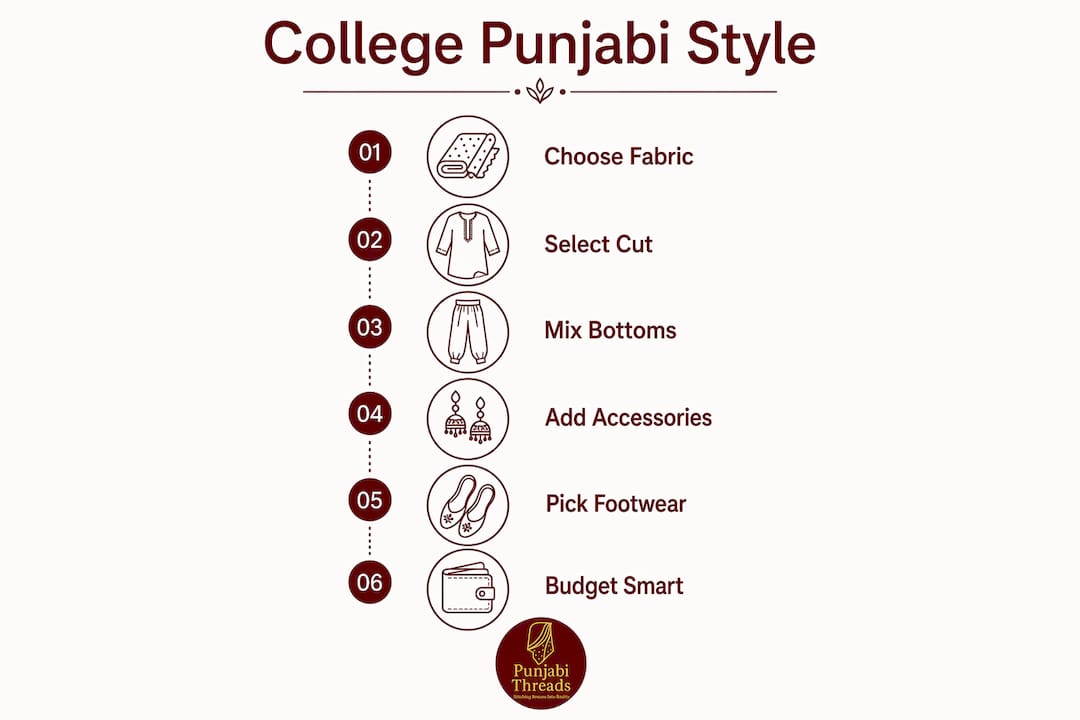
Accessories make or break a college ethnic look. Mixing gold and silver jewelry intentionally, rather than matching everything to one metal, creates a curated, modern effect that looks deliberate rather than accidental. A single pair of minimalist gold hoops with a thin silver cuff reads as styled. A full set of matching bangles and a heavy necklace reads as overdressed for a Tuesday morning class.
The dupatta question comes up constantly. The honest answer is that a heavy, pinned dupatta is impractical for college. A lightweight cotton stole draped loosely over one shoulder gives you the ethnic element without the hassle. On days when you want a cleaner silhouette, skip it entirely and layer a denim jacket or an ethnic shrug instead.
Styling combinations that work:
- Printed cotton kurta plus high-waisted olive cargo pants plus juttis
- Solid linen kurta plus white cigarette pants plus block heels plus one statement earring
- Embroidered collar kurta plus straight-leg jeans plus a lightweight stole
Pro Tip: Explore 2026 color trends for Punjabi suits before buying. Earthy tones and muted pastels are dominating campus style this year and pair with almost any bottom you already own.
What are practical budget tips for college-appropriate Punjabi suits?
Budget is where college ethnic wear gets real. Gen Z college fashion prioritizes suits priced under Rs 2,500 to Rs 3,000, a sharp contrast to traditional sets that can cost over Rs 8,000. This price shift reflects a broader change in what students want: fewer, better-fitting pieces rather than elaborate sets worn once a year.
Markets like Sarojini Nagar in Delhi remain the best source for affordable unstitched fabric and ready-made kurtas in the Rs 300 to Rs 800 range. Online platforms expand your options significantly, especially for students outside major cities. The trade-off with ready-made suits is fit. Standard sizing rarely accounts for individual proportions, which is why custom stitching from a boutique like Punjabithreads delivers noticeably better results for the same or slightly higher price.
The decision between custom and ready-made suits comes down to how often you plan to wear the piece. A custom-stitched cotton suit in your exact measurements will outlast three cheap ready-made alternatives and look better doing it.
| Price range | Fabric type | Best for |
|---|---|---|
| Under Rs 800 | Basic cotton, polyester blends | Casual daily wear, high-volume washing |
| Rs 800 to Rs 1,500 | Jaipur cotton, cotton-linen | Regular college days, moderate durability |
| Rs 1,500 to Rs 3,000 | Premium cotton, linen, chanderi cotton | Presentations, college events, longer lifespan |
| Rs 3,000 and above | Silk blends, embroidered sets | Festivals, college fests, special occasions |
Pro Tip: Buy one size bigger in the kurta for an intentional oversized fit. Pair it with fitted cigarette pants to balance the proportions. This works especially well with block-printed cotton kurtas.
Which footwear choices best complement Punjabi suits for college?
Footwear is the detail that separates a well-styled college ethnic outfit from one that looks unfinished. Students avoid athletic sneakers with traditional ethnic wear, and the reasoning is straightforward: the visual contrast between a structured kurta and a chunky running shoe breaks the cohesion of the outfit. The right footwear does not need to be expensive or uncomfortable.
Juttis are the most practical choice for daily college wear. They are flat, lightweight, and slip on quickly, which matters when you are running between classes. Embroidered juttis in neutral tones like tan, ivory, or black work with almost any kurta color. Block heels priced between Rs 500 and Rs 3,000 are the upgrade option for days when you want more height and polish without sacrificing stability. A block heel gives you a confident stride across campus without the ankle fatigue of a stiletto.
Footwear by occasion:
- Casual class days: Flat juttis in tan or black, or simple kolhapuris
- Presentations and seminars: Low block heels in nude or metallic tones
- College fests and cultural events: Embroidered juttis or strappy block heels
- Long days on campus: Cushioned flat sandals with ethnic detailing
For students who want a specific recommendation, the DDK block heel mules from Wildflower Wardrobe pair cleanly with straight-cut kurtas and cigarette pants without looking overdressed.
Pro Tip: Keep a pair of flat juttis in your bag on days you wear block heels. Swap them out after your last class. Your feet will thank you by the end of a full campus day.
How to avoid common styling mistakes with college ethnic outfits
The most common mistake is treating a Punjabi suit for college the same way you would dress for a wedding. Heavy dupattas with safety pins, full jewelry sets, and embroidered footwear all signal a formal occasion, not a Tuesday lecture. Avoiding heavy or pinned dupattas is the single fastest fix for making an ethnic outfit feel campus-appropriate.
Low-waist cargo pants are another frequent error. They cut the body at the widest point and create a boxy silhouette when paired with a kurta. High-waisted pants solve this immediately by defining the waist and creating a clean vertical line. The same logic applies to kurta length: a kurta that falls below the knee with wide-leg pants creates a shapeless look. Hip-length kurtas with a defined hemline always photograph and wear better.
Accessory overload is the third mistake. Three rings, two necklaces, a maang tikka, and stacked bangles belong at a wedding reception. For college, pick one statement piece and keep everything else minimal. A pair of gold and silver mixed earrings from Wildflower Wardrobe, for example, does more for a college ethnic look than a full jewelry set.
The best college ethnic outfits look like they took ten minutes to put together, even when they took thirty. That effortlessness comes from choosing the right proportions and limiting accessories, not from wearing more.
Pro Tip: Layer a lightweight cotton jacket or denim shrug over your kurta on cool mornings. Remove it by midday. This one move makes your outfit look more considered and keeps you comfortable across temperature changes throughout the day.
Key takeaways
Wearing a Punjabi suit in college style requires breathable fabrics, modern silhouettes, and minimal accessories that prioritize comfort and practicality over formality.
| Point | Details |
|---|---|
| Choose the right fabric | Jaipur cotton and cotton-linen blends survive daily wear and frequent washing without losing shape. |
| Prioritize modern cuts | Hip-length kurtas with mandarin collars pair with cargo pants and cigarette pants for a flattering, campus-ready silhouette. |
| Mix separates, not sets | Pairing individual kurtas with bottoms you already own creates more versatile and budget-friendly outfits. |
| Keep accessories minimal | One statement jewelry piece outperforms a full matching set for college ethnic wear every time. |
| Match footwear to the day | Flat juttis for daily class, block heels for presentations, and always prioritize comfort for long campus days. |
What I have learned from styling Punjabi suits for college
The conversation I have most often with students at Punjabithreads is about permission. They want to wear ethnic clothes to college but feel unsure whether it will look “too much.” My honest answer is that the problem is never the Punjabi suit itself. It is always the styling choices around it.
When a student comes in asking for a college-appropriate suit, I steer them toward a single, well-cut cotton kurta in a muted or earthy tone before anything else. That one piece, paired with high-waisted pants they already own and a pair of flat juttis, creates an outfit that looks intentional and modern without any extra effort. The students who struggle are the ones who try to recreate a full bridal-adjacent look on a Monday morning.
What I find genuinely exciting about 2026 campus ethnic wear is how much creative freedom it offers. You are not bound to a matching set or a specific color palette. A block-printed Jaipur cotton kurta over olive cargo pants with a silver cuff is a completely valid college outfit. So is a solid linen kurta over straight-leg jeans with embroidered juttis. The rule is simple: keep it light, keep it fitted, and keep the accessories deliberate.
The students who wear ethnic clothes most confidently on campus are the ones who treat their Punjabi suits the same way they treat their Western wardrobe. They mix, they experiment, and they do not overthink it.
— Punjabi
Find your college-ready Punjabi suit at Punjabithreads
Punjabithreads specializes in custom-stitched Punjabi suits built around your exact measurements and fabric preferences, which means no more guessing on sizing or settling for a ready-made cut that does not quite fit. For college students, the boutique offers lightweight cotton and linen options at price points that work within a student budget, with the added advantage of a garment that actually fits your body rather than a standard size chart. Whether you want a simple daily-wear kurta or a slightly more polished piece for presentations and college events, Punjabithreads has options worth exploring. Visit Punjabithreads to browse the full range of Punjabi suits available in Melbourne, or read more about custom vs. ready-made suits to decide which option fits your needs and budget.
FAQ
What fabrics work best for Punjabi suits in college?
Jaipur cotton and cotton-linen blends are the best choices for college wear because they are breathable, durable, and machine-washable. Avoid silk or heavy embroidered fabrics for daily campus use.
Can I wear a Punjabi suit with jeans to college?
Yes. A hip-length cotton kurta pairs well with straight-leg or slim jeans for a casual, modern college ethnic look. Keep accessories minimal and choose flat juttis or block heels to complete the outfit.
How much should I spend on a college Punjabi suit?
Gen Z college fashion targets suits priced between Rs 800 and Rs 3,000 for daily wear. This range covers good-quality cotton and linen options that hold up to frequent washing and regular campus use.
Do I need to wear a dupatta with a Punjabi suit to college?
No. A lightweight cotton stole draped loosely over one shoulder is a practical alternative. On days when you prefer a cleaner silhouette, skip the dupatta entirely and layer a denim jacket or ethnic shrug instead.
What is the best footwear to wear with a Punjabi suit on campus?
Flat juttis are the most practical everyday option, while low block heels work well for presentations and more formal college events. Avoid athletic sneakers, as they break the visual cohesion of an ethnic outfit.


