
Blog
Lining Options for Stitched Suits: Style Guide


The lining inside a stitched suit is the difference between a garment you wear once and one you reach for every time. Lining options for stitched suits determine comfort against your skin, how the jacket slides on and off, and whether the suit holds its shape through a full day of wear. The right choice comes down to fabric, construction style, and how you plan to use the suit. This guide covers every major suit lining type, from Bemberg and silk to polyester and cotton, so you can make a confident, informed decision.
1. what are the main lining options for stitched suits?
Suit lining is the inner fabric layer sewn inside a jacket to protect the outer shell, cover internal construction, and create a smooth surface against your clothing. The industry term for this layer is “jacket lining,” and the fabric choices for suit linings fall into five main categories: Bemberg (cupro), silk, polyester, viscose/rayon, and cotton.
Each fabric behaves differently against your body. Bemberg is 100% natural, moisture-wicking, and breathable, rivaling silk’s smoothness while outperforming polyester in comfort. Silk delivers a luxurious hand feel but requires careful handling. Polyester costs less and resists wrinkles but traps heat. Viscose and cotton fill the middle ground for warm-weather and casual suits.
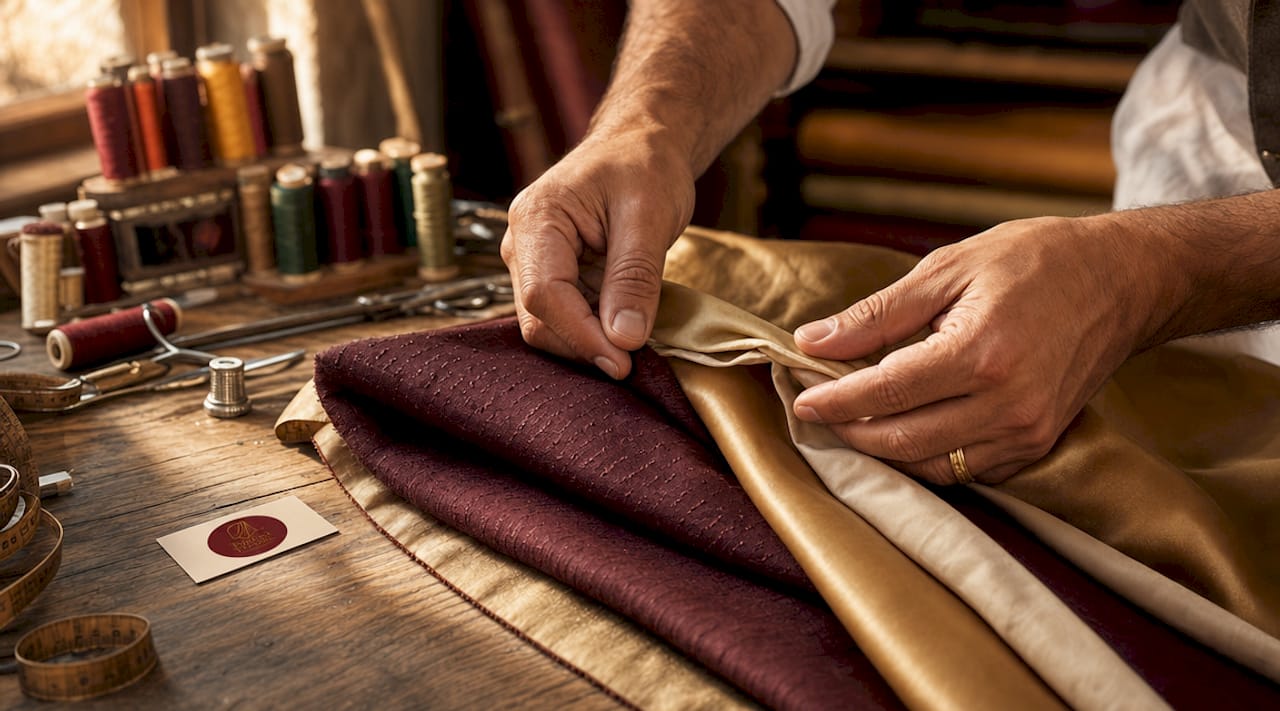
Standard quality suit linings weigh about 110 grams per meter, which balances coverage of inner seams and canvas without adding bulk. That weight directly affects how a suit drapes and moves on your body.
2. bemberg (cupro): the best all-around natural lining
Bemberg is the most practical lining fabric for professionals who wear suits regularly. It is made from cotton linter fibers through a cuprammonium process, giving it a natural origin and a silk-like finish. Most tailors who work with high-volume bespoke clients recommend it over silk for daily wear.
The key advantage is slickness. Bemberg provides superior slickness compared to silk, making it easier to put on and take off without snagging on shirts or knitwear. For someone wearing a suit five days a week, that matters more than it sounds.
Bemberg also manages moisture well. It pulls sweat away from your shirt and releases it through the outer fabric, keeping you dry during long events or warm days. It holds up to repeated dry cleaning better than silk and costs significantly less.
Pro Tip: If you are ordering a custom Punjabi or Pakistani suit for a wedding season that runs across multiple events, Bemberg is the lining fabric to request. It performs across temperature changes and stays looking fresh longer than polyester.
3. silk lining: luxury for special occasions
Silk lining is the prestige choice. It signals craftsmanship and is the standard in couture and high-end bespoke tailoring. Silk twill is recommended over satin or habotai weaves for durability, particularly in high-stress areas like armholes where tearing is most likely.
The trade-off is fragility. Silk is prone to wear and snagging, making it a poor choice for suits worn frequently. It is better suited for weddings, formal ceremonies, and power dressing occasions where the suit comes out a few times a year. Dry cleaning costs also add up over time.
For a Punjabi or Pakistani wedding suit, silk lining adds a layer of richness that complements heavily embroidered outer fabrics. The way silk catches light inside the jacket creates a subtle luxury that only the wearer knows is there.
4. polyester: the budget-friendly workhorse
Polyester is the most affordable and durable lining option, and it dominates off-the-rack suits for exactly that reason. It resists wrinkles, holds color well, and survives machine washing in some cases. For suits worn infrequently or bought on a tight budget, polyester gets the job done.
The downside is breathability. Polyester lacks breathability and can feel uncomfortably warm in hot climates due to poor moisture management. In Melbourne’s summer heat, a polyester-lined suit can become genuinely uncomfortable by midday.
Polyester also creates more friction against dress shirts than natural fibers, which causes the jacket to bunch and shift during movement. For formal occasions where you need to look composed for hours, that friction becomes a real problem.
5. viscose and rayon: breathable mid-range alternatives
Viscose and rayon are semi-synthetic fabrics that mimic silk’s softness at a lower price point. Viscose and rayon offer breathable alternatives widely used for smooth feel and temperature regulation, making them a solid choice for casual or warm-weather suits.
They are softer than polyester and more affordable than Bemberg or silk. The main limitation is durability. Viscose breaks down faster than polyester under repeated wear and dry cleaning, so it works best in suits you wear occasionally rather than daily.
For warm-weather ethnic wear, viscose linings are a practical middle ground. They keep the suit feeling light and airy without the cost of natural fiber linings.
6. cotton lining: maximum breathability for warm climates
Cotton linings are the most breathable option available. They absorb moisture directly rather than wicking it away, which works well in dry heat but can feel damp in humid conditions. Cotton suits lined with cotton are the go-to for summer weddings in warm, dry climates.
Cotton linings give a suit a more casual, relaxed character. They are rarely used in formal business suits but appear frequently in linen and cotton outer fabric suits designed for outdoor events. The texture is softer against the skin than polyester but less slick than Bemberg or silk.
If you are ordering a suit for a summer festival or outdoor celebration, cotton lining paired with a lightweight outer fabric creates the most comfortable combination available.
7. full vs. half vs. quarter lining: how coverage affects comfort
Lining coverage is as important as lining fabric. Full, half, quarter, and unlined constructions each serve different climates and use cases.
| Lining Style | Coverage | Best For | Trade-Off |
|---|---|---|---|
| Full lining | Entire jacket interior | Cold climates, formal wear | Less airflow, warmer |
| Half lining | Back panel open | Year-round, transitional seasons | Less structure at back |
| Quarter/butterfly | Fronts and shoulders only | Warm climates, light structure | Minimal warmth |
| Unlined | No lining | Maximum breathability | No structure, seams visible |
Full linings add warmth and structure, making them ideal for formal and cold-climate suits. Half-linings maintain structure in key jacket areas while allowing breathability through the open back panel, which makes them the most versatile choice for year-round wear. Quarter linings suit warm climates where you need minimal structure without the weight of a full lining.
Pro Tip: For Melbourne’s variable weather, a half-lining in Bemberg fabric gives you the best of both worlds. You get structure at the shoulders and chest, with airflow through the back when temperatures rise.
8. choosing the right lining based on occasion and climate
The right lining depends on three factors: how often you wear the suit, what the occasion demands, and what climate you live in.
- Weddings and formal ceremonies: Silk lining for maximum luxury; Bemberg as the practical alternative that still looks premium
- Daily professional wear: Bemberg as the versatile all-season choice for professionals who need comfort and durability
- Budget suits or infrequent wear: Polyester delivers acceptable performance at the lowest cost
- Warm weather and outdoor events: Cotton or viscose linings with a half or quarter construction
- Cold formal occasions: Full silk or Bemberg lining for warmth and structure
Climate is the most overlooked factor in lining selection. Matching lining type to lifestyle and climate is critical to long-term comfort. A full polyester lining in a Melbourne summer suit is a recipe for discomfort, regardless of how good the outer fabric looks.
9. custom suit lining options: color, pattern, and personalization
The lining is the one place in a suit where you can be completely unexpected. Custom linings offer unique stylistic opportunities including colors, patterns, embroidery, and personal artwork that express individuality without altering the suit’s external appearance.
Here is what you can customize in a bespoke stitched suit lining:
- Contrast colors: A navy suit with a burnt orange or deep red lining creates a striking reveal when the jacket opens
- Printed patterns: Paisley, geometric, or floral prints add personality without changing the suit’s formal exterior
- Embroidery: Initials, family motifs, or cultural symbols stitched into the lining add a deeply personal touch
- Mixed materials: Using silk at the chest and Bemberg at the back combines luxury feel where it matters with practicality where you need it
Lining fabric choice also influences how a suit drapes and moves. Slicker linings like Bemberg and silk allow the jacket to fall cleanly over the body. Stiffer linings can cause the jacket to hold its shape more rigidly, which works for structured formal suits but feels stiff in lighter styles.
For custom stitching vs. ready-made suits, the lining is one of the clearest differences. Ready-made suits use standard polyester linings. Custom suits let you choose every detail.
Key takeaways
The best lining for a stitched suit combines the right fabric with the right coverage style for your specific climate, occasion, and wear frequency.
| Point | Details |
|---|---|
| Bemberg is the top all-rounder | Choose Bemberg for daily wear suits needing breathability, durability, and a smooth feel. |
| Silk suits special occasions | Reserve silk linings for weddings and formal events where luxury outweighs practicality. |
| Coverage style matters as much as fabric | Half-linings balance structure and airflow for year-round wear in variable climates. |
| Polyester works for budget suits | Use polyester only for infrequent-wear suits where cost is the primary concern. |
| Custom linings express personality | Colors, prints, and embroidery transform the lining into a personal style statement. |
What i have learned after years of suit lining choices
Most people spend all their attention on the outer fabric and treat the lining as an afterthought. That is the single biggest mistake I see in custom suit orders.
The lining is what you feel every time you put the jacket on. It is what determines whether you are comfortable at hour six of a wedding or shifting and pulling at your jacket by hour two. I have seen beautifully embroidered outer fabrics completely undermined by a cheap polyester lining that made the wearer visibly uncomfortable.
My honest recommendation: always start with Bemberg unless you have a specific reason to go elsewhere. Silk is beautiful, but it is fragile. Polyester is fine for a suit you wear twice a year. For anything you plan to wear regularly or for extended events, Bemberg is the fabric that delivers without compromise.
The other thing people overlook is the lining as a style tool. I have seen a plain charcoal suit transformed by a deep burgundy paisley lining. The exterior stays formal and appropriate. The interior becomes a conversation piece. That contrast is one of the most underused opportunities in custom tailoring.
Finally, match your lining construction to your climate. A full lining in Melbourne’s summer is a mistake, no matter how premium the fabric. A half-lining or quarter-lining gives your body room to breathe without sacrificing the structure that makes a suit look sharp.
— Punjabi
Bring your custom suit lining vision to life
At Punjabithreads, every stitched suit is built around your measurements, your fabric preferences, and your personal style. That includes the lining.
Whether you want a breathable Bemberg lining for a wedding season suit or a bold contrast print that makes the jacket uniquely yours, the team at Punjabithreads works with you to get every detail right. Explore the full range of custom stitched suits and fabric options, or compare the benefits of custom versus ready-made to understand exactly what you gain when the lining is chosen for you, not for a mass market.
FAQ
What is the best lining fabric for a stitched suit?
Bemberg (cupro) is the best all-around lining fabric, offering breathability, moisture-wicking, and durability that outperforms polyester and rivals silk at a lower cost than pure silk.
Is silk lining worth it for a wedding suit?
Silk lining is worth it for special occasions like weddings, but silk twill is the recommended weave over satin for better tear resistance in high-stress areas like armholes.
What is the difference between full and half lining?
A full lining covers the entire jacket interior for warmth and structure, while a half-lining leaves the back panel open to allow airflow, making it the better choice for year-round or warm-climate wear.
Can i customize the color of my suit lining?
Yes. Custom suit linings can be ordered in contrast colors, printed patterns, or with embroidered details, giving you a personal style element that is invisible from the outside but entirely your own.
How does lining weight affect a suit?
Standard suit linings weigh around 110 grams per meter, which is enough to cover inner seams and canvas without adding bulk, keeping the suit’s silhouette clean and the drape natural.


