
Blog
Cotton vs Silk for Men’s Kurtas: Which Fabric Wins?


Cotton is the go-to fabric for everyday men’s kurtas, while silk is the definitive choice for formal and festive occasions. Understanding why cotton vs silk for mens kurtas matters comes down to four factors: comfort in your climate, the occasion you’re dressing for, how much maintenance you’re willing to do, and your budget. Cotton and silk sit at opposite ends of the fabric spectrum, and neither is universally better. The right choice depends entirely on where you’re wearing the kurta, how long you’ll have it on, and what impression you want to make.
Why cotton vs silk for men’s kurtas is the most important fabric decision
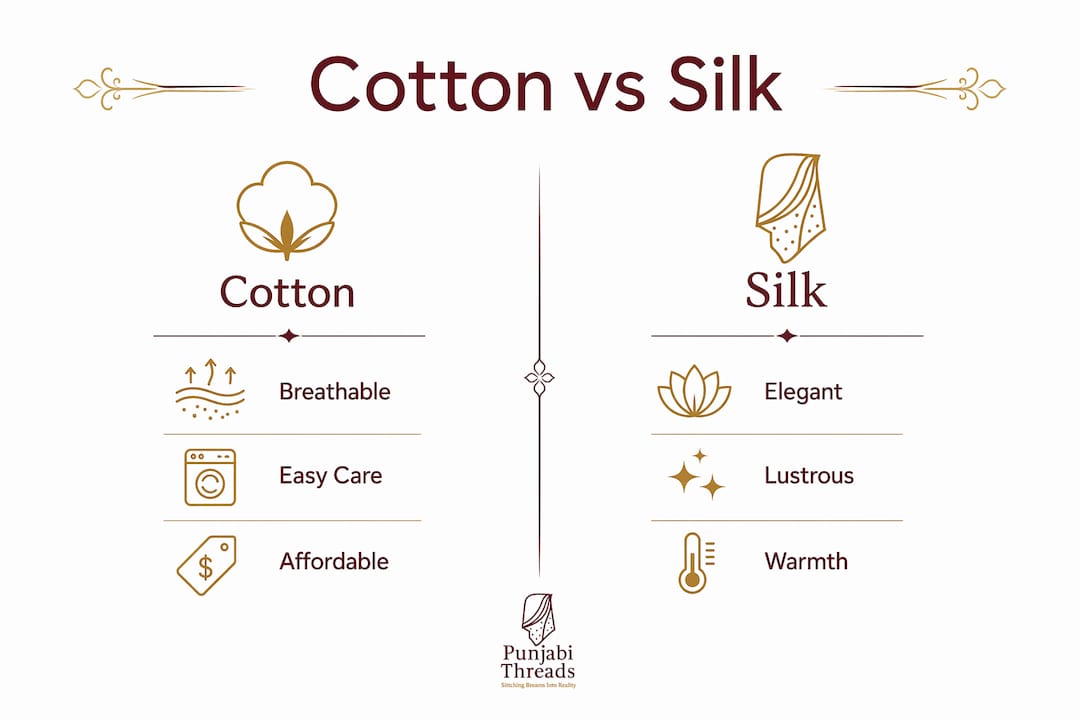
Cotton kurtas for men are defined by breathability, moisture management, and ease of care. Cotton fibers absorb moisture up to 27 times their own weight before feeling damp, which means you stay comfortable far longer than you would in synthetic fabrics. That single property explains why cotton dominates casual and daytime kurta wear across South Asia.
Silk kurtas, by contrast, are defined by their natural luster, drape, and visual weight. Silk’s natural lustre and drape give kurtas a regal quality that cotton simply cannot replicate. When you walk into a wedding reception or a Diwali celebration in a well-cut silk kurta, the fabric does half the work for you. The sheen catches light, the drape falls cleanly, and the overall effect reads as intentional and polished.
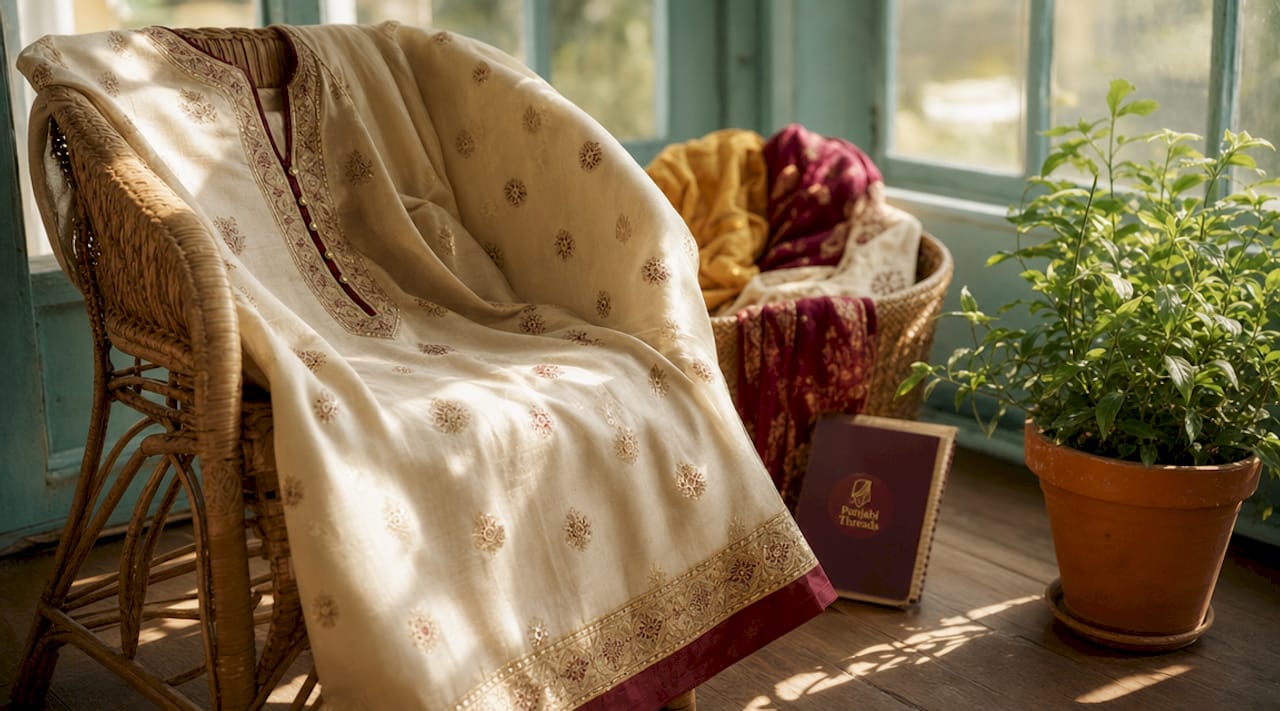
The fabric decision also affects your wallet. Silk costs more than cotton at purchase and demands more in upkeep, while cotton is affordable and practical for frequent rotation. For most men, the answer is not one or the other. It is building a wardrobe that uses each fabric where it performs best.
What are the key comfort benefits of cotton kurtas for men?
Cotton’s comfort advantage in kurtas comes from its open weave structure, which allows air to circulate freely against the skin. Humidity in coastal cities like Mumbai regularly reaches 80 to 90 percent during monsoon months, and in those conditions, a cotton kurta is not just more comfortable. It is genuinely functional. Sweat evaporates through the weave instead of pooling against your body, which keeps you cooler and prevents that heavy, stuck-to-skin feeling.
Cotton is also naturally hypoallergenic, making it the safer choice for men with sensitive skin or those prone to heat rash. The fiber is soft against the skin without any chemical treatment, and it softens further with each wash. For men who wear kurtas regularly, whether for daily wear, casual outings, or semi-formal office settings, that softness compounds over time into real comfort.
The variety within cotton itself is worth knowing:
- Mulmul cotton is extremely fine and almost like a second skin, making it ideal for peak summer heat and sensitive skin.
- Khadi cotton has a slightly coarser, handwoven texture that adds visual character while still breathing well.
- Standard cotton sits between the two and works for most everyday and semi-formal kurta styles.
- Cotton voile is lightweight and semi-sheer, often used in printed kurtas for summer festivals.
Maintenance is another major advantage. Cotton kurtas are machine washable, quick to dry, and easy to iron. You can wear one to a casual lunch, throw it in the wash that evening, and have it ready again the next morning. That kind of low-friction upkeep matters when you are wearing kurtas multiple times a week.
Pro Tip: If you sweat heavily, choose mulmul or voile cotton for your kurtas rather than standard cotton. The finer weave moves moisture away from your skin faster and dries more quickly between wears.
How does silk fabric enhance style and formality in men’s kurtas?
Silk kurtas occupy a different category entirely. The fabric’s protein-based fibers create a surface that reflects light with a natural sheen that no other natural fabric matches. That visual quality is why silk has been associated with ceremony and status across South Asian culture for centuries. A silk kurta at a wedding is not just appropriate. It is expected in many communities.
Beyond aesthetics, silk has a thermal property that surprises most men. Silk naturally wicks moisture and provides warmth in cooler conditions, making it genuinely versatile for events that move between air-conditioned interiors and warm outdoor settings. Men often underestimate silk’s ability to regulate temperature, which makes it surprisingly wearable in moderate summer climates for formal events. A banquet hall running heavy air conditioning in July is exactly the environment where silk performs better than cotton.
Silk’s protein-based fibers also help skin retain natural moisture and reduce friction, which matters during long events where you are wearing a kurta for six or more hours. Cotton can feel scratchy after extended wear in dry, air-conditioned environments. Silk does not.
The trade-offs are real, though:
- Silk requires dry cleaning or careful hand washing with a gentle detergent.
- It is sensitive to direct sunlight, which can fade the color over time.
- Stains set quickly and are harder to remove than on cotton.
- The cost per garment is significantly higher than comparable cotton kurtas.
Pro Tip: Store silk kurtas folded in a cotton cloth or muslin bag rather than hanging them. Hanging silk on a wire hanger for extended periods can distort the shoulder seam and stretch the fabric.
Cotton vs silk kurtas: how do maintenance, durability, and usability compare?
The practical differences between cotton and silk kurtas become most visible in how you care for them over time. Here is a direct comparison across the factors that matter most for everyday decision-making:
| Factor | Cotton kurtas | Silk kurtas |
|---|---|---|
| Washing method | Machine washable on gentle cycle | Dry clean or hand wash only |
| Ironing | Easy to iron; responds well to steam | Requires low heat; iron inside out |
| Wrinkle resistance | Wrinkles easily; needs regular pressing | Holds shape better with less wrinkling |
| Durability | Highly durable over frequent washing | Delicate; degrades faster with improper care |
| Cost | Affordable; suited for frequent rotation | Higher cost; best for occasional wear |
| Stain sensitivity | Forgiving; most stains wash out | Stains set quickly; harder to remove |
Cotton’s durability under frequent washing makes it the clear winner for everyday kurtas. A well-made cotton kurta can handle dozens of washes without losing its shape or color, provided you avoid hot water and high-heat drying. The one weakness is shrinkage. Cotton can shrink slightly if washed improperly, so cold water and air drying are the safer choices.
Silk holds its visual quality longer than cotton when cared for correctly, but the margin for error is narrow. One hot wash or a careless iron can permanently damage a silk kurta. That fragility is the main reason silk stays in the occasional-wear category for most men, regardless of budget.
Cotton-silk blends offer a practical middle ground. They provide the subtle shine and moisture-wicking of silk with easier maintenance than pure silk. If you want a kurta that looks elevated without the full commitment of silk care, a cotton-silk blend is worth considering.
Pro Tip: When buying a silk kurta, ask specifically whether it is pure silk or a silk blend. Pure silk has a distinct cool-to-touch feel and a soft, non-scratchy texture. Blends often feel slightly stiffer and warmer to the touch.
Which fabric suits different occasions, climates, and personal style?
Matching the fabric to the occasion is the most practical framework for building a kurta wardrobe. The general rule is straightforward: cotton for casual and daytime wear, silk for formal and evening events. But the nuances within that rule are where most men make better or worse decisions.
For cotton kurtas, the best occasions include:
- Casual family gatherings and weekend outings
- Daytime festivals like Holi or Baisakhi where movement and sweat are expected
- Semi-formal office wear in warm climates
- Eid celebrations held outdoors during summer months
- Everyday wear in cities with high humidity
For silk kurtas, the best occasions include:
- Wedding ceremonies and receptions, where a black kurta pajama in silk reads as sharp and intentional
- Formal Diwali and Navratri events held indoors
- Evening functions and gala dinners
- Religious ceremonies where traditional dress carries cultural weight
Climate plays a decisive role. If you live in Melbourne or another temperate city, silk is more wearable year-round than it would be in Chennai or Karachi during summer. Men in cooler climates can wear silk kurtas to semi-formal events without the discomfort that heat adds in tropical settings.
Personal style is the final variable. Men who prefer clean, understated looks often gravitate toward cotton because it photographs naturally and does not demand attention. Men who want their kurta to make a statement, especially at events where traditional dress is the norm, find that silk delivers that impact without effort. A light grey Punjabi kurta pajama in silk, for example, reads as formal and refined without being loud.
Cotton-silk blends serve men who sit between these two preferences. The blend balances luxurious look with easy upkeep and breathability, making it the best compromise for men who want both comfort and a touch of elegance without full silk maintenance demands.
Key takeaways
Cotton is the practical daily choice for men’s kurtas, while silk is the formal occasion fabric. The right wardrobe uses both strategically.
| Point | Details |
|---|---|
| Cotton for everyday comfort | Cotton absorbs moisture heavily and breathes well, making it ideal for warm climates and casual wear. |
| Silk for formal occasions | Silk’s natural luster and temperature regulation make it the standard choice for weddings and evening events. |
| Maintenance gap is significant | Cotton is machine washable; silk requires dry cleaning or hand washing and careful storage. |
| Blends offer a middle path | Cotton-silk blends provide subtle shine and easier care than pure silk for semi-formal occasions. |
| Climate shapes the decision | High humidity favors cotton; temperate climates like Melbourne make silk more wearable year-round. |
What I’ve learned from years of dressing men in cotton and silk kurtas
Working with men across Melbourne on their kurta choices for weddings, festivals, and everyday wear has taught me one consistent truth: most men default to cotton out of habit and silk out of obligation, without really thinking about why. That default works often enough, but it leaves a lot of comfort and style on the table.
The most common mistake I see is men wearing heavy cotton kurtas to indoor evening events because they assume silk is too formal or too warm. Silk’s temperature regulation is genuinely underrated. I have seen men in cotton kurtas visibly uncomfortable in air-conditioned banquet halls while the men in silk looked and felt better throughout the night.
The other mistake is treating silk as a once-a-year fabric. A well-made silk kurta, cared for properly, can anchor a wardrobe for years. The key is buying quality once rather than replacing cheaper pieces repeatedly. At Punjabithreads, we see customers who invested in a single premium silk kurta five years ago still wearing it to every major event because the fabric holds its quality.
My honest recommendation for most men: own two or three cotton kurtas for regular rotation and one or two silk or cotton-silk blend kurtas for occasions. That split covers nearly every situation without overcomplicating your wardrobe or your budget.
— Punjabi
Find your perfect kurta fabric at Punjabithreads
Whether you are drawn to the everyday ease of cotton or the formal elegance of silk, Punjabithreads carries both fabric types across a range of styles, cuts, and colors for men.
At Punjabithreads, every kurta is tailored to your exact measurements, so the fabric performs the way it should. A silk kurta cut to your frame drapes differently than one pulled off a rack. A cotton kurta stitched to your proportions moves with you instead of against you. Browse the full men’s kurta collection to explore fabric options, or visit Punjabithreads to start building a kurta wardrobe that fits your lifestyle, your climate, and your occasions.
FAQ
Is cotton or silk better for a summer kurta?
Cotton is the better choice for summer kurtas. Its open weave allows airflow and absorbs moisture heavily, keeping you cooler in hot and humid conditions.
Can silk kurtas be worn in warm weather?
Silk can be worn in moderate summer conditions, particularly at indoor events with air conditioning. Its moisture-wicking properties make it more temperature-adaptable than most men expect.
What is a cotton-silk blend kurta?
A cotton-silk blend combines the breathability and easy care of cotton with the subtle sheen and drape of silk. It is a practical option for semi-formal occasions where pure silk feels excessive.
How do I care for a silk kurta to make it last?
Dry clean or hand wash silk kurtas in cold water with a gentle detergent, iron on low heat from the inside, and store folded in a breathable cotton bag away from direct sunlight.
Which fabric is better for a wedding kurta?
Silk is the standard choice for wedding kurtas because its natural luster and drape create the formal, polished appearance that wedding occasions call for. Cotton-silk blends are a strong alternative for daytime or outdoor weddings.


