
Blog
What Is a Kurta Pajama? Styles, History, and How to Wear It


A kurta pajama is a two-piece South Asian outfit consisting of a kurta, a long collarless tunic that falls between the thigh and ankle, paired with pajama trousers, which are loose, drawstring-fitted pants. Together, they form one of the most recognized ensembles in men’s traditional clothing across India, Pakistan, and Bangladesh. The outfit appears at weddings, festivals, and religious gatherings, where fabric weight and embellishment signal whether the occasion is casual or ceremonial. What makes this combination so enduring is its ability to carry deep cultural meaning while remaining genuinely comfortable to wear for hours.
What is a kurta pajama and where does it come from?
The kurta pajama’s origins trace back to two separate garment traditions that merged across centuries of trade and migration. The kurta itself developed in the Indian subcontinent as a practical tunic suited to the region’s warm climate. The pajama trousers, however, arrived from Central Asia. National Geographic documents how loose trousers traveled along trade routes into South Asia, where they were eventually paired with the kurta to create the ensemble worn today.
This pairing was not accidental. The kurta’s open hem and the pajama’s relaxed waistband created a garment system that worked across seasons, body types, and social classes. Farmers, scholars, and nobility all wore versions of this combination, differing mainly in fabric quality and ornamentation. That cross-class adaptability is a large part of why the kurta pajama survived centuries of political and cultural change.
“The fusion of loosely tied pajama trousers with the kurta in India exemplifies cultural blending influencing traditional dress.” — National Geographic
The British Raj and the garment’s global reach
During British colonial rule in India, European administrators and soldiers encountered the kurta pajama and recognized its practical advantages. Europeans adopted the kurta pajama for its loose fit and soft fabrics, which contrasted sharply with the stiff, layered clothing common in Europe at the time. This adoption eventually shaped what the Western world now calls “pajamas,” a word derived directly from the Persian “payjama,” meaning leg garment. The kurta pajama’s influence on global fashion is therefore far older and more direct than most people realize.
By the 20th century, the kurta pajama had evolved from a functional daily garment into a deliberate style choice. Independence movements across South Asia reclaimed it as a symbol of cultural pride, and political leaders like Jawaharlal Nehru wore versions of it publicly. That association with dignity and heritage has never fully left the garment.
Fabrics, styles, and types of kurta pajamas
Kurta pajama styles range widely from simple cotton sets for everyday wear to heavily embellished silk versions for weddings and Eid celebrations. The fabric is the single biggest factor in determining whether an outfit reads as casual or formal. Understanding fabric choices before you shop saves significant time and money.
Common fabric options
- Cotton: Breathable, easy to wash, and ideal for warm weather or daily wear. Plain cotton kurtas work well for religious functions and family gatherings that do not require heavy formality.
- Linen: Slightly more textured than cotton, linen kurtas carry a relaxed elegance that suits outdoor festivals and daytime events.
- Silk: Pure silk signals ceremony. A silk kurta with gold or silver embroidery is the standard choice for wedding receptions and milestone celebrations.
- Blended fabrics: Cotton-silk or polyester-viscose blends offer a middle ground, providing a slight sheen without the full cost or care requirements of pure silk.
- Chanderi and georgette: Lightweight and semi-sheer, these fabrics suit warmer climates and evening events where movement and airflow matter.
Style variations worth knowing
Kurta length is one of the most practical decisions you will make. Knee-length kurtas read as casual and pair well with churidar trousers, which are fitted below the knee and gather at the ankle. Mid-calf and full-length kurtas carry more formality and pair better with straight-cut pajama pants. Kurta length impacts suitability for different event phases, so owning more than one length gives you flexibility across a full wedding weekend.
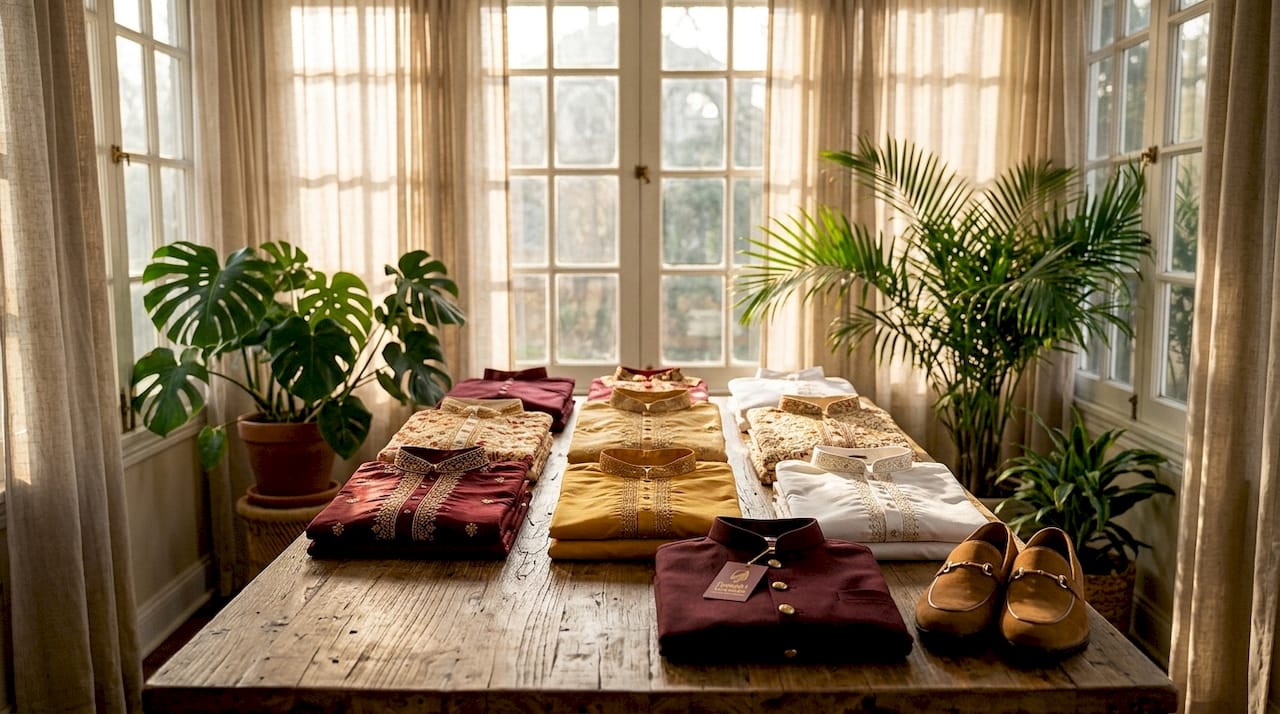
Neckline design also matters. A simple round neck or V-neck suits casual settings. A Mandarin collar with button detailing or a heavily embroidered placket shifts the outfit firmly into formal territory.
Pro Tip: If you are attending a multi-day wedding, plan your kurta lengths in advance. A shorter kurta works for daytime ceremonies, while a longer, embellished version handles the evening reception without requiring a full outfit change.
How do regional styles differ across South Asia?
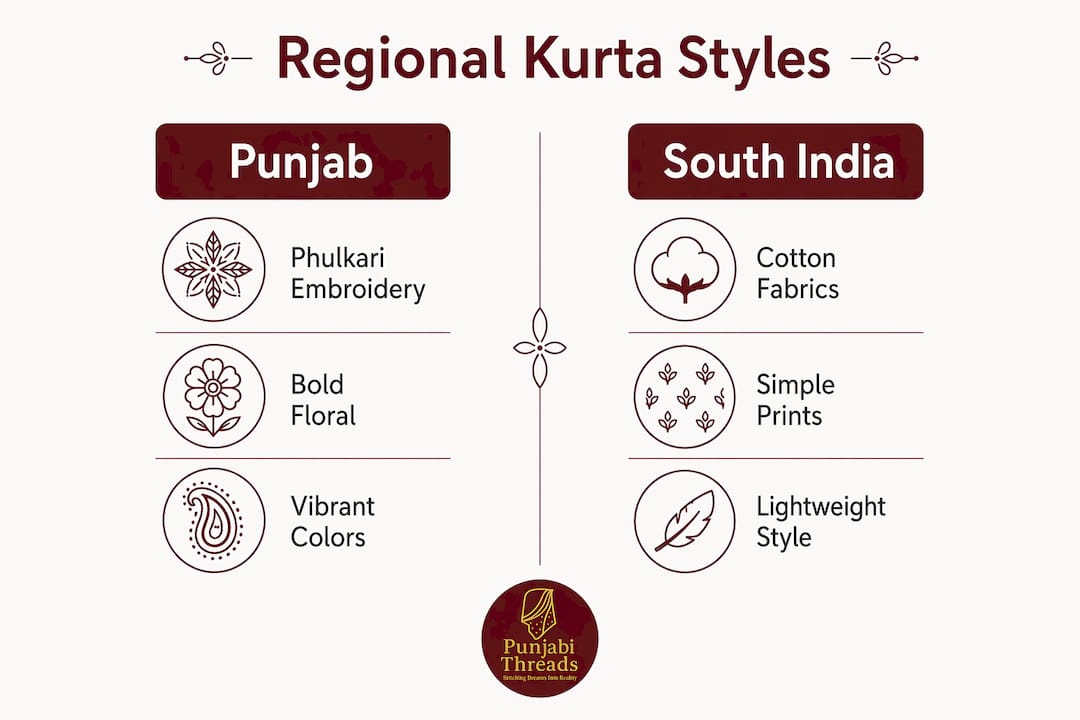
Regional variations in embroidery, fabric, and design bring genuinely distinct identities to kurta pajamas across the subcontinent. A kurta from Punjab looks and feels nothing like one from Bengal, even if both are technically the same garment category. These differences reflect local climate, craft traditions, and cultural values.
| Region | Signature style | Key feature |
|---|---|---|
| Punjab | Phulkari embroidery | Bold floral threadwork in vibrant colors on cotton or silk |
| Rajasthan | Zari and mirror work | Gold thread weaving and reflective embellishments for desert festivals |
| Bengal | Minimalist white or off-white | Clean lines, fine cotton, often worn for Durga Puja and Eid |
| Lucknow (UP) | Chikankari embroidery | Delicate white-on-white hand stitching on fine muslin |
| Kashmir | Sozni needlework | Fine silk thread embroidery with floral motifs on wool or silk |
Punjabi phulkari is particularly striking because the embroidery covers large portions of the fabric rather than appearing only at borders or hems. This makes Punjabi kurtas visually bold and well-suited to celebratory occasions. Rajasthani zari work, by contrast, uses metallic thread to create a richness that photographs exceptionally well under event lighting. Bengali minimalism reflects a different cultural priority: restraint and refinement over ornamentation.
Understanding these regional identities helps you choose a kurta that aligns with the specific cultural context of the event you are attending. Wearing a heavily embroidered Rajasthani kurta to a Bengali Eid gathering, for example, would feel stylistically out of place even if no one says so directly.
How to wear a kurta pajama for different occasions
Comfort, cultural correctness, and flexibility make the kurta pajama the trusted choice for a wide range of Indian and Pakistani occasions. The key is matching your fabric, embellishment level, and layering to the specific event rather than defaulting to one look for everything.
Here is a practical framework for occasion-based dressing:
- Casual family gatherings and religious functions: Choose plain or lightly printed cotton in neutral or muted tones. Skip embroidery. A simple kurta with straight pajama pants and kolhapuri sandals is appropriate and comfortable.
- Festivals like Diwali, Eid, or Baisakhi: Step up to a cotton-silk blend or light silk in brighter colors. Small embroidery at the collar or cuffs adds festivity without overdressing. Mojari shoes or embroidered juttis complete the look.
- Wedding ceremonies (daytime): A mid-length kurta in chanderi or cotton-silk with moderate embroidery works well. Pair with churidar trousers and a Nehru jacket in a complementary color to add structure.
- Wedding receptions (evening): This is where pure silk, heavy zardozi embroidery, or sherwani-style kurtas belong. A full-length kurta with straight pants, a waistcoat, and formal mojaris signals the appropriate level of ceremony.
- Boys’ kurta pajamas for children: Children’s versions use ergonomic designs that allow movement for toddlers and young kids. Cotton sets in bright colors with minimal embroidery keep children comfortable through long events.
Pro Tip: A well-fitted Nehru jacket over a plain kurta instantly shifts the outfit from casual to semi-formal. Keep one in a neutral color like ivory, navy, or charcoal and it will work across multiple kurta colors and events.
Footwear is often overlooked but carries significant visual weight. Kolhapuri chappals and rubber-soled juttis suit casual and festival wear. Embroidered mojaris and formal leather juttis belong at weddings. Avoid sneakers with traditional kurtas unless you are deliberately going for a fusion look at a modern, informal event.
Accessories like a pocket square, a simple gold chain, or a traditional brooch at the collar can add personality without overwhelming the outfit. The faith and cultural context of Muslim fashion also shapes how accessories are chosen for occasions like Eid, where modesty and elegance are equally valued.
Key takeaways
A kurta pajama is defined by its two-piece structure, and successful styling depends on matching fabric and embellishment to social context rather than following a single correct look.
| Point | Details |
|---|---|
| Definition and structure | A kurta pajama is a long collarless tunic paired with loose drawstring trousers, originating in South Asia. |
| Fabric drives formality | Cotton suits casual wear; pure silk with embroidery is the standard for weddings and formal celebrations. |
| Regional identity matters | Phulkari, zari work, and chikankari each signal specific regional and cultural contexts. |
| Occasion-based layering | Adding a Nehru jacket or waistcoat shifts a plain kurta from casual to semi-formal without a full outfit change. |
| Kurta length is a practical tool | Planning multiple kurta lengths across a multi-day event prevents style mismatches between ceremonies. |
Why the kurta pajama deserves more respect than it gets
I have spent years helping customers in Melbourne find the right fit for traditional occasions, and the most common mistake I see is treating the kurta pajama as a single category. People buy one set and expect it to work for a daytime mehndi, an evening reception, and a Sunday family lunch. It never does, and the result is always either underdressing or looking overdone.
The kurta pajama is actually a system, not a single outfit. The same way a Western wardrobe separates a casual shirt from a dinner jacket, the kurta pajama has its own internal hierarchy of formality. Once you understand that hierarchy, the garment becomes genuinely versatile rather than confusing.
What I find most interesting about this outfit is how honestly it reflects its wearer’s cultural knowledge. Someone who understands the difference between a Lucknowi chikankari kurta and a Punjabi phulkari kurta is communicating something real about their relationship to South Asian culture. That depth of meaning is rare in modern clothing. Most garments are purely aesthetic. The kurta pajama carries history, geography, and identity in its stitching.
My practical advice: start with two sets. One plain cotton for everyday and casual occasions, and one silk or embellished set for formal events. Build from there based on the specific occasions your life requires. Custom stitching, like what Punjabithreads offers, is worth considering because fit is where most ready-made kurtas fail. A kurta that pulls at the shoulders or bunches at the waist loses its elegance regardless of how fine the fabric is.
— Punjabi
Find your perfect kurta pajama at Punjabithreads
Punjabithreads brings together the craftsmanship of custom stitching with the convenience of browsing quality fabrics and styles from Melbourne. Whether you need a simple cotton set for a family gathering or a silk kurta for a wedding reception, the range covers both ends of the formality spectrum.
Every garment is stitched to your measurements, which solves the fit problem that plagues most ready-made traditional clothing. You can explore the full men’s traditional wear collection to find styles suited to your next occasion, or browse specific options like the light grey festive kurta for a clean, celebration-ready look. For families dressing for weddings, Eid, or Diwali, Punjabithreads at punjabithreads.com.au is the Melbourne destination for ethnic wear that actually fits.
FAQ
What is the difference between a kurta and a pajama?
A kurta is the long collarless tunic that forms the top half of the outfit, while a pajama refers specifically to the loose, drawstring trousers worn as the bottom. Together they form the kurta pajama set.
What fabric is best for a kurta pajama for weddings?
Pure silk or embellished cotton-silk blends are the standard choice for weddings and formal celebrations. Cotton suits everyday and warm-weather use, while silk with embroidery signals ceremony.
Can boys wear kurta pajamas to traditional events?
Yes. Children’s kurta pajama sets use ergonomic designs that allow active movement, making them practical and culturally appropriate for weddings, festivals, and religious functions.
How do I make a kurta pajama look more formal?
Add a Nehru jacket or embroidered waistcoat over a plain kurta to shift the formality level without changing the base outfit. Footwear also matters: embroidered mojaris read as formal, while flat kolhapuri sandals stay casual.
What is a boys kurta pajama and how does it differ from adult versions?
A boys kurta pajama follows the same two-piece structure as adult versions but uses lighter fabrics, simpler embroidery, and relaxed cuts designed for comfort during active wear. The proportions are scaled for children, and bright colors are more common in kids’ styles than in adult formal sets.


