
Blog
What Does Kids Salwar Kameez Mean for Parents


If you’ve ever searched “what does kids salwar kameez mean” before a family wedding or Eid celebration, you’re not alone. Many parents outside South Asia, and even some within diaspora communities, want more than just a style description. They want to understand what they’re putting on their child. The salwar kameez is a traditional South Asian outfit with deep cultural roots, and the children’s version carries every bit of that meaning. This article breaks down what the outfit is, what it represents, and how to choose the right one for your child.
Table of Contents
- Key takeaways
- What kids salwar kameez means: the full breakdown
- Cultural significance of salwar kameez for kids
- Modern salwar kameez styles for kids
- How to choose kids salwar kameez for any occasion
- My perspective on dressing kids in traditional wear
- Dress your child in something worth wearing
- FAQ
Key takeaways
| Point | Details |
|---|---|
| Three-piece outfit | A kids salwar kameez includes a kameez (tunic), salwar (trousers), and often a dupatta (scarf). |
| Cultural significance | The outfit connects children to South Asian heritage during festivals, weddings, and ceremonies. |
| Regional variation | Style, cut, and embellishment differ by region, from Punjabi suits to Bengali cotton sets. |
| Modern comfort focus | Kids’ versions prioritize breathable fabrics and wide-leg cuts for movement and ease. |
| Practical buying tips | Match fabric weight to the occasion and always check for a soft inner lining on your child’s outfit. |
What kids salwar kameez means: the full breakdown
The term “salwar kameez” is actually two words describing two separate garments worn together. Understanding the difference between salwar and kameez is the starting point for any parent trying to make sense of the outfit.
Kameez is the tunic or top. The word comes from the Arabic qamis, meaning shirt, and traveled into South Asian languages through centuries of trade and cultural exchange. In a child’s outfit, the kameez typically falls anywhere from hip length to knee length, depending on the style. It can be simple and straight, flared like an Anarkali, or layered with a decorative jacket on top.
Salwar refers to the trousers. The word has Persian roots and describes a loose, gathered pant that narrows at the ankle. For children specifically, the fit and cut of the salwar matters a great deal practically. Wide-leg cuts like sharara and palazzo are much more practical for kids because they allow free movement and make bathroom trips easier without help.
Dupatta is the third element, a long scarf or stole that drapes over the shoulders or head. For young children, the dupatta is often skipped entirely or sewn lightly onto the kameez so it doesn’t become a hazard during play.
- Kameez: the tunic or top piece, ranging from hip length to knee length
- Salwar: loose trousers with Persian origins, gathered at the waist and tapered or wide at the hem
- Dupatta: an optional scarf, often omitted or attached for young children
Pro Tip: When buying for a toddler or preschooler, look for sets where the dupatta is already stitched onto the kameez shoulder. It looks polished and removes the trip risk entirely.
The meaning of salwar kameez, at its most basic, is a coordinated set built for modesty, comfort, and cultural expression. Together, these three pieces form an outfit that has dressed South Asian children for generations.
Cultural significance of salwar kameez for kids
Clothing communicates identity, and for South Asian families, dressing a child in a salwar kameez sends a clear message: this child belongs to a living culture. The cultural significance of salwar kameez extends well beyond fabric and thread. It is tied to memory, family, and community in ways that no other garment quite replicates.
For most families, children wear salwar kameez during specific moments: Eid, Diwali, Baisakhi, weddings, naming ceremonies, and family gatherings. These are the occasions where cultural identity is most consciously expressed and passed down. When a five-year-old wears her first embroidered suit to a wedding, she’s participating in a tradition her grandmother and great-grandmother recognized.
“Clothing is one of the most immediate and visible ways a child learns who they are in relation to their community. A salwar kameez isn’t just an outfit for a celebration. It’s a cultural lesson dressed up in embroidery.”
Regional variation adds another layer of meaning. A Punjabi suit tends to be bold, heavily embroidered, and paired with a phulkari dupatta. A Bengali cotton salwar kameez for a child might be lighter, softer, and more subdued in color. Pakistani styles often feature intricate block prints or mirror work. Each version reflects a distinct regional aesthetic and storytelling tradition.
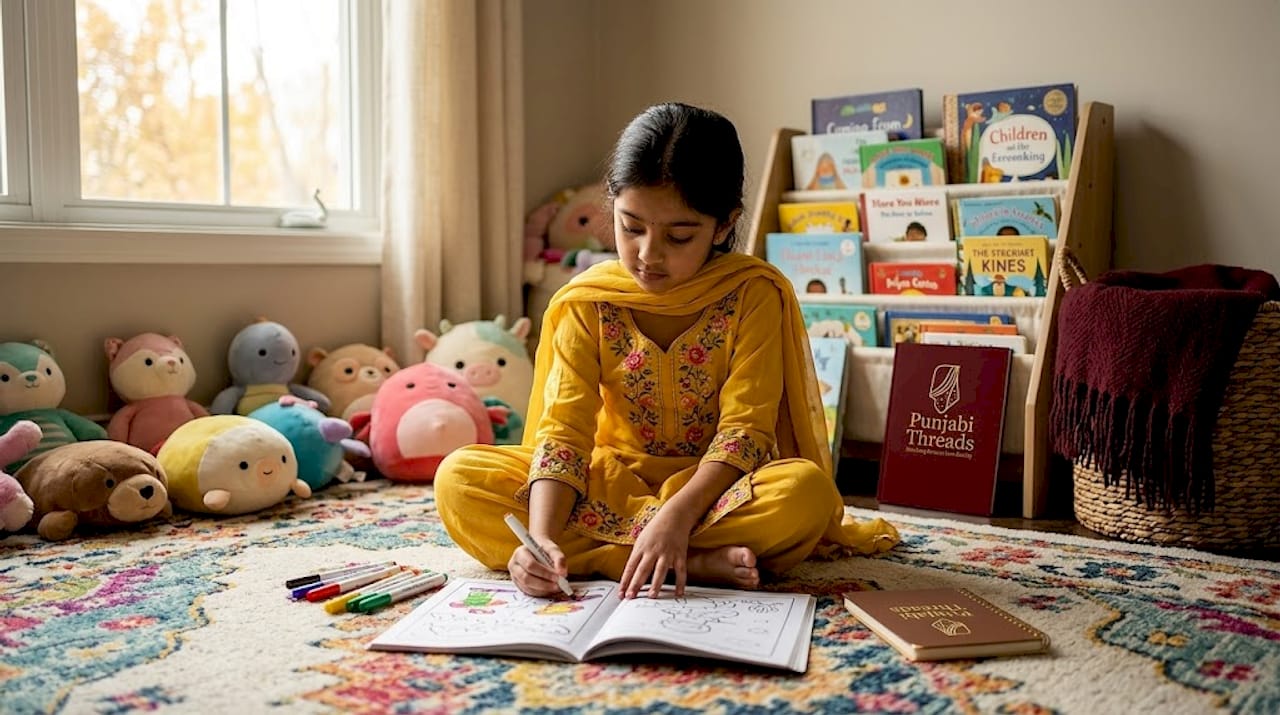
Children’s versions of the outfit balance this tradition with practical realities. Fabrics are chosen for softness. Closures use elastic rather than hooks. The outfit components are simplified so kids can move freely and parents can dress them quickly. None of this dilutes the cultural meaning. It just makes it wearable for small bodies.
Modern salwar kameez styles for kids
Salwar kameez style for children has evolved significantly over the past decade. Parents today have access to a much wider range of silhouettes, fabrics, and design details than previous generations did.
| Style | Description | Best for |
|---|---|---|
| Sharara suit | Flared pants from the knee down, paired with a short kameez | Weddings, formal events |
| Palazzo set | Wide-leg trousers with a long tunic | Everyday wear, family gatherings |
| Anarkali suit | Floor-length flared kameez over fitted pants | Festive occasions, parties |
| Jacket-style kameez | Short kameez layered with a decorative jacket | Winter weddings, receptions |
| Patiala suit | Deeply pleated salwar with a shorter kameez | Casual wear, cultural festivals |
These popular children’s styles reflect how traditional silhouettes have been adapted without losing their core identity. A sharara suit on a six-year-old at a family wedding looks festive and age-appropriate. A palazzo set in breathable cotton works just as well for a casual Eid morning visit.
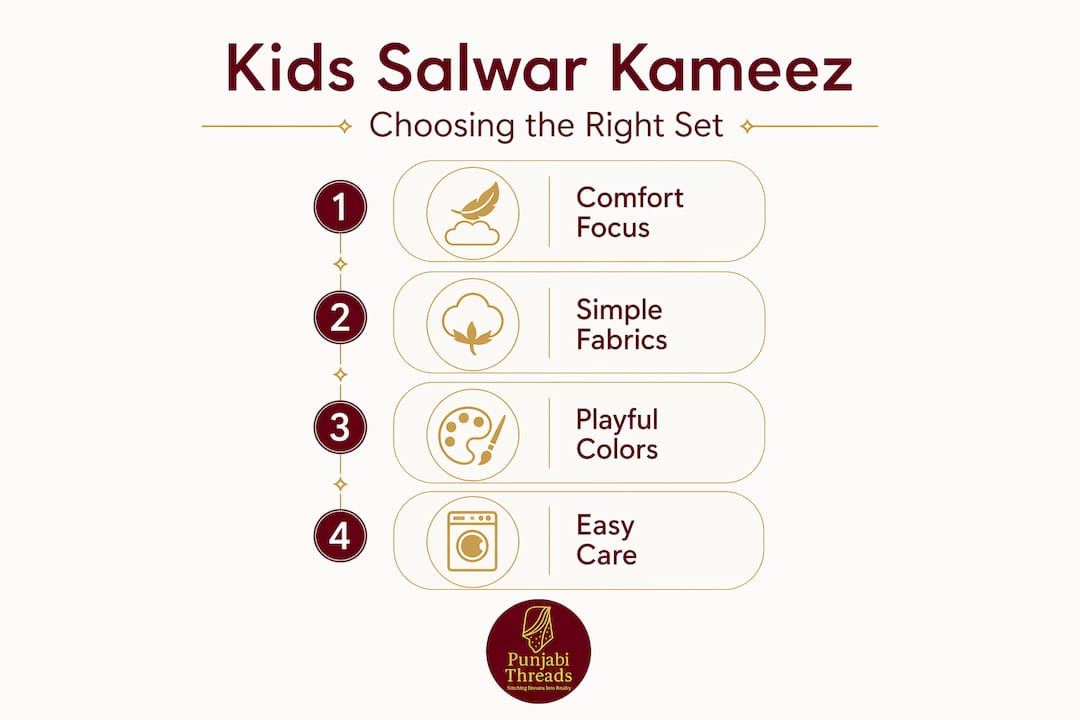
The shift in fashion trends for kids salwar kameez is also moving toward minimal embroidery and coordinated color palettes. Lightweight, coordinated ethnic wear is trending because it lets kids feel comfortable without the weight of heavy zari or stonework pulling at their shoulders all day.
Fabric choice reflects this shift too. Breathable cotton and rayon linings are now standard recommendations for children’s ethnic wear, even when the outer fabric is silk or net. The outer layer creates the visual impression. The inner lining determines whether your child spends the event smiling or scratching.
Pro Tip: For children under seven, avoid heavily beaded or stone-embellished kameez. The embellishments can come loose and pose a choking risk. Look for thread embroidery or printed designs instead.
Kids’ salwar kameez today also feature vibrant colors and playful prints that reflect a child’s personality while honoring the aesthetic tradition of ethnic wear. This is one area where modern design genuinely improves on the past. Children actually want to wear outfits that feel like theirs.
How to choose kids salwar kameez for any occasion
Knowing what the outfit means is useful. Knowing how to buy the right one is what gets you through the school festival, the wedding season, and the family Eid photo without stress.
Here’s how to match your choices to the occasion and your child’s needs:
- For formal events like weddings: Choose silk, georgette, or net outer fabrics with a cotton or rayon lining. Look for embroidery rather than heavy stonework. An Anarkali or sharara silhouette photographs beautifully and feels occasion-appropriate.
- For festivals like Diwali or Baisakhi: Cotton suits with phulkari embroidery or block print work well. They’re comfortable for active kids who will spend hours running around, and the cultural reference is clear.
- For everyday wear or school cultural days: Lightweight cotton palazzo sets or simple Patiala suits in bright prints are the most practical. They wash easily and dry fast.
- For cooler months or winter events: Jacket-style kameez in velvet or brocade layers beautifully over warm underlayers and looks polished without requiring a shawl.
Beyond occasion, fabric maintenance matters. Children’s ethnic wear should be hand-washed or placed in a garment bag for machine washing on a gentle cycle. Most embroidered pieces do best with cold water and air drying flat. Keeping the outfit in a muslin cloth bag between wears helps preserve embellishments and prevents color transfer.
One often-overlooked consideration: fit. Salwar kameez should have some room to grow but not so much that the kameez drags or the salwar bunches at the knee. Regional salwar fitting differences mean that a Patiala-style salwar looks intentionally voluminous while a straight-cut salwar should sit cleanly. Knowing which style you’re buying helps you judge the right fit.
My perspective on dressing kids in traditional wear
Working with families at Punjabithreads, I’ve had hundreds of conversations with parents who feel a mix of pride and uncertainty when it comes to dressing their children in salwar kameez. They want to get it right. They worry about appropriateness, comfort, and whether their child will actually cooperate.
What I’ve learned is that the kids who grow up wearing traditional clothing with confidence are the ones whose parents treated it as normal rather than special. That sounds simple. It’s actually a meaningful shift in approach. When a salwar kameez is just “what we wear to Nani’s house,” a child accepts it naturally. When it only appears for high-stakes events with instructions not to get it dirty, children learn to associate it with stress.
I’ve also seen the tension between honoring traditional craftsmanship and chasing modern trends. Supporting authentic artisan work matters, not just culturally but practically. A hand-embroidered suit made with care lasts through multiple children and holds its shape. A cheaply printed version rarely survives a single wash cycle.
My honest advice: buy fewer outfits and buy them better. One well-made salwar kameez that fits your child properly, breathes well, and connects to your family’s specific regional tradition is worth ten generic festival sets. The meaning of the outfit lives in the details you choose thoughtfully.
— Punjabi
Dress your child in something worth wearing
At Punjabithreads, we know how much it means to get traditional children’s clothing right. Whether you’re shopping for a wedding guest look or a cultural day at school, the difference between an outfit that gets worn once and forgotten and one that becomes a family memory usually comes down to fit, fabric, and craftsmanship.
Our kids ethnic wear collection includes sharara suits, Anarkali dresses, Patiala sets, and embroidered party gowns, all designed with children’s comfort and movement in mind. Every piece is available with custom stitching based on your child’s measurements, so you never have to guess at sizing again. For families in Melbourne looking for something specific, our custom salwar kameez service lets you choose fabric, embellishment style, and cut to match exactly what your occasion calls for. Reach out to us at Punjabithreads and let us help you find something your child will actually want to wear.
FAQ
What does kids salwar kameez mean?
A kids salwar kameez is a traditional South Asian outfit made up of three pieces: a kameez (tunic), salwar (loose trousers), and dupatta (scarf). It carries deep cultural significance as everyday and festive wear for children across South Asia and diaspora communities worldwide.
What is the difference between salwar and kameez?
The kameez is the tunic or top piece, while the salwar refers to the loose trousers. Together they form the foundation of the outfit, with the kameez typically reaching the hip or knee and the salwar gathered at the waist.
What salwar kameez styles work best for young children?
Palazzo and sharara cuts are the most practical for young children because the wide-leg design allows easy movement and independence. Anarkali styles work well for formal events where mobility is less of a priority.
What fabric should I choose for my child’s salwar kameez?
For children, look for outfits with a soft cotton or rayon lining even if the outer fabric is silk or net. Breathable inner linings prevent skin irritation during long events and make the outfit much more comfortable for extended wear.
Where can I buy kids salwar kameez in Australia?
Punjabithreads offers a full range of kids salwar kameez styles in Melbourne, including custom stitching options based on individual measurements. You can browse available styles and fabrics online or contact the boutique directly for personalized guidance.


