
Blog
The Role of Dupatta in Bridal Wear: A Style Guide


The dupatta is not an afterthought you toss over your shoulder before walking down the aisle. The role of dupatta in bridal wear runs far deeper than decoration. It carries centuries of cultural memory, marks life’s most significant ceremonies, and when draped with intention, transforms an outfit into something truly unforgettable. If you have been treating it like a scarf that matches your lehenga, this guide will change how you think about it completely.
Table of Contents
- Key takeaways
- The role of dupatta in bridal wear and its cultural roots
- Dupatta draping techniques and the double dupatta trend
- How the dupatta shapes your bridal silhouette
- Practical tips and pitfalls for wearing a bridal dupatta
- My take on what the dupatta really does
- Find your perfect bridal dupatta with Punjabithreads
- FAQ
Key takeaways
| Point | Details |
|---|---|
| Cultural weight matters | The dupatta carries ritual significance in ceremonies like Chunni Chadhai, not just aesthetic value. |
| Draping technique shapes the silhouette | How you wear your dupatta defines the visual balance of your entire bridal look. |
| Double dupatta adds versatility | Combining one heavy and one lightweight dupatta lets you honor tradition while staying comfortable. |
| Fabric choice affects function | Lightweight fabrics like net or tulle work best for head veils, while heavier pieces suit shoulder drapes. |
| One dupatta, multiple looks | Practicing two or more draping styles with the same fabric lets you restyle across different wedding events. |
The role of dupatta in bridal wear and its cultural roots
Ask any bride who has gone through a traditional South Asian wedding and she will tell you the moment the dupatta was draped over her felt different from anything else that day. That feeling is not accidental.
The Chunni Chadhai ceremony uses a red dupatta to symbolize prosperity, happiness, and marital bliss, formally marking the bride’s acceptance into the groom’s family. It is not a fashion moment. It is a threshold. The groom’s female relatives conduct this act of draping as a gesture of protection and blessing, transforming the bride’s identity in front of her community.
Red remains the most loaded color in bridal dupatta tradition, but the symbolism does not stop there. Ivory signals purity in some communities, while gold-embroidered pieces signal prosperity. Fabric choice carries meaning too. Silk speaks to formality and celebration. Chanderi suggests refinement. Georgette offers grace with movement.
“The dupatta ties deeply to South Asian heritage, symbolizing modesty, respect, and freedom. Rebranding it as a mere fashion scarf erases this cultural significance.”
The symbols woven into the fabric and the direction of the drape also carry weight. Placing the dupatta over the left shoulder has traditionally conveyed modesty and elegance, though modern brides now choose drapes based on comfort and personal aesthetics rather than strict rules. That shift matters. It means you get to honor the meaning while making it yours.
Key cultural functions the dupatta serves in bridal ceremonies:
- Marking formal acceptance into a new family during Chunni Chadhai
- Conveying blessings from elders through the act of draping
- Signaling marital commitment through color and embellishment choices
- Creating a visual symbol of transition from daughter to bride
Dupatta draping techniques and the double dupatta trend
The way you drape your dupatta has more impact on your overall bridal look than most brides realize going in. You can have the most beautifully embroidered lehenga in the room and still look off if the dupatta sits awkwardly. Conversely, a well-executed drape pulls even a simpler outfit into sharp focus.
Here is a breakdown of the major draping styles and what each one does for your silhouette:
| Draping Style | Best For | Key Benefit |
|---|---|---|
| Traditional left shoulder | Classic bridal ceremonies | Timeless elegance, cultural resonance |
| Saree style | Brides wanting a draped flow | Adds length, creates a graceful sweep |
| Cape style | Reception or sangeet | Modern and free, easy to move in |
| Belt style | Fashion-forward brides | Defines the waist, adds structure |
| Head veil with shoulder pin | Nikah or religious rituals | Modest, ceremonial, deeply traditional |
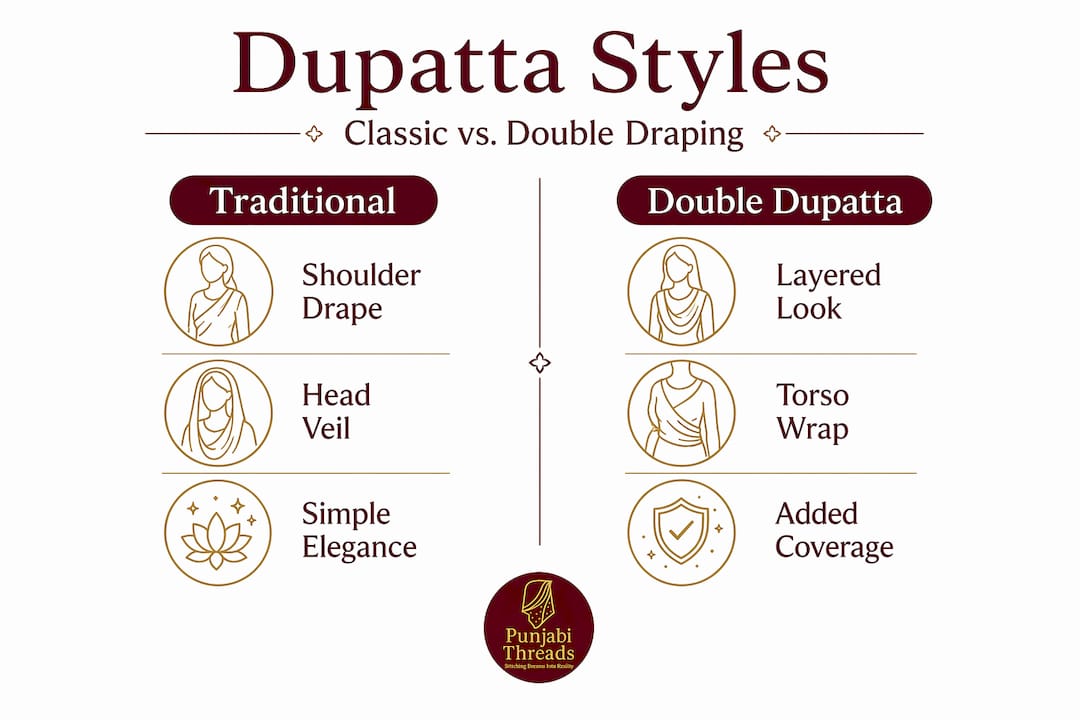
The double dupatta style has become one of the most talked-about trends in bridal fashion because it genuinely solves a real problem. Brides want the drama and cultural depth of a fully draped veil, but they also need to move, eat, and dance. Combining one heavier embroidered dupatta around the torso with a lighter net or tissue veil over the head gives you both. The heavier piece grounds the look and showcases craftsmanship. The lighter piece adds delicacy and suits the veil aesthetic without weighing your head down for eight hours.
Pro Tip: Test your dupatta draping with your full jewelry before the wedding day, including maang tikka, necklace, and jhumkas. Some draping styles snag on earrings or conflict with tikka placement. Finding that out during a trial session is far better than realizing it during the pheras.
Fabric weight matters enormously in deciding your draping style. Heavy silk or velvet works beautifully for a shoulder drape pinned to the blouse, but it is not your friend as a head veil unless it is supported by strong foundational pinning to the lehenga or blouse at multiple points. Advanced draping techniques rely on strategic pinning using specialized clips and safety pins placed under embellishments to prevent snagging and slipping throughout the day.
You can also explore ethnic wear trends to see how contemporary brides in Australia are blending traditional draping conventions with modern silhouettes and fabrics.
How the dupatta shapes your bridal silhouette
There is a reason top bridal designers treat the dupatta as a primary design element rather than an accessory they add at the end. Poor draping can undermine an expensive lehenga, while expert draping transforms the entire look into something that reads as polished and intentional in every photograph.
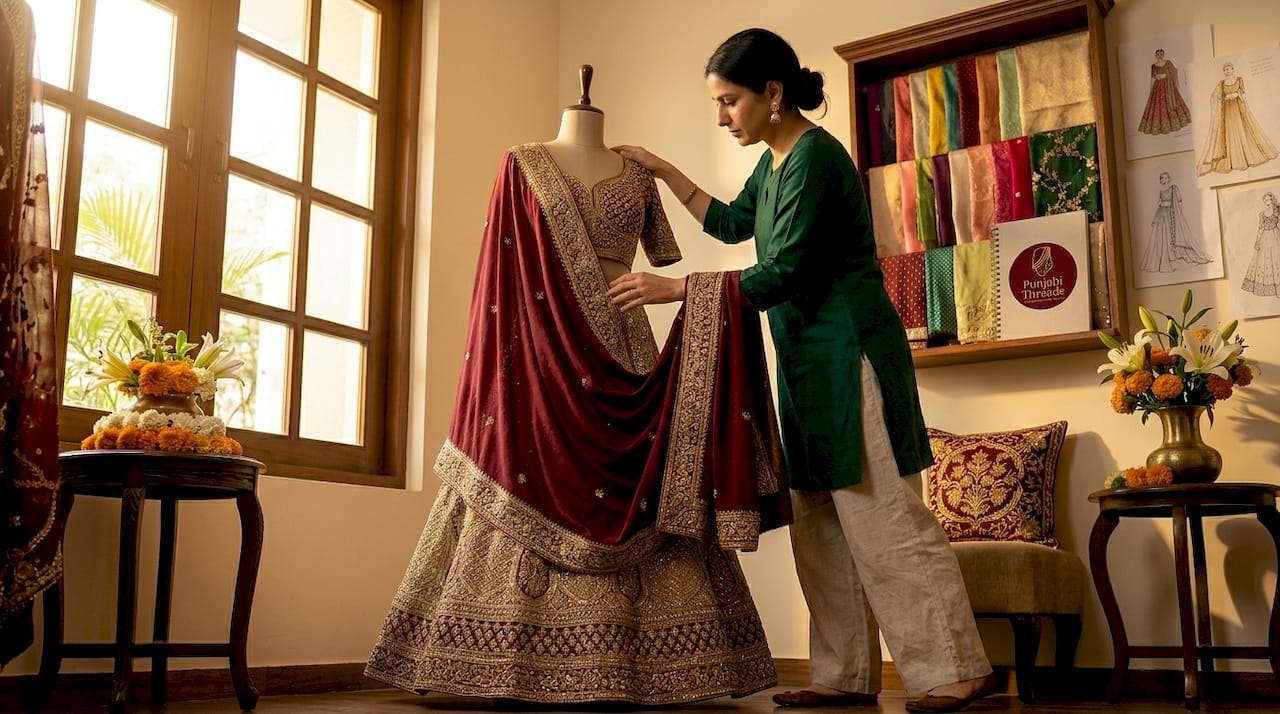
Think of it this way. Your bridal silhouette is a composition. The lehenga creates the base. The blouse frames the top. The dupatta is the element that controls flow, draws the eye, and determines whether your look feels heavy, airy, dramatic, or soft. When it is draped well, it moves with you. When it is thrown on carelessly, it just gets in the way.
Body type plays a significant role in which styles serve you best. Taller brides can wear flowing dramatic dupattas with long trailing ends, which add grandeur without overwhelming their frame. Petite brides generally benefit from shorter, more structured arrangements that do not shorten the visual line of the body. If you are working with a heavily embroidered lehenga, a plainer dupatta with a single decorative border lets the skirt breathe. If your lehenga is minimal, a richly worked dupatta becomes the star.
Key considerations when choosing dupatta styling for your body and bridal look:
- Heavy embroidery on both the lehenga and dupatta creates visual noise. Pick one piece to be the focal point.
- Contrast or tonal matching both work, but the dupatta’s border should complement, not fight, the lehenga’s color palette.
- Occasion matters. A long cathedral veil-style drape suits a main ceremony. A cape drape suits a reception.
- Consider your wedding photography style because certain draping techniques photograph dramatically better than others depending on lighting and movement.
Pro Tip: Ask your bridal stylist or boutique to show you the dupatta draped on your actual body, not just on a mannequin. The weight distribution, fall, and overall proportion read differently when the outfit is on you.
Practical tips and pitfalls for wearing a bridal dupatta
Most bridal dupatta disasters come down to one of two things. Either the dupatta was not secured properly or it was not chosen with the day’s practical demands in mind. Both are entirely preventable.
Here is a step-by-step approach to making sure your dupatta works with you all day:
- Pin the foundation first. Always begin by securing the dupatta to the blouse or lehenga at multiple anchor points before adjusting the drape. A single pin at the shoulder will not hold through three hours of ceremony.
- Use the right pins. Invest in flat-back safety pins and bridal saree pins. Standard safety pins can scratch skin or catch on embroidery. Test them against your fabric before the day.
- Match fabric weight to function. Lightweight fabrics like net or tulle work best for head veils because they sit without pulling. Reserve heavier silk or embroidered pieces for shoulder and torso draping where gravity works in your favor.
- Rehearse the drape. Walk, sit, and hug someone while wearing the full pinned drape. If anything shifts or falls, adjust the pinning before the wedding day.
- Plan for restyling. Learn at least two distinct draping styles for your dupatta so you can shift from a formal ceremony drape to a looser reception style with the same fabric.
Restyling the same dupatta across events is one of the smartest moves a bride can make. Structured pinned drapes suit religious rituals and formal ceremonies. Cape or shoulder drapes work beautifully for sangeet or reception settings where you want to feel lighter and more mobile. Modern brides restyle across wedding functions using the same fabric to create fresh looks without changing the entire outfit.
Pro Tip: Have a trusted bridesmaid who knows your draping plan. She can quickly re-pin or adjust your dupatta between events or after photos without you needing to step away.
My take on what the dupatta really does
I have worked with so many brides who come in focused entirely on the lehenga or the suit fabric, and the dupatta is practically an afterthought. They ask about it last. They budget for it last. And then they see it draped correctly for the first time and the whole expression on their face changes.
The dupatta is the piece that makes a bridal outfit feel complete. Not because of tradition alone, but because it does something structural to the look. It connects the outfit to the body, adds movement, and softens the overall composition. Without it, even the most elaborate bridal ensemble can read as unfinished.
What surprises most brides is how much the dupatta carries emotionally too. When I hear women talk about the Chunni Chadhai or the moment their mother draped the dupatta over them before they walked out, it is never about the fabric. It is about the gesture. The meaning lives in the act.
My honest advice: treat your dupatta as part of the design, not as the thing you figure out the morning of. Choose it with the same care you give to every other element. Practice the drape. Understand what it means in your tradition. And then wear it with intention rather than obligation. The difference shows in every photograph.
— Punjabi
Find your perfect bridal dupatta with Punjabithreads
At Punjabithreads, we understand that getting your bridal dupatta right is as much about heritage as it is about fit and fabric.
Whether you are looking for a custom-stitched suit with a perfectly matched dupatta or need guidance on fabric choices that honor your cultural traditions, our Melbourne boutique is built for exactly this. We offer personalized consultations where you bring your measurements, your vision, and your cultural requirements, and we help you build an outfit that feels as meaningful as it looks. Explore our range of bridal Punjabi suits in Melbourne or get clarity on the custom vs. ready-made decision before you commit. The right dupatta is out there. We help you find it.
FAQ
What is the cultural significance of the dupatta in weddings?
The dupatta carries deep symbolism in South Asian bridal traditions, representing modesty, respect, and family acceptance. During ceremonies like Chunni Chadhai, a red dupatta is draped by the groom’s female relatives to mark the bride’s formal welcome into her new family.
How do brides wear a dupatta for different wedding events?
Brides typically use a formal, pinned drape for religious ceremonies and switch to a looser cape or shoulder style for receptions or sangeet. Practicing two draping techniques with the same dupatta allows brides to restyle across multiple events without changing their outfit.
What fabric works best for a bridal dupatta head veil?
Lightweight fabrics like net or tulle are recommended for head veils because they sit without pulling and stay secure with less pinning. Heavier embroidered fabrics are better suited to shoulder or torso draping where the weight is better supported.
What is the double dupatta style and who is it for?
The double dupatta style combines one heavier dupatta draped around the torso with a lighter veil over the head, offering both cultural depth and practical comfort. It suits brides who want the visual drama of a full bridal veil without the discomfort of wearing a heavy fabric on their head for hours.
How do I choose the right dupatta draping style for my body type?
Taller brides can carry flowing, dramatic dupattas with long trailing ends, while petite brides benefit from shorter, more structured draping arrangements that maintain visual length. The key is to try the drape on your actual body with your full outfit before committing to a style.


