
Blog
Why Thread Type Matters in Ethnic Suits

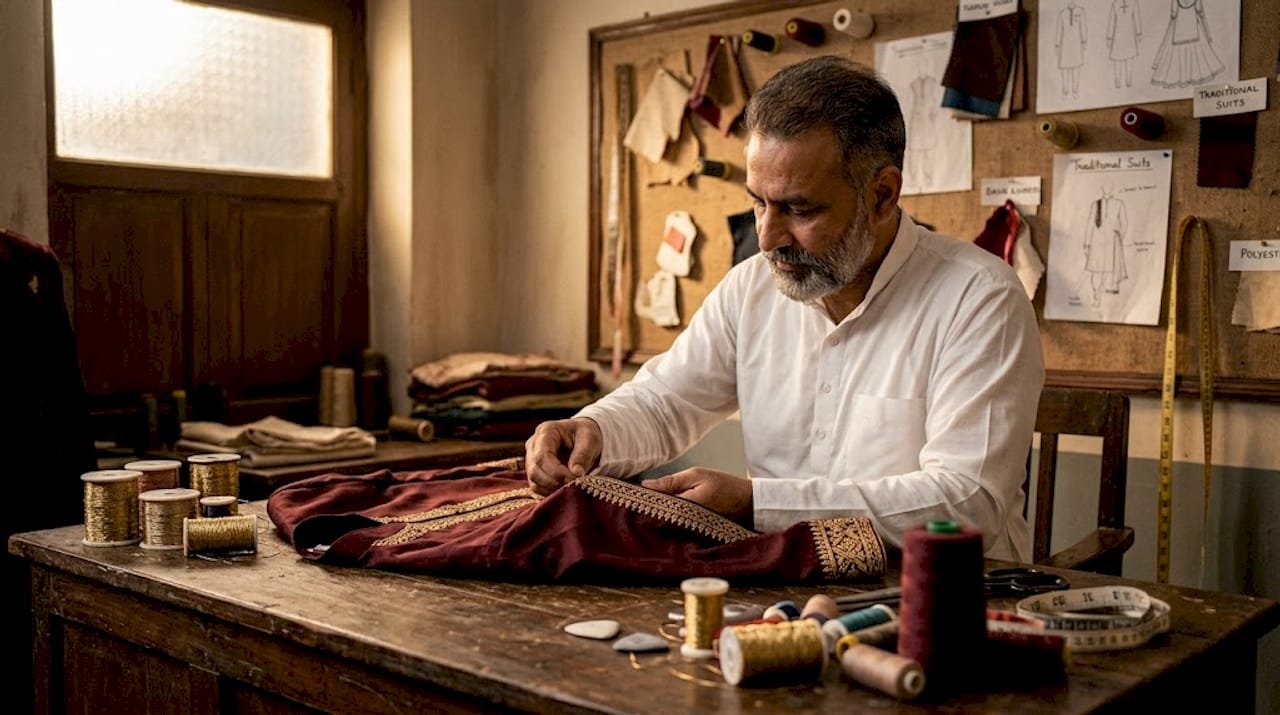
Most people buying ethnic suits spend hours choosing the right fabric, embroidery, and color. Almost no one thinks about the thread. That blind spot is exactly why thread type matters in ethnic suits more than most shoppers ever realize. The thread holding your garment together determines how long the seams last, whether embroidery stays intact after washing, and how the finished suit actually looks on your body. Get it wrong, and no amount of beautiful fabric will save you from a suit that falls apart after two wearings.
Table of Contents
- Key Takeaways
- Why thread type matters in ethnic suits: the basics
- How thread type affects durability and appearance
- Matching thread to fabric and embroidery style
- Caring for your suits based on thread type
- My take on why thread gets overlooked
- Get expert thread selection with every suit at Punjabithreads
- FAQ
Key Takeaways
| Point | Details |
|---|---|
| Thread drives durability | The thread type directly controls seam strength and determines how well your suit holds up over time. |
| Polyester outperforms cotton | Polyester thread offers superior tensile strength and stretch recovery, making it better suited for fitted ethnic silhouettes. |
| Zari quality varies widely | Pure zari lasts decades while imitation zari degrades within one to two years, so identifying the difference matters. |
| Thread must match fabric weight | Using the wrong thread weight on delicate fabrics causes puckering, tearing, or permanent embroidery distortion. |
| Maintenance depends on thread type | How you store and clean your suit should change based on what thread was used in its construction. |
Why thread type matters in ethnic suits: the basics
Before you can make smart choices, you need to understand what thread types are actually used in ethnic garment construction. Three main categories dominate the space, and each behaves very differently on your suit.
Polyester thread is the most widely used option in modern ethnic suit construction. It is strong, slightly elastic, and resistant to moisture. These properties make it especially useful for high-stress areas like side seams, armholes, and fitted bodices where the fabric stretches and moves with your body.
Cotton thread carries a longer history in traditional ethnic wear. It produces a matte finish that blends naturally with cotton fabrics, and it has been used in hand-stitched garments for generations. That said, it comes with real limitations:
- Cotton thread has roughly 3% elongation before snapping, compared to polyester’s 15 to 25% stretch recovery
- It loses up to 20% of its strength when wet, which matters during washing
- It is prone to shrinkage, which can cause seams to pucker after the first few washes
- It performs best on natural, loosely woven fabrics where its matte finish is a genuine asset
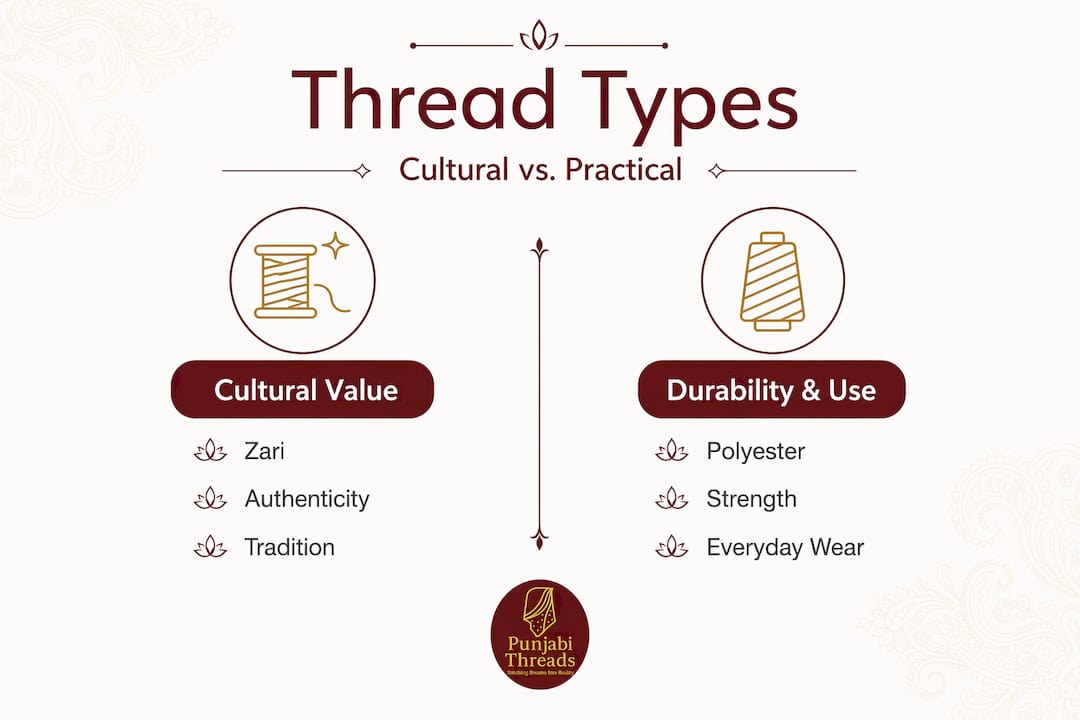
Zari thread is in a category of its own. Used almost exclusively for decorative embroidery on ethnic wear like salwar kameez, lehengas, and shararas, zari comes in three grades: pure, half-fine, and imitation. Pure zari is made from real silver wire coated in gold, wrapped around a silk core. It is tarnish-resistant, has a refined and softer luster, and can last 30 to 50 years with proper care. Imitation zari uses plastic or polyester film to mimic the appearance, but it peels, tarnishes, and degrades within one to two years.
The cultural significance of thread materials in ethnic fashion runs deep. Authentic zari on a wedding suit is not just decoration. It is a marker of quality, craftsmanship, and value that experienced buyers recognize instantly.
How thread type affects durability and appearance
Knowing the categories is one thing. Understanding the real-world impact of thread selection on your garment is where things get specific.
Here is a direct comparison of the three main thread types across the factors that matter most:
| Thread type | Tensile strength | Elasticity | Colorfastness | Ideal use in ethnic suits |
|---|---|---|---|---|
| Polyester | High (30% stronger than cotton) | 15 to 25% stretch | Excellent | Seams, lining, fitted construction |
| Cotton | Moderate (drops 20% when wet) | ~3% before snapping | Good | Loose kurtas, natural fabric suits |
| Pure zari | Moderate (metallic core) | Low | Excellent | Fine embroidery, heirloom garments |
| Imitation zari | Low | Very low | Poor | Budget embroidery, short-term wear |
Polyester thread resists abrasion four to ten times better than cotton in high-friction zones. That is a significant difference on a garment you plan to wear to multiple events. When your dupatta catches on a chair or your armhole seam flexes during dancing at a wedding, polyester thread absorbs that stress. Cotton thread in the same situation is far more likely to snap.
For embroidery, the stakes are even higher. Up to 40% of sewing project failures trace back to incorrect thread selection. On ethnic suits with dense embroidery panels, using the wrong thread weight creates fabric distortion that no amount of steaming can fully fix.
Pro Tip: If you are buying a ready-made suit rather than having it custom stitched, gently pull on a visible seam near the armhole. If the thread gives too easily or the seam gapes with minimal pressure, cotton thread was likely used where polyester would have been stronger.
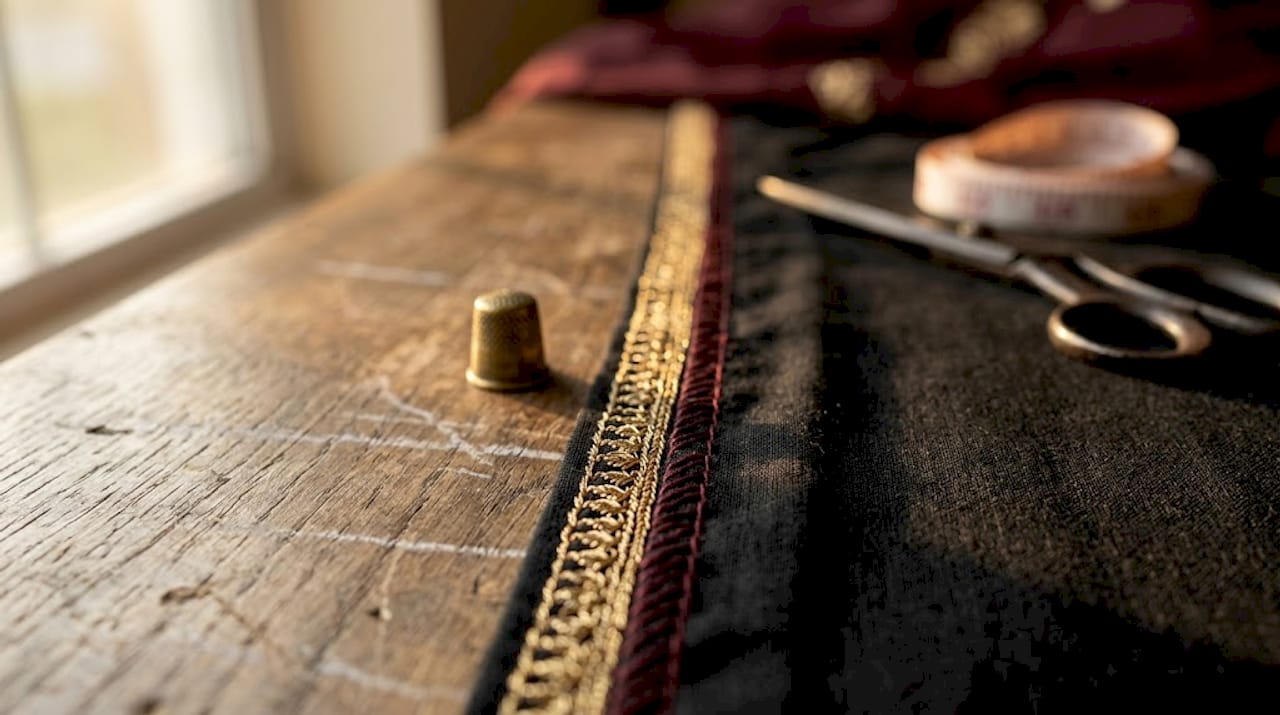
The appearance factor matters too. Imitation zari has a bright, flashy shine that consumers often confuse with quality. Real zari has a softer, more refined glow. If a suit looks almost metallic under fluorescent lighting, that is a red flag, not a selling point.
Matching thread to fabric and embroidery style
Choosing the right thread is not just about picking the strongest option available. It is about matching thread properties to the specific fabric and embroidery style of your suit.
Here is where many people make costly mistakes:
- Silk and georgette fabrics require fine, lightweight polyester or silk thread. Using a heavier thread on delicate materials causes the fabric to pucker permanently at every stitch point, ruining the drape.
- Cotton lawn and cambric work well with either cotton or fine polyester thread. The weight and weave of these fabrics are compatible with both, but polyester wins when the suit has a fitted cut.
- Heavy fabrics like brocade or raw silk need stronger, heavier thread to match the fabric’s density. Lightweight thread in a dense fabric leads to seam failure under the tension of wearing.
- Metallic zari embroidery requires careful handling during stitching. Heavy metallic embroidery needs robust threads to prevent breakage mid-design, while fine embroidery needs lightweight thread to avoid distorting the base fabric.
The principle that guides all of this is what stitching professionals call the “seam is a team” concept. Thread, needle, and fabric must work together in balance. When one element is mismatched, the weakest link takes all the stress and eventually breaks. Using thread that is too strong for a delicate fabric actually causes the fabric to tear before the thread does.
Pro Tip: When choosing thread for ethnic suits, match the thread weight to the fabric weight first, then factor in the seam stress level. A fitted kameez in silk georgette needs fine, elastic polyester thread, not a heavy-duty industrial thread that would be appropriate for denim.
This is also why custom stitching gives you a genuine advantage over ready-made options. A skilled tailor selects thread type and weight based on your specific fabric and the garment’s cut, rather than using a one-size-fits-all approach.
Caring for your suits based on thread type
Once you understand what thread is in your suit, care becomes much more straightforward. The thread composition should directly inform how you wash, iron, and store the garment.
- For polyester-threaded suits, machine washing on a delicate cycle in cold water is generally safe. Polyester thread withstands repeated washing without losing significant strength or color. Avoid high heat in drying, which can cause the thread to slightly distort, even if the fabric survives fine.
- For cotton-threaded suits, hand washing is strongly preferred. Cotton thread shrinks when exposed to hot water and loses significant strength when wet, which means aggressive washing is actively shortening the seam life of your garment.
- For suits with zari embroidery, breathable storage is non-negotiable. Wrap the suit in a soft muslin cloth rather than plastic. Plastic traps moisture, which accelerates tarnishing in both real and imitation zari. Store flat or loosely rolled rather than tightly folded to prevent crease lines through the embroidery.
- When ironing zari embroidery, always iron on the reverse side with a pressing cloth between the iron and the garment. Direct heat degrades zari fiber, dulls the metallic sheen, and can cause imitation zari to melt or peel.
- For repairs, match the original thread type as closely as possible. Using polyester to repair a seam originally stitched in cotton creates uneven tension across the seam, which causes the surrounding stitches to loosen over time.
Proper care can extend garment lifespan significantly. A suit with pure zari, stored correctly and cleaned carefully, maintains its quality for decades. An imitation zari suit handled the same way will still degrade within a few years because the thread itself has a short lifespan built in.
My take on why thread gets overlooked
I have seen it happen so many times. A customer brings in a beautiful suit for alterations, and when we open the seams, the thread is already fraying at stress points. The fabric is flawless. The embroidery looks stunning. But whoever stitched it used the cheapest available cotton thread on a fitted silhouette in silk. The garment was never going to last.
The frustrating part is that consumers are not taught to ask about thread. When people compare ethnic suits, the conversation is always about the fabric, the design, and the embroidery. Thread is invisible, so it feels less important. But that invisibility is exactly what makes it so consequential. You only notice it when something goes wrong.
In my experience, the gap between artisanal tailoring and mass-market production almost always shows up in thread quality first. A mass-produced suit cuts costs where it is least visible. An experienced tailor treats thread selection as a core part of the craft, not an afterthought. I have seen suits made with pure zari and matched polyester seam thread still looking perfect after 15 years of occasional wear. I have also seen suits fall apart after three events because the thread was the wrong type for the fabric.
My honest advice: ask about the thread before you buy or commission a suit. If a tailor cannot tell you what thread they use and why, that tells you something important about how they approach their craft overall.
— Punjabi
Get expert thread selection with every suit at Punjabithreads
At Punjabithreads, thread selection is never an afterthought. Every custom suit we stitch is built with thread type matched precisely to the fabric weight, embroidery style, and how you plan to wear the garment. Whether you are ordering a fitted bridal suit with heavy zari work or a casual salwar kameez for everyday wear, the thread choice is part of the conversation from day one.
If you have been wondering about the difference between custom and ready-made suits, thread quality is one of the clearest arguments for going custom. Our Melbourne-based team brings that attention to detail to every garment. Explore our full range of Punjabi suits in Melbourne or reach out to discuss your next outfit. Your suit should still look as good in ten years as it does on the day you first wear it.
FAQ
What thread type is best for fitted ethnic suits?
Polyester thread is the best choice for fitted ethnic suits because it offers 30% higher tensile strength than cotton and stretches with the garment without snapping at seams under movement.
How can I tell if a suit uses real or imitation zari?
Real zari has a soft, refined luster rather than a bright metallic shine. Very shiny, flashy-looking zari thread is typically imitation, made from plastic film that tarnishes and peels within one to two years.
Can I machine wash ethnic suits with zari embroidery?
No. Suits with zari embroidery should be hand washed gently or dry cleaned. Machine washing stresses zari threads and can cause real zari to unravel and imitation zari to peel significantly faster.
Why does cotton thread cause problems in ethnic suits?
Cotton thread has only about 3% elasticity before snapping, which makes it poorly suited for fitted silhouettes. It also loses up to 20% of its strength when wet, meaning repeated washing weakens seams over time.
Does thread type affect how embroidery looks over time?
Yes. The wrong thread weight causes embroidery to pucker or distort the base fabric permanently. Imitation zari thread dulls and peels, degrading the appearance of embroidery that initially looked high quality.


