
Blog
Punjabi Wedding Dress Code Guide for Every Event


Punjabi weddings are some of the most colorful, layered celebrations you’ll ever attend. This punjabi wedding dress code guide exists because most guests genuinely underestimate what’s involved. Punjabi weddings often span 3 to 5 days, each ceremony carrying its own dress expectations, formality level, and cultural rules. Show up in the wrong color, skip a head covering at the Gurudwara, or wear your fanciest outfit to the Haldi and you’ll stand out for the wrong reasons. This guide walks you through every major event, what to wear, what to avoid, and how to plan your wardrobe like someone who’s done this before.
Table of Contents
- Key takeaways
- 1. Understanding the core criteria for choosing your outfits
- 2. What to wear to the Haldi ceremony
- 3. Dressing for the Mehndi
- 4. Sangeet outfit strategy
- 5. The wedding ceremony: Anand Karaj dress code
- 6. Reception attire: making your grand entrance
- 7. Comparing popular traditional Punjabi wedding dress styles
- 8. Wardrobe planning for a multi-day Punjabi wedding
- My honest take on Punjabi wedding dress etiquette
- Dress for the occasion with Punjabithreads
- FAQ
Key takeaways
| Point | Details |
|---|---|
| Multi-day events need multiple outfits | Plan at least 2 to 3 outfits tailored to the formality and activity of each ceremony. |
| Head covering is non-negotiable at the Gurudwara | All guests must cover their heads during the Anand Karaj. Plan your dupatta style in advance. |
| Avoid red and black as a guest | Red is reserved for the bride; black is considered inauspicious at many Punjabi weddings. |
| Fabric choice matters as much as style | Choose stain-tolerant cotton for Haldi and lighter fabrics for active events like Sangeet. |
| Formality increases as the wedding progresses | Save your most embellished, elaborate outfits for the reception. |
1. Understanding the core criteria for choosing your outfits
Before you pull anything out of your closet or visit a boutique, you need to understand what actually drives outfit decisions at a Punjabi wedding. It is not just about looking good. Style, culture, and practicality all share equal weight.
Cultural and religious etiquette come first. At a Sikh Anand Karaj, guests must cover their heads and dress modestly. This is non-negotiable and applies to everyone regardless of religion or background. Wedding stylists consistently stress observing the invitation dress code since expectations vary by ceremony and family.
Color selection is a real minefield. Guests should avoid red and black at most Punjabi weddings. Red belongs to the bride. Black is often seen as inauspicious. Stick with rich jewel tones, pastels, and festive colors like teal, royal blue, fuchsia, emerald, or gold.
Fabric and activity go hand in hand. You cannot wear heavy silk embroidery to a Haldi. You will regret wearing stiff fabric to a three-hour Sangeet dance floor. Matching your fabric to what you will physically be doing is one of the most underrated Punjabi wedding attire tips there is.
Here is a quick checklist before you finalize any outfit:
- Does it cover your shoulders and knees for the ceremony?
- Can you sit on the floor comfortably in it?
- Does it include or pair well with a dupatta for head covering?
- Is the fabric forgiving if turmeric or henna gets on it?
- Does it fit the formality level of that specific event?
Pro Tip: Ask the bride or a close family member directly about the color palette they are working with for each event. Many families coordinate guest colors per ceremony, and knowing this saves you from accidentally clashing with the bridal party.
2. What to wear to the Haldi ceremony
The Haldi is the most casual event of the entire wedding. It involves applying turmeric paste, which means staining is almost guaranteed. Lightweight, stain-tolerant fabrics in yellow and mustard tones are the standard recommendation for a reason.
Go with cotton or inexpensive cotton blend suits. Do not wear anything you would be heartbroken to ruin. Simple, unembellished salwar kameez sets in yellow, white, or orange are ideal. Skip heavy jewelry and opt for minimal accessories.
Men attending the Haldi do well in a basic cotton kurta pajama in yellow or cream. Keep it simple and expect the fabric to take some hits.
3. Dressing for the Mehndi
The Mehndi is a step up from Haldi in both energy and formality. Guests are seated for long stretches while henna is applied, so silhouette matters. You want something comfortable and floor-friendly.
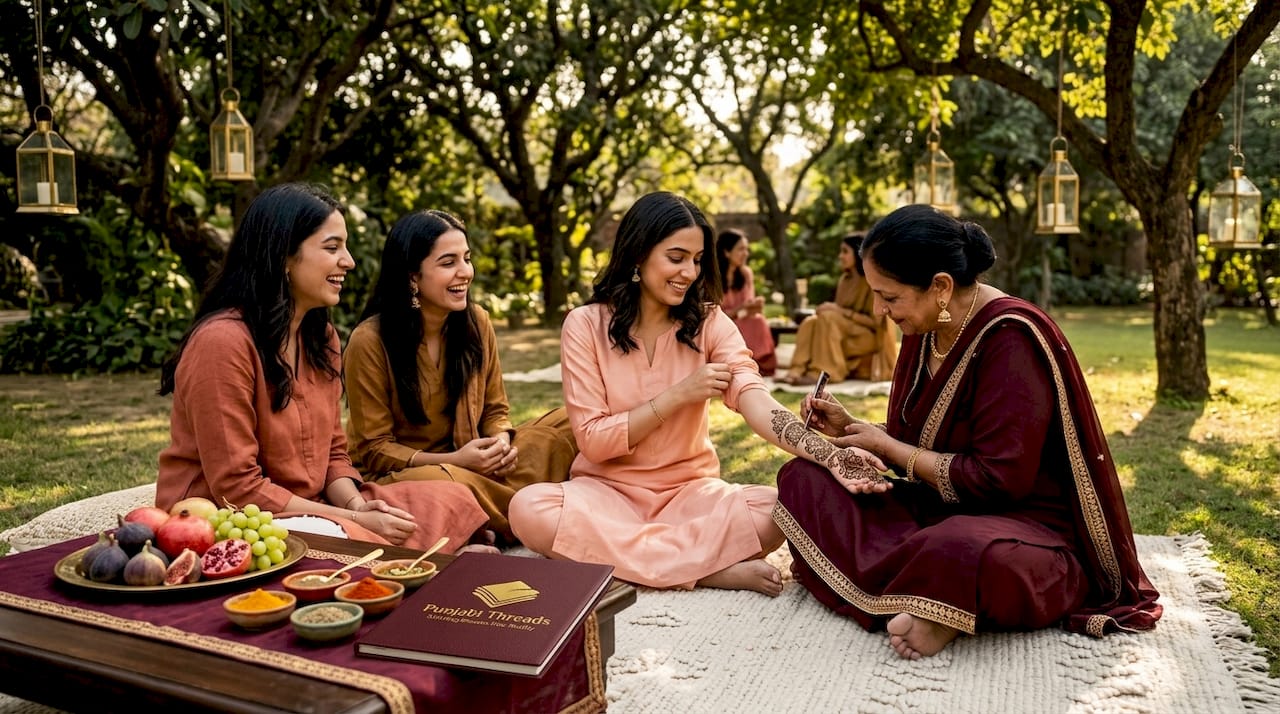
Vibrant greens are the traditional color palette for Mehndi. Think emerald, lime, mint, or any shade of green that photographs beautifully against orange henna. Anarkali suits and flared salwar sets work perfectly here. They look put-together, allow you to sit cross-legged without restriction, and photograph effortlessly.
Men can wear a printed or embroidered kurta pajama in greens or contrasting earthy tones. Juttis or mojris in coordinating colors round off the look perfectly.
Pro Tip: If you are getting henna applied, wear something with sleeves you can push back easily. Tight or embellished cuffs make the whole process awkward and risk smudging fresh mehndi.
4. Sangeet outfit strategy
The Sangeet is where the wedding truly comes alive. It is a dance-heavy, performance-filled celebration, and sharara sets or anarkalis with embroidery that allow movement are the go-to choices. You will be on your feet for hours. Comfort and flair need to coexist.
Choose fabrics like georgette or chiffon that move with you. Heavy brocade or stiff silk will slow you down and cause discomfort by the second hour. Embellishments are welcome here. Mirror work, sequins, and thread embroidery all photograph beautifully under event lighting.
Men stepping up for the Sangeet often wear embellished kurta sets in bold colors. A well-fitted maroon kurta pajama with a Nehru collar makes a sharp statement without looking overdressed. Colorful turbans or safa headwear add a festive touch for those who want it.
5. The wedding ceremony: Anand Karaj dress code
This is the most culturally important event to dress correctly for. The Anand Karaj takes place in a Gurudwara and follows Sikh religious protocols. Getting this wrong is not just a fashion misstep. It shows a lack of respect for the ceremony.
The rules are clear:
- Head covering is mandatory for all guests without exception
- Shoulders must be covered fully at all times
- No red garments as a guest, since red is the bridal color
- Remove footwear before entering the Gurudwara
- Salwar kameez suits, sarees, or anarkalis are all appropriate for women
- Men should wear a kurta pajama, sherwani, or bandhgala with appropriate head covering
Planning ahead for dupatta draping prevents ceremonial awkwardness. Practice pinning or draping your dupatta so it stays on your head without constant adjustment during the ceremony. A simple cotton or chiffon dupatta works better than a heavily embroidered one for this purpose.
Colors that work beautifully for the ceremony include royal blue, deep teal, mustard, purple, and soft pink. You can also explore cape style Punjabi suits that offer a contemporary take while maintaining full modesty.
6. Reception attire: making your grand entrance
The reception is your moment to bring maximum glamour. Outfit formality should increase as the wedding events progress, and the reception is the peak. Heavy lehengas, silk sarees with rich embroidery, and embellished sharara sets are all fair game here.
For women, color choices open up significantly. Deep jewel tones like emerald, sapphire, burgundy, and champagne gold are crowd favorites. Avoid red to respect bridal color territory, but nearly everything else is a statement waiting to happen.
Men attending receptions often opt for sherwanis in navy, ivory, or deep green. A light grey kurta pajama styled with a pocket square and dress shoes works just as well for guests who want elegance without full sherwani formality.
Editors recommend vibrant color and traditional embroidery for Indian wedding guests as a way to honor the cultural occasion. Blending in with the festive atmosphere is a mark of respect, not just good taste.
7. Comparing popular traditional Punjabi wedding dress styles
Choosing between outfit silhouettes is not always obvious, especially when you are juggling multiple events. Here is a breakdown of the most popular Punjabi wedding dress styles and where each fits best.
| Style | Best event | Formality | Comfort | Fabric options |
|---|---|---|---|---|
| Salwar kameez suit | Ceremony, Mehndi | Medium to high | High | Cotton, silk, chiffon |
| Anarkali suit | Sangeet, Mehndi | Medium to high | High | Georgette, net, chiffon |
| Lehenga choli | Reception, Sangeet | Very high | Medium | Silk, brocade, organza |
| Sharara set | Sangeet, Reception | High | Medium to high | Georgette, net |
| Saree | Ceremony, Reception | High to very high | Medium | Silk, chiffon, georgette |
| Kurta pajama (men) | All events | Low to medium | Very high | Cotton, linen, silk blend |
| Sherwani (men) | Ceremony, Reception | Very high | Medium | Silk, brocade |
Women can wear lehengas, anarkali suits, or sarees across events, but the key is matching the outfit weight to the event’s physical demands. A full lehenga at a Haldi is impractical. A simple cotton suit at a reception will feel underdressed.
Pro Tip: Organza and georgette drape beautifully in photos and handle light movement well, making them the most versatile fabrics across Mehndi, Sangeet, and ceremony outfits. They also pack without heavy creasing if you are traveling to attend.
8. Wardrobe planning for a multi-day Punjabi wedding
Planning only one main ceremony outfit is one of the most common mistakes guests make. A full Punjabi wedding typically requires a minimum of three distinct looks across all events.
Here is a practical approach to planning:
- Map every event you will attend and note its formality level, activity type, and any dress code notes from the invitation.
- Assign one outfit per event starting with the most casual and building toward the most formal. Cross-reference your fabric choices against staining risk.
- Identify what can double up with accessory changes. A salwar kameez in a neutral tone can work for the ceremony with a heavy dupatta and transition to a more casual look with a simpler stole.
- Sort your accessories by event. Keep heavier jewelry for the reception, minimal pieces for Haldi, and mid-weight statement earrings for Sangeet and Mehndi.
- Choose footwear that handles long periods of standing and sitting. Embellished block heels and traditional juttis are the sweet spot between function and style.
For men attending the full multi-day event, the minimum wardrobe is a casual cotton kurta for daytime pre-wedding events and a sherwani or embellished kurta for the ceremony and reception. Two outfits can cover all events with the right accessory plan.
Pro Tip: Carry a small stain-remover stick in your bag during Haldi and Mehndi events. Turmeric responds well to immediate treatment, and catching a stain early can save the fabric before it sets.
My honest take on Punjabi wedding dress etiquette
I’ve spent years working closely with families preparing for multi-day Punjabi wedding celebrations, and the same mistakes keep appearing. Guests focus entirely on how their outfit looks and almost nothing on how it functions within the specific ceremony they’re attending.
The head covering issue surprises me most. I’ve seen guests show up to an Anand Karaj with no dupatta at all, scrambling to borrow a scarf at the Gurudwara entrance. That moment of panic is entirely avoidable. Modest, thoughtful head covering is not just a rule. It changes how you experience the ceremony. When you are not fidgeting with a slipping scarf, you actually absorb the ceremony.
My personal favorite guest outfit for a full Punjabi wedding is a well-fitted anarkali in a mid-weight georgette. It photographs beautifully at every event, works with a heavy or light dupatta depending on the occasion, and never restricts movement. I would take a perfectly tailored anarkali over a borrowed, ill-fitting lehenga every single time. Fit is everything. An average fabric in a perfect fit will always outperform expensive fabric that does not sit right on your body.
For men, I always recommend a properly fitted kurta over a standard sherwani that was not made for their measurements. The difference in how they carry themselves is immediate and visible.
— Punjabi
Dress for the occasion with Punjabithreads
Finding traditional Punjabi wedding attire that actually fits right, especially in Melbourne, is not easy. Most ready-made options run small, use inconsistent sizing, and leave you compromising on either comfort or style.
Punjabithreads specializes in exactly this problem. Whether you need a beautifully fitted salwar kameez for a ceremony or a custom kurta for men’s attire, every piece is stitched to your exact measurements and fabric preferences. The difference between a custom piece and a ready-made grab is felt from the first hour you wear it through the final dance at the reception.
If you are weighing your options, the custom vs. ready-made comparison on their site breaks down exactly what each approach delivers for different budgets and timelines. You can also explore the full collection at Punjabithreads or check out current ethnic wear trends in Australia for fresh inspiration before your next event.
FAQ
What should I never wear to a Punjabi wedding?
Avoid red and black as a guest. Red is reserved for the bride, and black is considered inauspicious at most Punjabi wedding celebrations.
Is a head covering required at a Sikh wedding ceremony?
Yes. All guests, regardless of gender or religion, must cover their heads inside the Gurudwara during the Anand Karaj. A dupatta or scarf works well for this purpose.
How many outfits do I actually need for a full Punjabi wedding?
Plan for at least 2 to 3 outfits across the wedding events. Casual stain-tolerant wear for Haldi, festive mid-weight outfits for Mehndi and Sangeet, and your most formal look for the ceremony and reception.
What are the best fabrics for Sangeet and dancing events?
Georgette and chiffon are the strongest choices. They move freely, photograph beautifully, and do not restrict movement during extended dancing.
What do men typically wear to a Punjabi wedding?
Men wear sherwanis, kurta pajamas, or bandhgalas depending on the event. Kurta pajamas suit casual and mid-level events, while sherwanis are standard for ceremonies and receptions.


