
Blog
Why Patiala Salwar Is Popular: Style, Comfort, and Heritage


Few garments carry the weight of royalty and the ease of everyday wear at the same time. The Patiala salwar does exactly that, and understanding why Patiala salwar is popular means looking at both its regal origins and its remarkable ability to adapt. Born in a Punjabi royal court over a century ago, this voluminous, pleated bottom has outlasted countless fashion cycles. Today it shows up in festival crowds, Bollywood films, and Gen Z street style feeds with equal confidence. Here is everything you need to know about what makes this garment genuinely timeless.
Table of Contents
- Key Takeaways
- Why Patiala salwar is popular: the royal story behind it
- Design features that explain the comfort and the look
- Cultural significance that keeps it relevant across generations
- The modern revival and how Gen Z is wearing it now
- How to choose and wear Patiala salwar suits today
- My take on why this garment keeps winning
- Find your perfect Patiala salwar with Punjabithreads
- FAQ
Key Takeaways
| Point | Details |
|---|---|
| Royal origins matter | The Patiala salwar traces back to early 20th century Punjab, giving it a cultural prestige few garments can match. |
| Fabric volume creates comfort | Using roughly 4.5 meters of fabric, the deep pleats allow free movement and natural airflow. |
| Cultural identity runs deep | Worn at Lohri, Baisakhi, and Eid, the salwar functions as both fashion and ethnic symbol. |
| Gen Z is driving the revival | Fusion styling with crop tops and sneakers has made Patiala salwar a streetwear staple in 2026. |
| Custom fit changes everything | Choosing custom-stitched Patiala suits over ready-made options delivers a silhouette that flatters every body type. |
Why Patiala salwar is popular: the royal story behind it
Most people who wear a Patiala salwar today have no idea they are wearing a garment that started as men’s court attire. The style was introduced by Maharaja Bhupinder Singh in early 20th century Punjab, during a reign that lasted from 1900 to 1938. The Maharaja was known for his extravagant tastes, and the garment reflected that. It was designed for physical comfort in the heat while maintaining the visual grandeur expected of royalty.
The transition from men’s royal wear to women’s fashion happened gradually, and it changed the garment’s cultural meaning entirely. Women in Punjab adopted the silhouette and made it their own, pairing it with long kurtas and dupattas that suited the regional aesthetic. The result was something that felt both celebratory and practical.
What makes this history matter for fashion today is the concept of Shahi heritage. The word Shahi means royal in Punjabi and Urdu, and the Shahi heritage adds cultural richness that sets this salwar apart from other ethnic bottoms. Wearing a Patiala salwar is not just a style choice. It carries a quiet association with sophistication and cultural depth that other garments simply do not offer.
Key facts about the Patiala salwar’s origins:
- Originated in the princely state of Patiala in Punjab, India
- Initially designed as men’s court attire before women adopted the style
- Named directly after the city of Patiala, cementing its geographic and cultural identity
- The Shahi or royal connection elevated its status beyond everyday ethnic wear
- Gained widespread popularity in the 1940s and 1950s as women across Punjab embraced the look
Pro Tip: If you are shopping for a Patiala salwar for a wedding or cultural event, look for fabrics like silk or brocade that honor the garment’s royal roots while still being wearable for a full day of celebration.
Design features that explain the comfort and the look
The Patiala salwar’s silhouette is not accidental. Every element of its construction serves a purpose, and once you understand the design, the garment’s popularity makes complete sense.
The most defining feature is the pleating. A traditional Patiala salwar requires about 4.5 meters of fabric, which is roughly double the amount used in a standard salwar. That extra fabric is folded into deep pleats that are stitched together at the top and allowed to flare outward from the hip. The result is a bottom that moves with the body rather than restricting it. In warm climates, this design creates natural airflow that makes the garment far more comfortable than fitted alternatives.
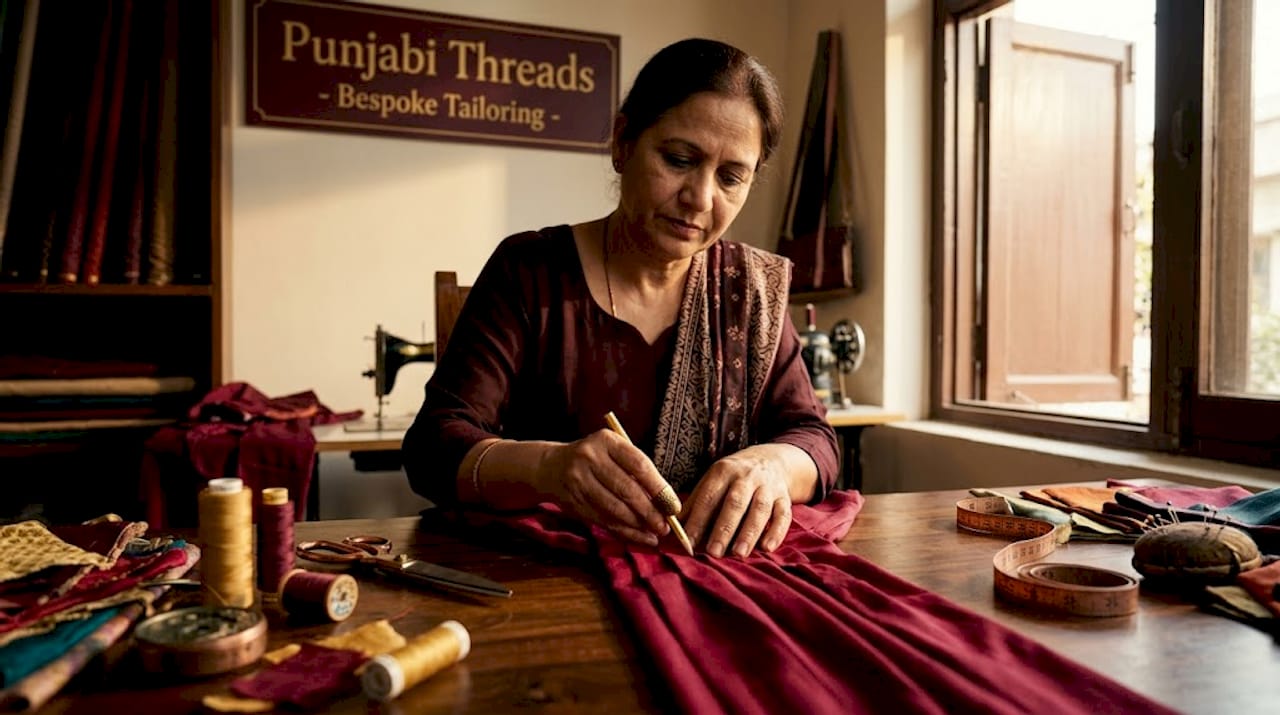
The intricate pleating and stitching techniques create a flow and volume that a simple salwar cannot replicate. This is not just about aesthetics. The structure of the pleats means the garment holds its shape through movement, dancing, and long wear without bunching or losing its silhouette.
Here is how the Patiala salwar compares to other common salwar styles:
| Feature | Patiala salwar | Regular salwar | Semi-Patiala |
|---|---|---|---|
| Fabric used | ~4.5 meters | ~2 to 2.5 meters | ~3 to 3.5 meters |
| Pleat depth | Deep, stitched pleats | Minimal or no pleats | Reduced pleats |
| Silhouette | Voluminous, flared | Straight or tapered | Moderate flare |
| Best for | Festivals, weddings, casual wear | Formal office wear | Daily wear, travel |
| Comfort level | High, especially in heat | Moderate | High |
The semi-Patiala emerged as a practical innovation for women who loved the look but wanted something lighter for daily wear. By reducing the number of pleats while keeping the essential shape, the semi-Patiala delivers the iconic silhouette without the weight or bulk of the traditional version. It is particularly popular for office wear and casual outings where a full traditional Patiala might feel like too much.
Pro Tip: For everyday wear, choose a semi-Patiala in cotton or linen. Save the full traditional version with heavier fabrics like georgette or silk for special occasions where you want the full visual impact.
Cultural significance that keeps it relevant across generations
The Patiala salwar is not just a fashion item. It is a cultural marker. For Punjabi women, wearing one is an act of identity as much as it is a style choice. This is a big part of why Patiala salwar fashion has never truly gone out of style, even when other ethnic trends came and went.
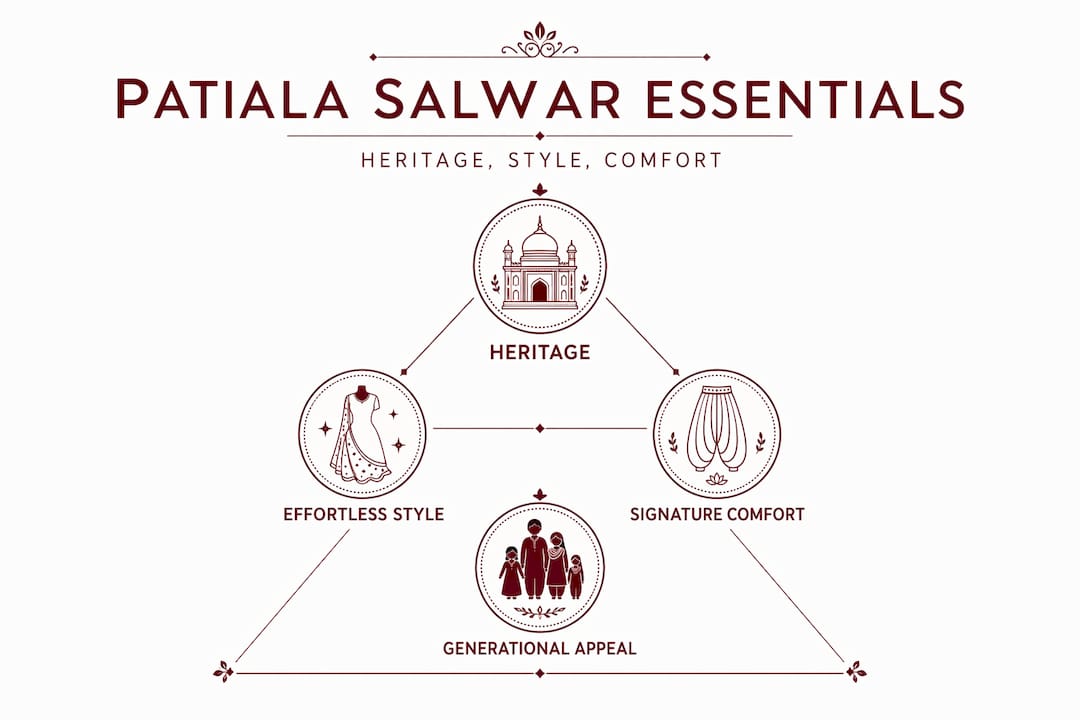
Its role in festivals is central to understanding its staying power. The salwar is worn at Lohri, Baisakhi, and Eid as a standard choice across generations. At these celebrations, wearing a Patiala salwar is not a fashion statement. It is participation in a shared cultural moment. Grandmothers, mothers, and daughters often wear the same garment style at the same event, which creates a continuity that very few fashion items achieve.
Bollywood has played a significant role in taking this regional garment global. Films set in Punjab regularly feature Patiala salwars in vibrant colors and embroidered fabrics, and when audiences across India and the diaspora see these images, they associate the garment with joy, celebration, and cultural pride. That emotional association is powerful and lasting.
The cultural significance of Patiala salwar fashion includes several layers:
- It serves as a symbol of Punjabi identity for diaspora communities in countries like the UK, Canada, and Australia
- It appeals to women of all ages, from teenagers at college festivals to grandmothers at family gatherings
- The garment’s association with dance, especially Bhangra and Giddha, makes it a natural choice for cultural performances
- Its presence at religious and seasonal festivals gives it a sacred dimension beyond everyday fashion
- The internet has nationalized regional styles like the Patiala salwar, creating a shared fashion language across India and the global South Asian diaspora
The modern revival and how Gen Z is wearing it now
Something interesting happened in the last few years. The Patiala salwar stopped being just a traditional garment and became a streetwear option. This shift did not happen overnight, and it was not driven by fashion houses. It was driven by young women on social media who figured out that a voluminous pleated bottom pairs incredibly well with a fitted crop top and a pair of white sneakers.
Gen Z’s adoption of Patiala salwar has included fusion styles that combine western streetwear elements with traditional ethnic bottoms. The result looks fresh, culturally grounded, and genuinely wearable for everyday life. Influencers and celebrities have normalized this casual styling in 2026, and the trend shows no sign of slowing down.
The Patiala salwar’s resurgence reflects a broader shift toward lifestyle-driven clothing focused on comfort and versatility. Young women are tired of choosing between looking stylish and feeling comfortable. The Patiala salwar solves that problem without asking them to compromise their cultural identity.
Here is how the modern Patiala salwar revival is showing up in real styling choices:
- Crop top and Patiala: A fitted or slightly cropped kurta or plain crop top paired with a bold printed Patiala salwar creates a balanced silhouette. The volume at the bottom is offset by the fitted top, making the overall look proportional and modern.
- Western jacket layering: Throwing a denim or structured blazer over a traditional kurta and Patiala salwar adds a fusion element that works for casual outings and even semi-formal events.
- Sneakers instead of juttis: Swapping traditional flat shoes for clean white sneakers instantly shifts the look from ethnic to street-ready without losing the cultural core of the outfit.
- Minimalist accessories: Gen Z styling often pairs a Patiala salwar with simple gold hoops and a small shoulder bag rather than traditional heavy jewelry, letting the garment speak for itself.
- Sustainable fabric choices: Patiala suits are accessible at different price points, and younger buyers are increasingly choosing natural fabrics like cotton and khadi that align with sustainability values.
How to choose and wear Patiala salwar suits today
Knowing why Patiala salwar is popular is one thing. Knowing how to wear it well is another. The right choices in fabric, fit, and styling make a significant difference in how the garment looks and feels on your body.
Start with fabric. Cotton and lawn are the best choices for daily wear and warm weather. Georgette and chiffon work beautifully for evening events and festivals because they catch light and move elegantly. Silk and brocade are reserved for weddings and formal occasions where you want maximum visual impact.
Practical styling guidance for Patiala salwar for women:
- Choose a top that ends at or just above the hip. A top that is too long will hide the pleats and flatten the silhouette.
- If you have a petite frame, opt for a semi-Patiala with smaller pleats to avoid being overwhelmed by volume.
- Taller women can carry the full traditional Patiala with deep pleats and still look proportional.
- For Vaisakhi and festive occasions, pair a bright Patiala salwar with a contrasting kurta and minimal embroidery for a look that is celebratory without being overdressed.
- When choosing between custom and ready-made suits, custom stitching gives you control over pleat depth, waistband fit, and length, which matters enormously with a garment this structured.
Pro Tip: Always get the waistband stitched to your exact measurement. A Patiala salwar that sits correctly at the waist will hang and flare exactly as it should. One that is even slightly off will bunch at the top and ruin the silhouette.
My take on why this garment keeps winning
I have watched fashion cycles come and go, and I have seen plenty of “heritage revivals” that lasted one season before disappearing. The Patiala salwar is different, and I think I know why.
Most garments ask you to adapt to them. The Patiala salwar adapts to you. Its volume accommodates every body shape. Its fabric options span every budget. Its styling range covers everything from a village festival to a Melbourne street corner. I have seen women in their seventies wear it with dignity at weddings and women in their twenties wear it with sneakers at brunch, and both looked completely right.
What I find genuinely remarkable is how the garment holds its cultural weight without becoming a costume. Wearing a Patiala salwar in 2026 does not feel like dressing up in something from the past. It feels like claiming something that belongs to you. That is rare. Most traditional garments lose that quality when they get modernized. The Patiala salwar has kept it because the design itself is so sound that it does not need to be reinvented. It just needs to be worn.
The royal Shahi heritage is not just a marketing point. It is the reason the garment carries itself with authority regardless of what you pair it with. That is the kind of design confidence that no trend can manufacture.
— Punjabi
Find your perfect Patiala salwar with Punjabithreads
If reading this has made you want to actually wear a Patiala salwar rather than just admire it, Punjabithreads is the right place to start. Based in Melbourne, Punjabithreads specializes in custom-stitched Punjabi suits that are built to your exact measurements, so the pleats sit right, the waistband fits perfectly, and the length flatters your frame.
Whether you are looking for a traditional full Patiala for a wedding, a semi-Patiala in cotton for everyday wear, or a fusion-ready style for a festival like Baisakhi, Punjabithreads has the fabric selection and tailoring expertise to bring it together. Browse the full range of Punjabi suits in Melbourne or explore the guide on custom vs. ready-made suits to figure out which option suits your needs and budget. Every garment is stitched with the kind of care that makes the difference between a suit you wear once and one you reach for every season.
FAQ
What makes Patiala salwar different from a regular salwar?
A Patiala salwar uses roughly 4.5 meters of fabric with deep stitched pleats that create a voluminous flare, while a regular salwar uses about half that fabric and has a straight or tapered cut. The result is a significantly more comfortable and visually striking silhouette.
Why is Patiala salwar so comfortable to wear?
The deep pleats and extra fabric allow full freedom of movement and natural airflow, making it ideal for warm climates and long events. Unlike fitted bottoms, the Patiala salwar does not restrict movement at any point during wear.
Can Patiala salwar be worn casually, not just for festivals?
Yes. The semi-Patiala style in cotton or lawn fabric works well for everyday wear, and fusion styling with crop tops and sneakers has made the full Patiala a casual streetwear option for many younger women in 2026.
What is the cultural significance of Patiala salwar?
The Patiala salwar originated in the royal court of Maharaja Bhupinder Singh in early 20th century Punjab and has since become a symbol of Punjabi cultural identity, worn at festivals like Lohri, Baisakhi, and Eid across generations.
Is custom stitching better than buying a ready-made Patiala salwar?
Custom stitching gives you control over pleat depth, waistband fit, and length, which matters significantly with a structured garment like the Patiala salwar. Ready-made options work for standard sizing, but custom tailoring delivers a fit that flatters your specific body type.


