
Blog
How to Accessorise a Minimalist Punjabi Suit Stylishly

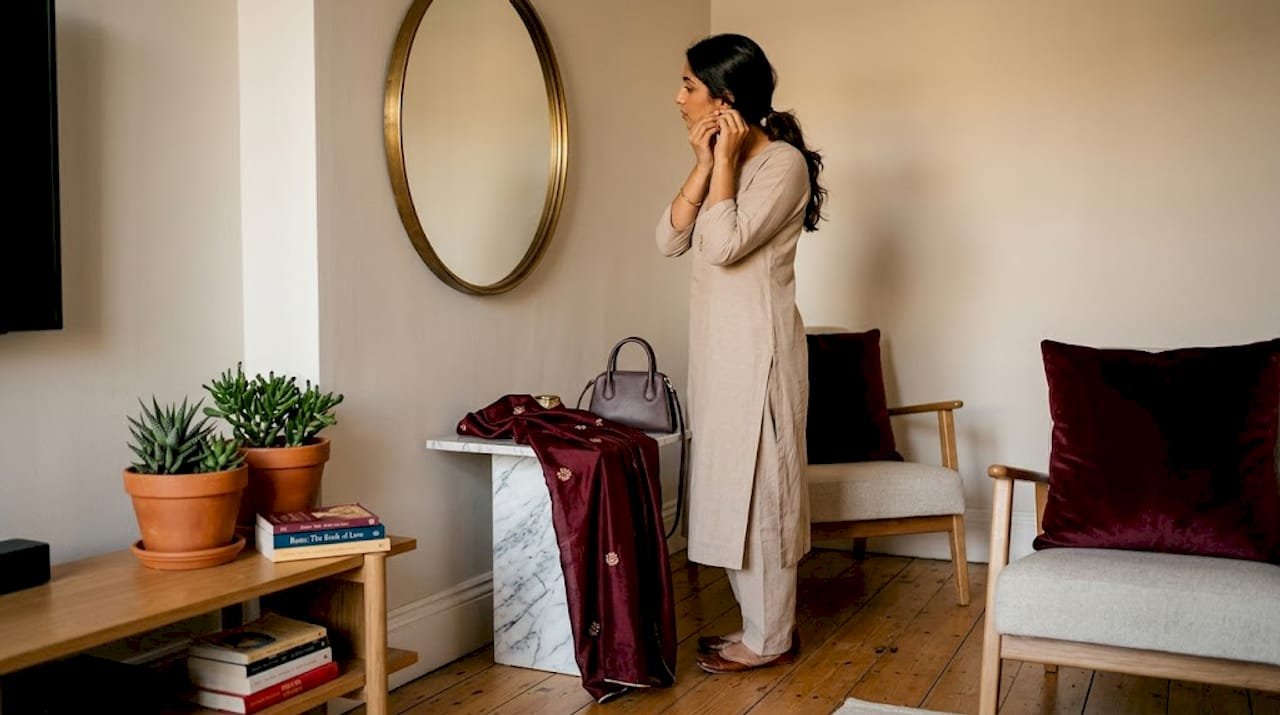
Knowing how to accessorise a minimalist Punjabi suit without disrupting its clean, quiet elegance is genuinely harder than it looks. Too much and you lose the whole point. Too little and the outfit falls flat. The challenge is real: minimalist ethnic wear lives and dies by restraint, and every accessory you add either sharpens the look or clutters it. This guide walks you through exactly what to choose, what to skip, and how to build a look that feels polished, contemporary, and entirely intentional from head to toe.
Table of Contents
- Key Takeaways
- How to accessorise a minimalist Punjabi suit: the foundations
- Choosing jewelry for a minimalist Punjabi suit
- Footwear and bags for minimalist Punjabi suits
- Layering accessories and styling for different occasions
- Avoiding common minimalist styling mistakes
- My take on why restraint is the real style statement
- Find your perfect minimalist suit at Punjabithreads
- FAQ
Key Takeaways
| Point | Details |
|---|---|
| Start with fit and fabric | A well-tailored suit in quality fabric is the foundation every accessory decision builds on. |
| One focal jewelry piece | Choose a single statement item like jhumkas or a choker instead of layering multiple bold pieces. |
| Footwear sets the tone | Neutral juttis or block heels complement minimalist suits without competing for attention. |
| Match metals to embroidery | Coordinate your jewelry metal tones with any thread work or border detail on the suit. |
| Occasion drives the swap | Switch one or two accessories to move the same outfit from daytime casual to evening formal. |
How to accessorise a minimalist Punjabi suit: the foundations
Before you pick a single earring or reach for a clutch, you need to understand what you are working with. Minimalist styling emphasizes restraint, clean silhouettes, neutral or soft color palettes, and high-quality fabrics like organza or modal crepe over heavy embellishments. That context changes everything about how you approach accessories.
The fabric of your suit tells you how much your accessories can do. A stiff brocade or chanderi with a subtle border already carries visual weight. A soft cotton or georgette in a muted tone is a blank canvas. You can push further with the latter. With the former, you pull back.
Silhouette matters just as much. A straight-cut suit with a plain neckline invites a bolder earring. A suit with a structured collar or detailed yoke needs almost nothing at the neck. Understanding this relationship before you open your jewelry box saves you from a lot of trial and error.
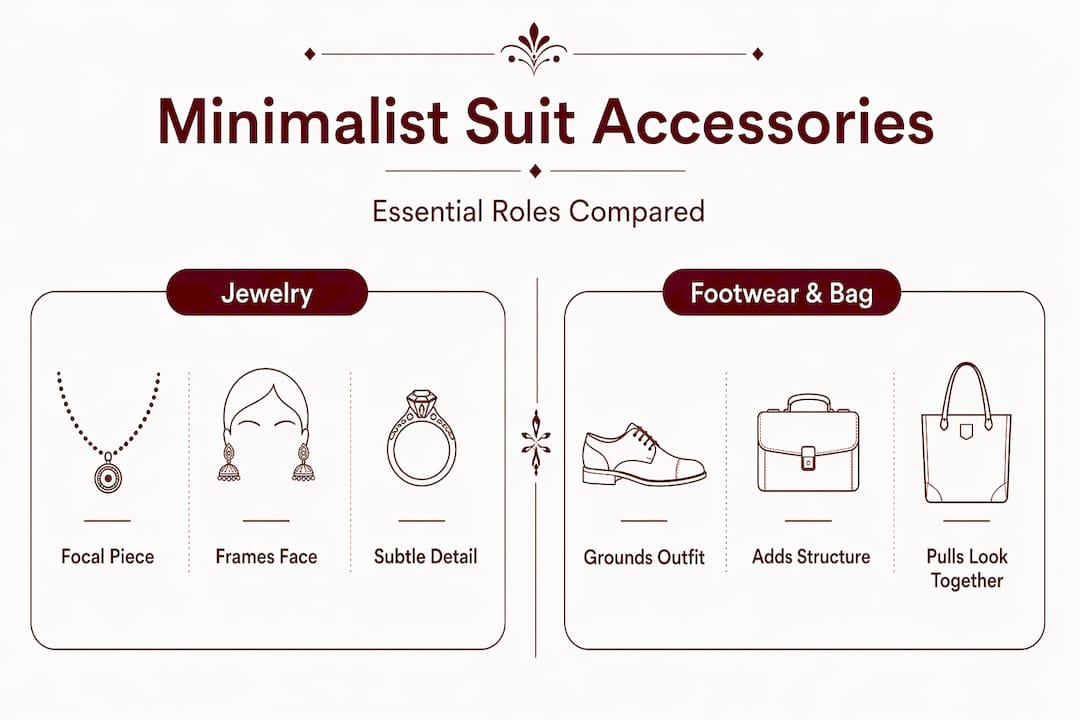
Here is a quick reference for accessory categories and how they interact with minimalist suits:
| Accessory category | Role in minimalist styling |
|---|---|
| Earrings | Primary focal point; often the only jewelry needed |
| Necklace | Secondary; only when neckline is open and plain |
| Footwear | Sets the formality level of the entire look |
| Bag or clutch | Functional accent; should not compete with the outfit |
| Dupatta | Can replace jewelry as a styling element when draped intentionally |
Minor tailoring adjustments like bust darts or slimmed side seams can make a mid-range suit look bespoke, and that matters enormously for minimalist looks. When the fit is perfect, you need fewer accessories to look put together. Tailoring is not an afterthought. It is the base layer that every accessory sits on top of.
Pro Tip: Before styling accessories, put on the suit and look at it in natural light. Note where your eye goes first. That is the area that already has visual weight, and it is probably where you should not add more.
Choosing jewelry for a minimalist Punjabi suit
This is where most people go wrong. The instinct is to layer. A necklace, earrings, a stack of bangles, maybe a maang tikka. The result is a look that fights itself. For minimalist Punjabi suits, choose one focal point for jewelry like oversized jhumkas or a statement choker instead of multiple bold pieces.
Here is how to select and style that one piece with intention:
- Identify your neckline first. A boat neck or high collar means earrings are your only real option. A V-neck or sweetheart neckline opens the door for a delicate pendant or slim choker.
- Match your metal to the suit’s detail. If the suit has gold thread embroidery or a gold border, go with gold-toned jewelry. Silver suits work with silver, oxidized silver, or white metal pieces. Mixing metals on a minimalist outfit reads as an error, not a style choice.
- Choose scale relative to your frame. Oxidized jhumkas add rustic charm and slim hoops work well for everyday casual wear. If you are petite, a large chandelier earring can overpower you. A medium-sized jhumka or a structured hoop tends to work across more body types.
- Let the suit color guide the stone or finish. Pastels pair beautifully with rose gold or pearl accents. Deeper jewel tones like teal or burgundy carry oxidized silver or antique gold with authority.
- Stop at one. A single piece like oxidized jhumkas or a delicate pendant almost always outperforms layering several random jewelry pieces. If you feel the urge to add more, wait ten minutes and look again.
Earrings should anchor the face while necklaces support the outfit’s neckline. When you think of it that way, the decision becomes much simpler. You are not decorating yourself. You are framing the look.
Pro Tip: For daily wear or warm weather events, choose sweat-resistant lightweight jewelry in silver or oxidized finishes. Heavy gold pieces in summer heat are uncomfortable and tend to look overdone against a simple suit.
Footwear and bags for minimalist Punjabi suits
Footwear is the most underrated decision in a minimalist ethnic outfit. Get it right and the whole look clicks. Get it wrong and even a perfectly styled suit looks off.
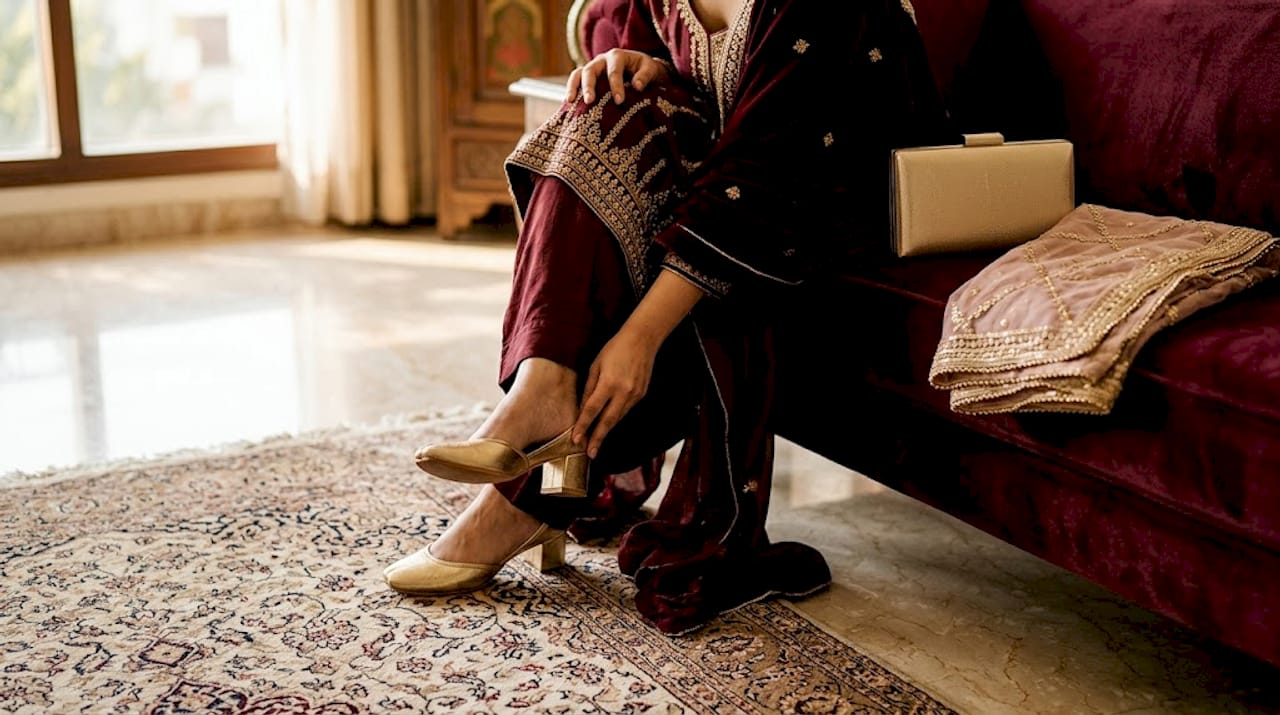
Footwear trends for 2026 favor neutral-toned juttis and block heels, and stilettos are discouraged, especially for outdoor events where heels sink into grass or uneven ground. That is not just a practical note. Stilettos also create a visual sharpness that can clash with the softness of a minimalist suit.
Here is what works and why:
- Neutral juttis in ivory, beige, tan, or metallic gold are the most versatile choice. They add a traditional touch without competing with the suit. A tan jutti under a white cotton suit is quietly perfect.
- Block heels in nude or matching tones give you height and structure without the aggression of a stiletto. They read as polished and modern, which aligns with the quiet luxury ethnic look that is dominating 2026 styling.
- Kolhapuris in natural leather tones work beautifully for casual daytime outfits. They add texture and a grounded, earthy quality.
- Avoid heavily embellished footwear with mirror work or bold prints. On a minimalist suit, that level of detail on your feet pulls the eye downward and fragments the look.
For bags, the rule is similar: simple, structured, and proportionate. A small envelope clutch in a neutral or tonal shade works for formal occasions. A woven or leather potli bag adds texture without loudness for festive events. For daily wear, a slim crossbody in tan or black keeps things clean and functional.
Color coordination between your bag and footwear is not mandatory, but it creates a more intentional finish. Even a tonal relationship, like a cream bag with ivory juttis, reads as considered rather than accidental.
Layering accessories and styling for different occasions
The real skill in minimalist Punjabi suit styling is knowing how to use accessories to shift the same outfit across different settings without starting from scratch.
- For daytime or casual wear: Start with just earrings and flat footwear. Keep the dupatta loosely draped or set it aside entirely if the suit works without it. A small woven bag completes the look.
- For a festive or semi-formal event: Swap the flats for block heels, add a slim bangle or a single delicate ring, and drape the dupatta with intention, perhaps pinned at one shoulder or folded neatly over the arm.
- For evening or formal occasions: Introduce a structured clutch, choose a slightly bolder earring (still one piece), and pin the dupatta symmetrically. A light application of highlighter on the collarbone does more than a necklace ever could.
Texture is your quiet tool. When a suit is plain, a dupatta in a slightly different texture, say a georgette dupatta on a cotton suit, adds visual interest without adding color or pattern. That layering of fabric, not jewelry, is one of the most underused Punjabi suit styling tips available.
Pro Tip: Pin your dupatta rather than letting it hang loose. A pinned dupatta frames the body and creates a cleaner silhouette, which makes any accessories you are wearing read as more deliberate.
Hair and makeup also play a role. A sleek bun or low ponytail keeps the focus on your earrings. A bold lip in a deep shade replaces the need for a necklace by drawing attention upward to the face. These are not afterthoughts. They are part of the accessory equation.
Avoiding common minimalist styling mistakes
Even with the best intentions, a few predictable errors tend to show up. Knowing what they look like makes them easy to correct.
- Too many focal points: If your earrings are bold, your bag is embellished, and your dupatta has heavy embroidery, the eye does not know where to go. Pick one element to lead and let the rest support it.
- Wrong scale: A tiny stud earring on a large-framed person disappears. An oversized statement necklace on a petite frame overwhelms. Scale your accessories to your body, not just to the outfit.
- Ignoring color harmony: Warm and cool tones mixed without intention look unfinished. Check that your jewelry metal, bag, and footwear all sit in the same temperature range as the suit.
- Sacrificing comfort: Accessories you fidget with ruin the look. A bangle that slides constantly, a bag strap that digs in, shoes that hurt after twenty minutes. Discomfort shows in how you carry yourself.
“The most polished looks are never the most loaded ones. Restraint is a skill, and like any skill, it gets easier the more deliberately you practice it.”
Explore current ethnic wear trends in Australia to stay current on what fabrics and silhouettes are resonating right now. That context helps you make smarter accessory decisions from the start.
My take on why restraint is the real style statement
I have seen hundreds of minimalist Punjabi suits come through the door at Punjabithreads, and the pattern is consistent: the women who look the most striking are almost never the ones wearing the most. They are the ones who made one deliberate choice and committed to it.
What I have learned is that most people underestimate how much tailoring does the heavy lifting. When a suit fits perfectly, the body itself becomes the structure. Accessories then become accents, not corrections. That shift in thinking changes everything about how you approach getting dressed.
The quiet luxury movement in ethnic wear is not a trend that will fade next season. It reflects something deeper: a preference for clothes that feel elegant rather than loud, that work across multiple occasions, and that respect the quality of the fabric. A minimalist Punjabi suit done well is exactly that.
My honest advice: if you are second-guessing an accessory, take it off. The version of the outfit with less is almost always the stronger one. Confidence in simplicity is its own kind of statement, and it is one that never goes out of style.
— Punjabi
Find your perfect minimalist suit at Punjabithreads
If this guide has you thinking about your next minimalist Punjabi suit, the starting point is always the suit itself. At Punjabithreads, every garment is custom stitched to your exact measurements, which means the fit that makes minimalist styling work is already built in. No guessing, no compromising on silhouette.
Browse the full collection of Punjabi suits in Melbourne to find clean, contemporary designs in quality fabrics that are made to be styled with intention. If you are weighing your options, the breakdown of custom vs. ready-made suits is worth reading before you decide. For festive occasion inspiration, the Vaisakhi outfit ideas guide shows how minimalist looks translate beautifully to celebration dressing. The Punjabithreads team is also available to help you think through fabric choices and styling direction for any occasion.
FAQ
What is the best jewelry for a minimalist Punjabi suit?
Choose a single focal piece such as oxidized jhumkas, slim silver hoops, or a delicate pendant. One well-chosen item frames the look better than multiple layered pieces.
What footwear works best with minimalist Punjabi suits?
Neutral-toned juttis and block heels are the top choices for 2026. They complement the suit’s clean silhouette without adding visual noise or competing for attention.
How do I accessorise a minimalist Punjabi suit for an evening event?
Swap flat footwear for block heels, choose a structured clutch, and pin your dupatta deliberately. A slightly bolder earring, still just one piece, is enough to shift the look into formal territory.
Can I wear bangles with a minimalist Punjabi suit?
Yes, but keep it to one slim bangle or a single delicate ring rather than a full stack. The goal is to add a quiet accent, not create noise at the wrist.
How does tailoring affect minimalist Punjabi suit styling?
A well-tailored suit reduces how many accessories you need because the fit itself creates structure and elegance. Minor adjustments to the silhouette can make a suit look bespoke and polished without a single piece of jewelry.


