
Blog
How a Lehenga Fitting Transformation Changes Everything

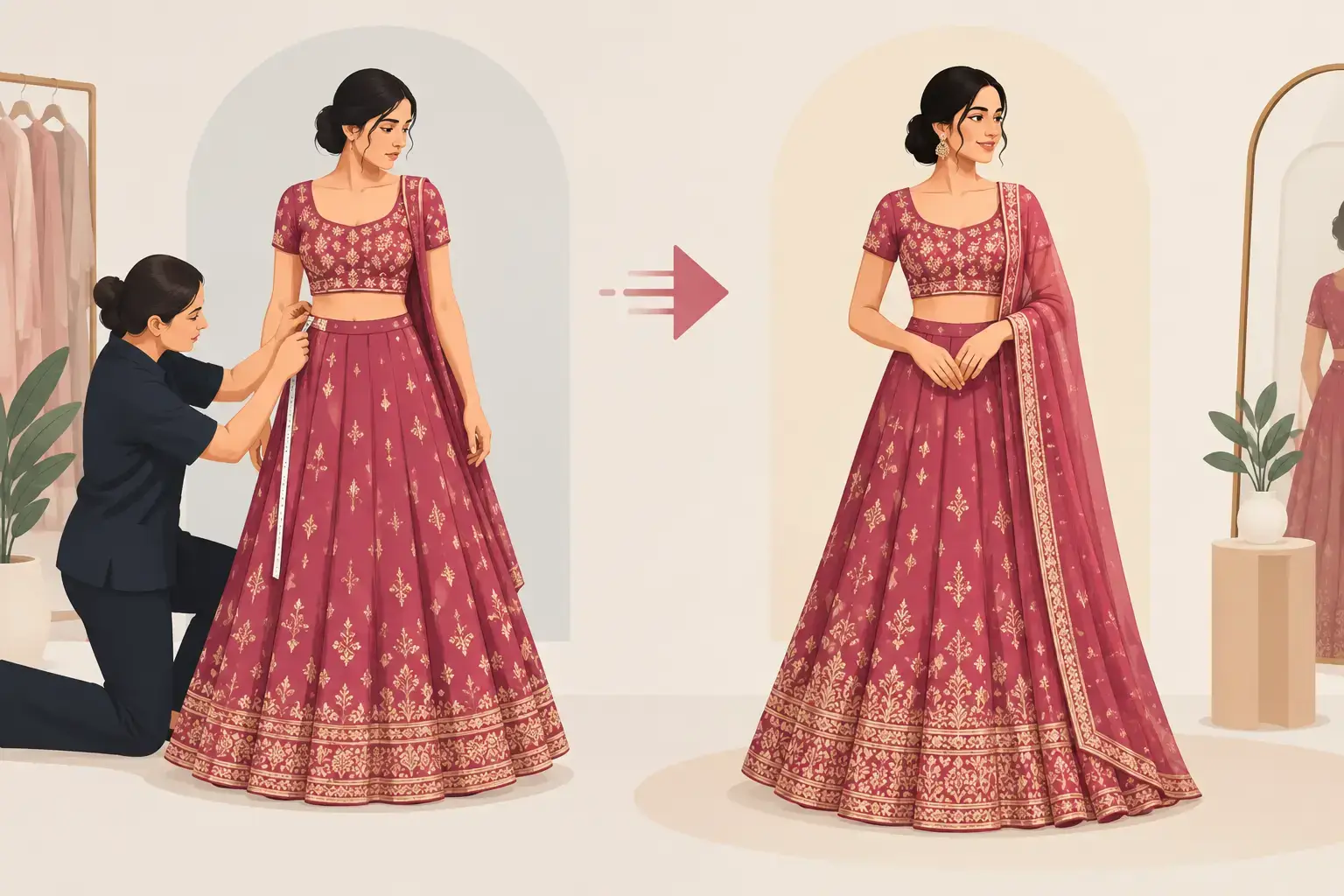
A lehenga can arrive with exquisite embroidery, a rich dupatta, and the exact shade you imagined, yet still not feel like your outfit until it fits your body properly. A thoughtful lehenga fitting transformation changes more than the waist measurement. It gives you the confidence to walk into your wedding, sangeet, reception, or family celebration feeling comfortable, supported, and completely yourself.
For occasionwear, fit is what allows the craftsmanship to shine. The blouse sits smoothly without pulling, the skirt rests at the right point on the waist, and the hem moves beautifully rather than catching under your shoes. These small details make a remarkable difference in photographs, on the dance floor, and during a long day of celebration.
What Makes a Lehenga Fitting Transformation So Noticeable?
Lehengas are designed in layers: a structured blouse or choli, a flowing skirt, and a dupatta that completes the silhouette. Because each piece has a different purpose, one loose or restrictive area can affect the entire look. A skirt that slips down can make the hem too long. A blouse that is tight at the armhole can limit movement and create strain across delicate embroidery. A dupatta without the right placement may conceal the neckline or keep needing adjustment.
The transformation starts with balance. Your tailor considers where the lehenga should sit, how much ease you need to sit and dance, and how the blouse should support the bust and shoulders. This is especially valuable for embellished bridal lehengas, where heavy handwork, sequins, stones, and layered lining add weight and structure.
The goal is not to make the garment as tight as possible. A beautiful fit has room for real movement. You should be able to raise your arms for a photo, greet guests comfortably, eat a full meal, and enjoy the music without constantly adjusting your outfit.
The Fitting Details That Create a Polished Silhouette
A blouse tailored for support and comfort
The blouse is often the most transformative part of a lehenga alteration. A well-fitted choli should stay in place while allowing comfortable breathing and natural movement. The shoulder seam, bust shaping, neckline, sleeve opening, and back closure all contribute to the result.
For bridal wear, built-in cups, supportive lining, and carefully positioned closures can reduce the need for extra layers underneath. This depends on the fabric and blouse design. A lightly embroidered georgette blouse may need a different approach from a heavily embellished velvet or silk design. The best solution always respects the original construction rather than forcing a generic alteration.
Neckline adjustments also deserve attention. A neckline can be raised for more coverage, reshaped to sit flatter, or refined so it frames jewelry beautifully. When the blouse and jewelry work together, the entire look feels intentional.
A waistband that stays where it belongs
The lehenga skirt should sit securely at your natural waist or preferred lower-waist position without digging in. This sounds simple, but it affects drape, comfort, and proportion. If the waistband is too loose, the skirt can slide down through the event. If it is overly tight, it may create discomfort and change how the panels fall.
Expert tailoring can refine the waistband, side seams, hooks, drawstring, or internal support depending on the garment. For a bridal lehenga, a secure closure is particularly important because the skirt may carry substantial embroidery or a wide border. The aim is reliable support that remains discreet beneath the fabric.
The right hem for heels, flats, and movement
Hem length can transform the way a lehenga looks in an instant. Too long, and it pools on the floor or catches as you walk. Too short, and the proportions can feel unfinished. The ideal length depends on the shoes you will actually wear, not the shoes you happened to have on during a first fitting.
Bring your wedding heels, jutti, or reception shoes to the appointment whenever possible. If you plan to change shoes later in the event, discuss that early. Some brides choose a length that works best with heels for formal photographs, while others prioritize a comfortable, floor-skimming length for dancing. There is no single correct choice – it depends on the occasion and how you want to move.
Dupatta placement that looks effortless
A beautifully embroidered dupatta can add drama, softness, and tradition, but it must be draped with purpose. Its weight, border, and fabric affect how it falls over the shoulder, across the arms, or over the head for ceremonial moments.
During a fitting, it helps to try the complete look together: lehenga, blouse, dupatta, jewelry, and even the intended hairstyle if possible. This reveals whether the dupatta needs discreet pinning points, whether the shoulder area needs extra security, and which drape best highlights the blouse and skirt. The finished effect should look graceful, not overly pinned or restrictive.
When Should You Schedule Lehenga Alterations?
Timing protects both your garment and your peace of mind. For a wedding lehenga or detailed partywear, schedule your first fitting several weeks before the event. This allows time for careful alterations and a final check once your blouse, jewelry, and shoes are ready.
Avoid leaving significant changes until the final days before an event, especially when the garment has dense embroidery, beadwork, or complex construction. Adjusting a plain skirt is very different from reshaping a blouse with handwork along the side seams. Fine embellishment often needs to be removed and restored carefully so the altered area retains its original finish.
If your measurements are likely to change before the event, let the tailor know. It may be wiser to complete structural work first, then make final waist or blouse refinements closer to the date. Honest guidance is part of getting a fit that feels comfortable rather than uncertain.
What to Bring to Your Fitting Appointment
A complete fitting gives the tailor the clearest view of your final look. Bring the footwear you expect to wear and the shapewear or undergarments you have chosen. If you have your jewelry and dupatta, bring those too. Even a quick try-on with these pieces can reveal whether the neckline, hem, or drape needs adjustment.
Wear or bring the same type of bra you plan to use on the day. The difference between a padded bra, a strapless style, and built-in blouse cups can change the way the blouse sits. If your event includes a high-energy dance performance, mention it. A reception outfit needs a different level of movement from a lehenga intended mainly for a ceremony and portraits.
It is also helpful to speak up about your preferences. Some clients love a sharply defined, fitted waist; others want a little extra ease for comfort during a long celebration. Some want a modest blouse adjustment, while others want a more contemporary sleeve, neckline, or back design. The right tailoring reflects your style, your event, and your comfort level.
Expert Tailoring Preserves the Beauty of the Garment
A lehenga should never look as though it has been altered in a hurry. The best work preserves the embroidery pattern, keeps the lining smooth, and ensures closures are secure. This is where experience with South Asian occasionwear matters. Fabrics such as net, tissue, silk, velvet, georgette, and brocade each respond differently to stitching, reshaping, and pressing.
At Punjabi Threads, expert tailors approach each garment with close attention to fabric, embroidery, and silhouette. Whether you are refining a ready-made lehenga, preparing bridal attire, or creating a coordinated family look for a special function, the focus remains the same: Perfect Fit, Every Time.
Your lehenga is meant to be worn, celebrated in, and remembered in. Give it the fitting time it deserves, then step into your occasion knowing every detail has been crafted with love.