
Blog
How to Style Patiala Salwar With Modern Grace

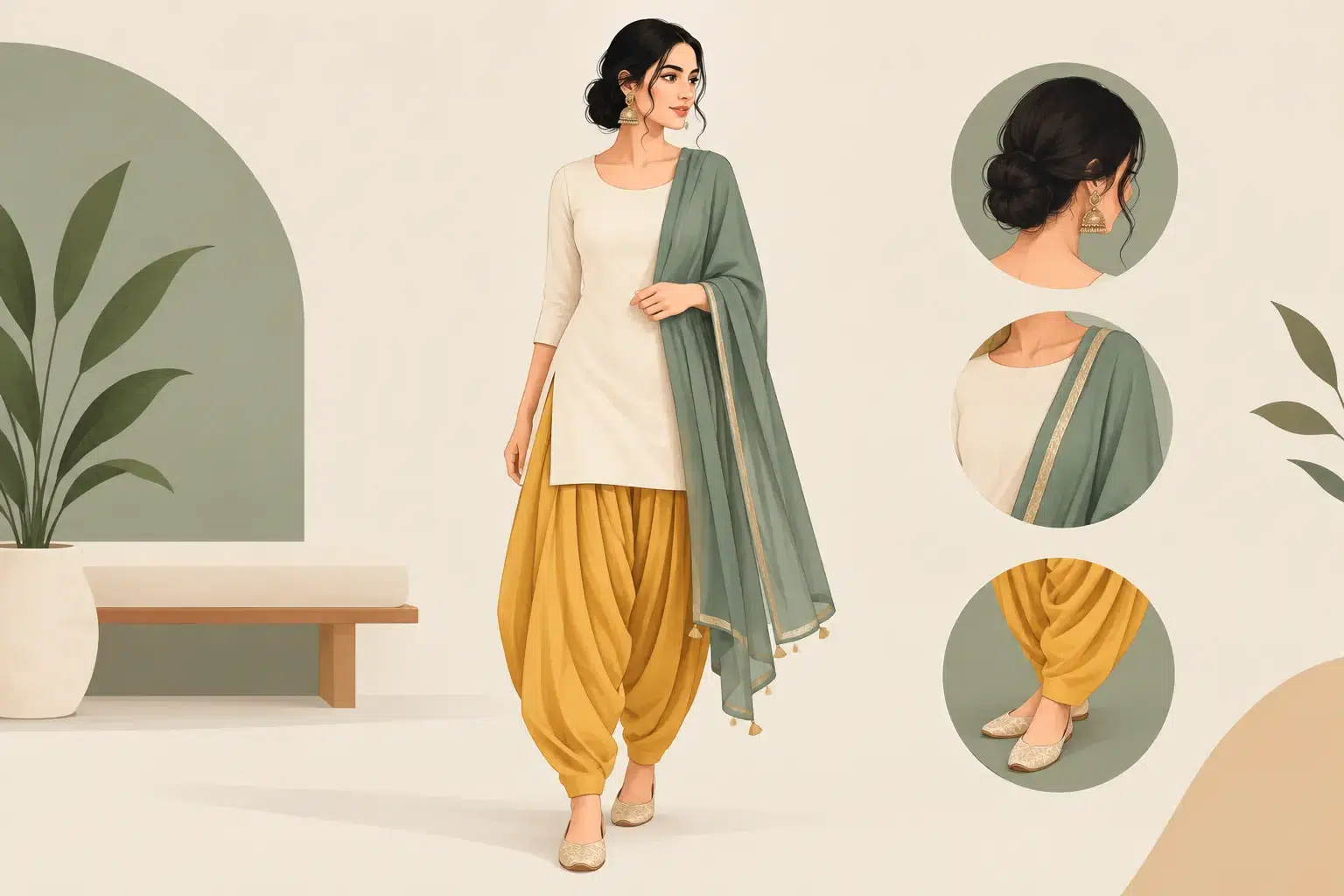
A Patiala salwar has a presence of its own. Its generous pleats, soft movement, and unmistakably Punjabi silhouette make even a simple suit feel festive. Knowing how to style Patiala salwar well comes down to balance: let the salwar bring volume and character, then choose a kameez, dupatta, and accessories that give the outfit shape, polish, and purpose.
Whether you are dressing for a family celebration, gurdwara visit, mehndi, wedding function, or a relaxed ethnicwear day, the right styling keeps this beloved classic looking intentional rather than overly busy.
Start With the Right Kameez Length
The kameez determines how the Patiala salwar sits visually. Because the salwar is full through the hips and legs, a shorter or mid-thigh kameez usually creates the most flattering proportion. It allows the pleats and ankle gathers to remain visible while defining the upper half of the outfit.
A straight-cut kameez with side slits is a timeless choice for everyday Punjabi suits. It feels neat, comfortable, and easy to wear with cotton, rayon, or lightweight crepe Patiala salwars. For a more youthful look, choose a fitted kameez that ends around the upper thigh, especially when the salwar is made in a solid, rich color such as rani pink, royal blue, emerald, or mustard.
For formal occasions, a slightly longer kameez can work beautifully when the fabric is refined and the tailoring is precise. Think silk-blend, jacquard, velvet, or embroidered georgette. The key is to avoid a loose, long top with an equally voluminous salwar unless you want a deliberately relaxed silhouette. Too much fabric through every layer can hide the shape of the outfit.
Choose Fit Over Tightness
A well-styled Patiala suit should allow movement without looking oversized. Your kameez should skim the body at the shoulders and bust, with enough ease through the waist and hips to sit comfortably over the salwar. A clean shoulder line makes a significant difference, particularly in photos and at special events.
If you have a fabric you love but the fit feels uncertain, custom stitching is worth considering. Small adjustments to the kameez length, sleeve shape, neckline, and salwar waist can make a traditional outfit feel made for you rather than simply worn by you.
How to Style Patiala Salwar by Occasion
The same Patiala salwar can look entirely different depending on the fabric, finish, and accessories around it. Start with where you are going, then build the outfit accordingly.
For everyday wear
Cotton Patiala salwars paired with a printed or lightly embroidered kameez are practical without losing their cultural charm. Floral prints, block-inspired motifs, small zari details, and soft pastels work well for casual lunches, cultural gatherings, and daytime family visits. Keep the dupatta lightweight – cotton, chiffon, or a soft printed fabric gives coverage without adding unnecessary bulk.
A simple jutti, small hoops or studs, and a few glass bangles are often enough. For a casual look, skip heavy necklace sets and let the suit’s color and print do the work.
For festivals and religious functions
Festive dressing calls for richer texture, but it does not always require a heavily embellished suit. A deep-colored Patiala salwar in satin, silk-blend, or premium crepe looks elegant with a kameez featuring gota work, zari embroidery, sequins, or delicate threadwork. Jewel tones such as wine, maroon, teal, navy, and bottle green feel especially appropriate for evening celebrations.
A coordinated dupatta with a border can elevate the full set immediately. Drape it over one shoulder for a clean look, or pin it lightly at the shoulder and let the other end fall naturally at the side. This keeps it secure while still allowing the dupatta to show its embroidery or finishing.
For weddings and mehndi events
At a wedding, Patiala salwar styling can be joyful, colorful, and expressive. A short embroidered kameez with a contrasting Patiala salwar is a classic mehndi choice. Pair yellow with green, hot pink with orange, or deep purple with turquoise if you want a vibrant Punjabi look. For a more coordinated finish, choose tonal shades and let the embroidery provide contrast.
Phulkari-inspired dupattas, mirror work, tassels, and paranda-style hair accessories add personality to mehndi and sangeet outfits. For a formal wedding reception, however, a refined palette with detailed embroidery may feel more suitable than bright contrast. It depends on the event’s dress code, venue, and time of day.
Build Color With Intention
Patiala salwars invite color, but the strongest outfits still have a clear color story. You can choose a matching set for an elegant, lengthening effect, or use contrast to create a traditional Punjabi statement.
When mixing colors, keep one element more restrained. If your salwar is bright fuchsia, pair it with a kameez that has fuchsia accents rather than competing with it in several unrelated colors. If your dupatta is heavily embroidered, a solid salwar and simpler kameez help it remain the focal point.
Classic pairings include mustard with green, red with cream, navy with magenta, and black with gold. Softer combinations such as blush with ivory, sage with peach, or powder blue with silver feel fresh for daytime functions. Skin tone, personal preference, and the event all matter more than rigid rules. The most flattering color is often the one that makes you stand taller the moment you put it on.
Give the Dupatta a Purpose
A dupatta should not feel like an afterthought. It can soften a fitted kameez, bring contrast to a plain suit, or add the ceremonial finish needed for a religious function or wedding.
For a balanced everyday outfit, wear the dupatta open over both shoulders or folded neatly over one shoulder. If you are wearing a statement salwar and kameez, choose a lighter dupatta in a coordinating shade. For a simple suit, use the dupatta as your opportunity for color, zari, lace edging, or embroidered detail.
With a short kameez, avoid wrapping the dupatta too tightly around the neck. This can make the upper body look crowded and take away from the outfit’s easy movement. A relaxed shoulder drape is usually more flattering. When dancing or moving through a busy event, discreetly pinning it at the shoulder offers a polished, practical solution.
Finish With Juttis and Jewelry
Punjabi jutti and Patiala salwar belong together for a reason. The gathered ankle of the salwar naturally draws attention to the feet, so footwear deserves consideration. Choose embroidered juttis for formal suits, mirror-work or colorful designs for mehndi functions, and clean leather or lightly embellished pairs for regular wear.
Avoid footwear that is too chunky or sporty with a traditional Patiala suit. A pointed jutti, low embellished sandal, or delicate heel usually keeps the line of the outfit graceful. Comfort matters, especially for long wedding events, so make sure your juttis have enough room at the toes and are worn in before the occasion.
Jewelry should reflect the level of embroidery in your suit. A heavily worked neckline may only need earrings and bangles. A simpler round or V-neck kameez can carry a pendant, choker, or traditional tikka for a special event. Gold-tone jewelry complements warm shades such as red, mustard, orange, and maroon, while silver, pearl, or kundan-inspired pieces can look striking with cool colors and pastels.
Pay Attention to the Salwar Itself
The beauty of a Patiala salwar lies in its pleats, but the fabric must fall correctly. It should have enough fullness to create that distinctive drape without looking stiff or excessively bulky. Lightweight cotton is ideal for daily wear, while silk-blends and flowing crepe offer a dressier finish.
The waist placement also changes the look. Wearing the salwar comfortably at your natural waist gives the outfit structure and allows the pleats to fall well. If it slips too low, the kameez can look shorter than intended and the overall silhouette may lose its balance. Proper tailoring at the waist and ankle is one of the quiet details that creates a perfect fit, every time.
At Punjabi Threads, thoughtfully selected Patiala suits and expert tailoring make it easier to choose a silhouette that feels true to Punjabi heritage while fitting your personal style. A few careful choices – the right kameez length, a considered dupatta, comfortable juttis, and tailoring that respects your shape – can turn a familiar suit into an outfit you will be excited to wear again.