
Blog
What Is a Patiala Suit? Punjabi Style Explained

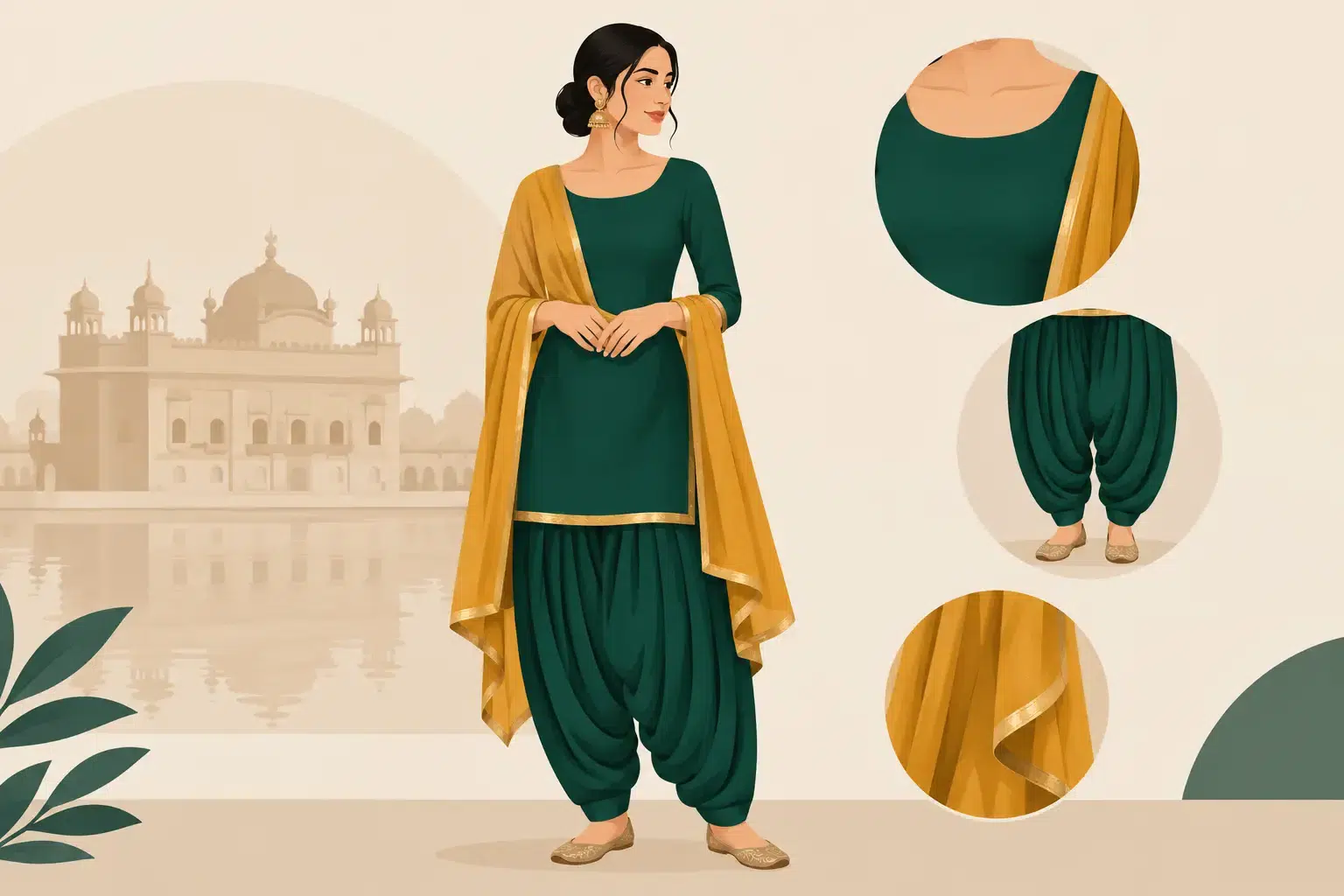
A Patiala suit is instantly recognizable from the movement of its salwar: soft fabric gathered into generous pleats that create volume, comfort, and unmistakable Punjabi character. If you have ever asked, “what is Patiala suit?”, the short answer is that it is a traditional three-piece outfit featuring a pleated Patiala salwar, a kurti or kameez, and a coordinating dupatta. The fuller answer is more interesting – it is a silhouette shaped by Punjab’s heritage and still loved for its youthful elegance, easy wear, and festive presence.
From family celebrations to gurdwara visits, mehndi events, and everyday ethnic dressing, a well-fitted Patiala suit feels expressive without feeling restrictive. It can be simple and breezy in cotton or richly embellished for a wedding function. The difference lies in the fabric, cut, finishing, and, above all, the way the pleats sit on the body.
What Is a Patiala Suit Made Of?
A complete Patiala suit traditionally has three parts. The Patiala salwar is the defining feature: a loose, heavily pleated lower garment that tapers toward the ankle. It is worn with a short or mid-length kurti, also called a kameez, and a dupatta draped over the shoulders or around the neck.
The salwar uses considerably more fabric than a standard straight-bottom suit. That extra fabric is carefully gathered around the waist and upper thigh, producing layered folds that move beautifully when you walk. The lower leg narrows at the ankle with a cuff or gathered finish, balancing the volume above.
The kurti is usually shorter than the kameez worn with a straight salwar or palazzo. This proportion matters. A shorter top lets the pleats remain visible and keeps the outfit looking balanced rather than heavy. Some contemporary Patiala suits use an A-line kurti, side slits, peplum detailing, or a slightly longer hem, but the pleated salwar remains the heart of the look.
The Punjabi Roots Behind the Patiala Suit
The Patiala suit takes its name from Patiala, a historic city in Punjab, India. Its royal associations are often reflected in the style’s generous use of fabric and graceful, confident shape. Over time, the outfit became a beloved part of Punjabi dress, especially for women who wanted clothing that could keep up with active daily life while still looking polished.
That practicality remains one of its greatest strengths. The loose salwar offers room to sit, walk, dance, and move comfortably, while the kurti and dupatta bring a refined, feminine finish. For many Punjabi families, it also carries a sense of familiarity: the kind of outfit seen at festive gatherings, worn by mothers and daughters, and chosen for occasions where cultural connection matters.
Today’s Patiala suit is not limited to one traditional look. Designers refresh it through jewel tones, digital prints, mirror work, zari embroidery, gota accents, lace borders, and contemporary necklines. Yet even with modern updates, the silhouette continues to signal Punjabi style at a glance.
Patiala Salwar vs. Regular Salwar: What Is the Difference?
Not every salwar kameez is a Patiala suit. A regular salwar may have a relaxed fit and some gathering at the waist, but it generally has less volume and fewer pleats. The Patiala salwar is intentionally fuller, with dense folds that create a more dramatic drape around the hips and thighs.
A straight-cut salwar kameez offers a cleaner, more streamlined appearance. Churidar bottoms are fitted and bunch gently at the ankle, while palazzo suits have wide legs that fall more freely from the waist. Patiala bottoms are different because the fullness is concentrated in the pleating, then drawn in at the ankle.
This creates a particular styling effect. A straight suit can feel formal and elongated; a Patiala suit feels lively, youthful, and distinctly Punjabi. Neither is better in every situation. If you prefer a close, sleek silhouette, a churidar or straight pant may suit you more. If comfort, movement, and visible traditional character are your priorities, Patiala is a beautiful choice.
Choosing the Right Fabric for a Patiala Suit
Fabric determines whether the pleats look crisp, fluid, airy, or festive. Because a Patiala salwar uses extra material, the fabric should drape well without becoming bulky. Lightweight cotton is a classic option for casual wear, warm weather, and daytime religious functions. It breathes easily and gives the pleats a soft, natural fall.
Rayon, crepe, and soft blends offer smooth movement with a slightly dressier finish. They work well for dinner events, festive gatherings, and ready-to-wear suits that need to remain comfortable for several hours. For party wear, georgette, chiffon, silk blends, and satin-like fabrics can bring more fluidity and shine, especially when paired with embroidery or an embellished dupatta.
Heavier fabrics can be stunning, but they need thoughtful tailoring. Dense velvet or stiff brocade may create too much bulk when used for a fully pleated salwar. These fabrics often work better for the kurti, borders, yoke, or dupatta, paired with a lighter fabric for the bottoms. The goal is to preserve the characteristic folds without weighing down the silhouette.
Color also sets the mood. Bright shades such as fuchsia, mustard, royal blue, parrot green, and red celebrate the vibrancy associated with Punjabi dressing. Softer pastels, ivory, sage, dusty rose, and powder blue bring a more contemporary feel. For evening functions, deep wine, emerald, navy, and black with antique gold embroidery make a graceful statement.
The Fit That Makes a Patiala Suit Look Beautiful
A Patiala suit should feel relaxed, but relaxed does not mean shapeless. The waistband needs to sit securely and comfortably, whether it has a drawstring, elastic, or a tailored belt. If the waist is too loose, the pleats can slip and lose their intended shape. If it is too tight, the salwar will feel uncomfortable and the gathers will pull awkwardly.
The kurti should complement the fullness below. A more fitted kurti through the bust and waist can create definition, while a lightly flared style offers a softer, easygoing look. Length is personal, but a hem around the upper thigh to mid-thigh is a dependable starting point for a traditional Patiala pairing. Petite shoppers may prefer a slightly shorter kurti to avoid overwhelming the frame, while taller shoppers can carry a longer cut with ease.
Pay attention to the shoulder fit, armhole comfort, and sleeve length as well. These small details make an outfit feel custom rather than simply worn. At Punjabi Threads, expert tailors can help refine measurements, adjust a ready-made suit, or create a Patiala suit from fabric you have chosen yourself. Perfect Fit, Every Time is not just about the waist or hem – it is about how the entire outfit moves with you.
How to Style a Patiala Suit for Different Occasions
For daytime wear, let the silhouette do the talking. A printed cotton kurti, solid Patiala salwar, and lightweight dupatta look fresh with Punjabi jutti and simple bangles. This combination is comfortable enough for a casual lunch, cultural program, or a busy day of visiting family.
For festivals such as Diwali, Vaisakhi, or Eid celebrations, choose richer color contrast. A mustard kurti with a magenta salwar, a turquoise suit with a pink dupatta, or a deep blue set with silver work can feel celebratory without needing heavy bridal embellishment. Add jhumkas, stacked bangles, and embroidered jutti to complete the look.
For a wedding-related event, consider a silk-blend or georgette Patiala suit with zari work, sequins, thread embroidery, or a detailed neckline. A beautifully finished dupatta can elevate the entire outfit, particularly one with a border, scattered motifs, or delicate mirror work. Keep the jewelry coordinated with the embroidery tone: gold-toned accessories for warm zari, silver-toned pieces for cooler stones and threadwork.
The key trade-off is between ornament and volume. Since the Patiala salwar already has visual fullness, an extremely heavy kurti, ornate dupatta, and bold jewelry all at once can feel crowded. Choose one focal point – perhaps an embroidered kurti or a statement dupatta – then let the remaining pieces support it.
Caring for the Pleats and Embellishments
A Patiala suit deserves a little care because its shape depends on the pleats staying neat. Always check the garment label, particularly if it has sequins, stones, zari, or delicate embroidery. Many embellished suits are best dry-cleaned, while simple cotton styles may be hand-washed or gently machine-washed in cold water.
Avoid twisting the salwar after washing, as this can distort the folds. Dry it away from harsh sun when possible, then iron on a suitable setting, working around embellishments with a protective cloth. Store heavy dupattas folded carefully so borders and embroidery do not snag.
A Patiala suit is more than a traditional outfit category. It is a joyful expression of Punjabi craft, color, and movement, with room to make the look entirely your own. Choose the fabric that feels good, the fit that gives you confidence, and the details that suit the occasion – then wear every pleat with pride.