
Blog
Lehenga Versus Sharara Outfits for Every Event

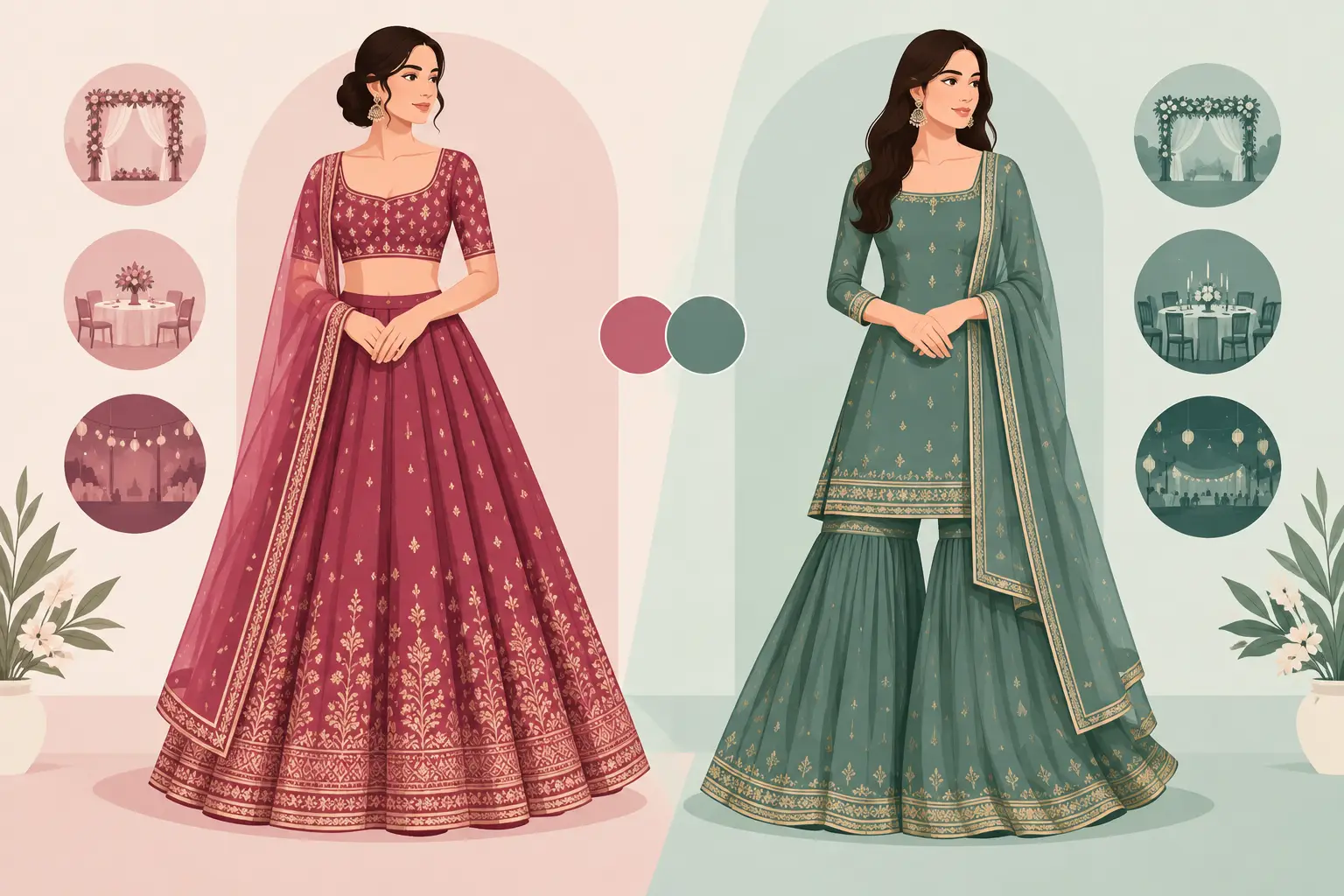
A wedding invitation can make one decision feel surprisingly big: should you wear a lehenga or a sharara? Both are festive, elegant, and rich in South Asian heritage, yet they create very different silhouettes and move differently throughout a long celebration. When choosing lehenga versus sharara outfits, the best choice is not simply about what is trending. It is about the occasion, your personal style, the fabric, and the fit that lets you feel beautiful from the first photo to the final dance.
A well-chosen lehenga brings sweeping drama and bridal grandeur. A sharara offers volume with a lighter, more effortless feel. Whether you are dressing for a sangeet, nikah, Diwali gathering, reception, or family celebration, understanding the difference helps you shop with confidence.
Lehenga Versus Sharara Outfits: The Main Difference
A lehenga is a skirt-based ensemble, usually styled with a choli or blouse and a dupatta. The skirt may be flared, paneled, A-line, mermaid-cut, or softly gathered, creating a continuous, flowing shape from the waist down. It is especially loved for its grand entrance effect, detailed embroidery, and ability to showcase luxurious fabrics such as silk, velvet, brocade, organza, and embellished net.
A sharara is a two-piece lower silhouette with very wide, flared pants, traditionally paired with a short kurti, peplum top, or longer kameez and a dupatta. From a distance, a sharara can resemble a skirt, but its divided legs give it a distinctly different feel and more freedom of movement. The flare usually begins at the thigh, knee, or lower leg, depending on the design.
The visual difference matters. A lehenga feels more formal and sweeping, particularly when its border work follows the full circumference of the skirt. A sharara feels expressive, youthful, and graceful, with each step revealing its movement. Neither is automatically more flattering or more appropriate. The right choice depends on how you want to look, sit, walk, and celebrate.
Choose a Lehenga for Grand, Traditional Impact
Lehengas are natural favorites for brides, sisters of the bride or groom, and guests attending formal receptions. Their structure gives embroidery room to shine. A heavily worked skirt with zardozi, sequins, threadwork, pearls, or mirror details can create a statement that photographs beautifully under event lighting.
For a wedding function, a lehenga is ideal when you want a polished, traditional silhouette with a strong sense of occasion. Rich jewel tones such as emerald, wine, royal blue, maroon, and deep plum suit evening events especially well. For daytime ceremonies, soft blush, sage, powder blue, peach, and ivory-gold offer a lighter but equally elegant presence.
The trade-off is volume. A full lehenga can feel heavier than a sharara, especially when it has dense handwork, a cancan layer, or a wide embellished border. This is not a problem when the event is formal and you want that dramatic finish, but it is worth considering if you will be standing for long periods, managing young children, or dancing late into the night.
A tailored lehenga should sit securely at the natural waist or slightly below it, depending on your preferred proportion. The blouse length, neckline, sleeve style, and dupatta drape can all change the final effect. A fitted blouse with a higher-waisted skirt can create length, while a slightly longer blouse can offer a more covered, balanced look.
Choose a Sharara for Movement and Modern Elegance
Sharara outfits have a celebratory charm that works beautifully for mehndi events, sangeets, Eid gatherings, festive dinners, and daytime weddings. The wide-legged construction makes them easier to walk in than a heavily flared skirt, while still delivering the fullness and detail expected from occasionwear.
A short kurti with a dramatic sharara creates a lively, fashion-forward silhouette. A longer kameez offers more coverage and a softer line, making it a lovely choice for religious functions or family celebrations. Peplum tops are another flattering option, especially when you want definition at the waist without the fitted feel of a traditional blouse.
Sharara sets can look as elaborate as lehengas when made in premium fabrics and finished with embroidery, gota patti, mirror work, or sequins. However, they often feel less formal than a bridal lehenga. That can be exactly the appeal. For guests who want to look dressed up without appearing overdressed, a sharara brings the right amount of celebration.
They also work well when comfort is part of the plan. You can sit more easily, move across a crowded venue, and dance with greater freedom. The key is getting the length right. Sharara pants should skim close to the floor with your chosen heels or jutti, without dragging or catching under the foot.
Fabric Changes the Entire Look
The same silhouette can feel completely different depending on fabric. A silk lehenga has a regal body and a crisp fall, while an organza lehenga appears airy and romantic. Velvet adds winter richness and depth, but it can feel warmer and heavier during a summer celebration. Net and georgette create softer movement, making them useful for flared designs that need to float rather than stand away from the body.
For shararas, georgette, crepe, chiffon, and lighter silks often work beautifully because they allow the panels to move. A stiffer fabric can give the pants dramatic volume, but too much stiffness may make the lower half feel bulky. If your sharara includes heavy embroidery, a lighter base fabric can keep the overall outfit more comfortable.
Pay attention to lining as well. Quality lining helps the garment sit smoothly and prevents embellishments from scratching the skin. It is a small detail that makes a real difference at an all-day event.
Fit Is What Makes Either Outfit Feel Special
A beautiful design should never require constant adjusting. With a lehenga, the waist, skirt length, and blouse fit deserve the most attention. The blouse should support and shape comfortably without pulling across the bust, gaping at the armhole, or restricting movement when you raise your arms.
With a sharara, the kurti fit and the point where the flare begins are equally important. A flare that starts too high can add unwanted width, while one that begins lower creates a more elongated look. The right cut depends on your height, proportions, and the style of the top.
This is where expert tailoring brings real value. At Punjabi Threads, personalized stitching and alterations help transform a beautiful fabric or ready-made outfit into a look that feels made for you. A precise hem, adjusted waist, refined neckline, or correctly placed dupatta can make an occasion outfit feel more comfortable and far more polished.
Styling Your Lehenga or Sharara
Lehengas and shararas both become more memorable when accessories are chosen with intention. A heavily embroidered lehenga often needs only statement earrings, a coordinated clutch, and a refined dupatta drape. If the blouse has a simple neckline, a choker or layered necklace can add a bridal or reception-ready finish.
With a sharara, you can have more fun with contrast. A printed or lightly embroidered sharara can be elevated with bold jhumkas, stacked bangles, and embellished jutti. A more ornate sharara set may call for cleaner accessories so the craftsmanship remains the focus. For either outfit, make sure your footwear is selected before alterations, since heel height affects the final hem.
Your dupatta can also shift the mood of the outfit. Draped neatly over one shoulder, it feels contemporary and easy. Pinned over the head or styled across both shoulders, it becomes more traditional and ceremonial. Choose a drape that suits the function and lets you move comfortably.
Let the Occasion Lead, Then Make It Yours
If you want a sweeping, formal silhouette for a reception, engagement, or bridal event, a lehenga may be the natural choice. If you want festive volume with easier movement for a mehndi, sangeet, Eid lunch, or family celebration, a sharara may feel more like you. But the finest choice is the one that matches the moment while still reflecting your personality.
Try the outfit on, walk in it, sit in it, and lift your arms as you would while greeting family or dancing. When the fit is right and the details feel personal, you will not spend the event thinking about your clothes. You will simply enjoy the celebration in them.