
Blog
Plus Size Ethnicwear That Celebrates Your Shape

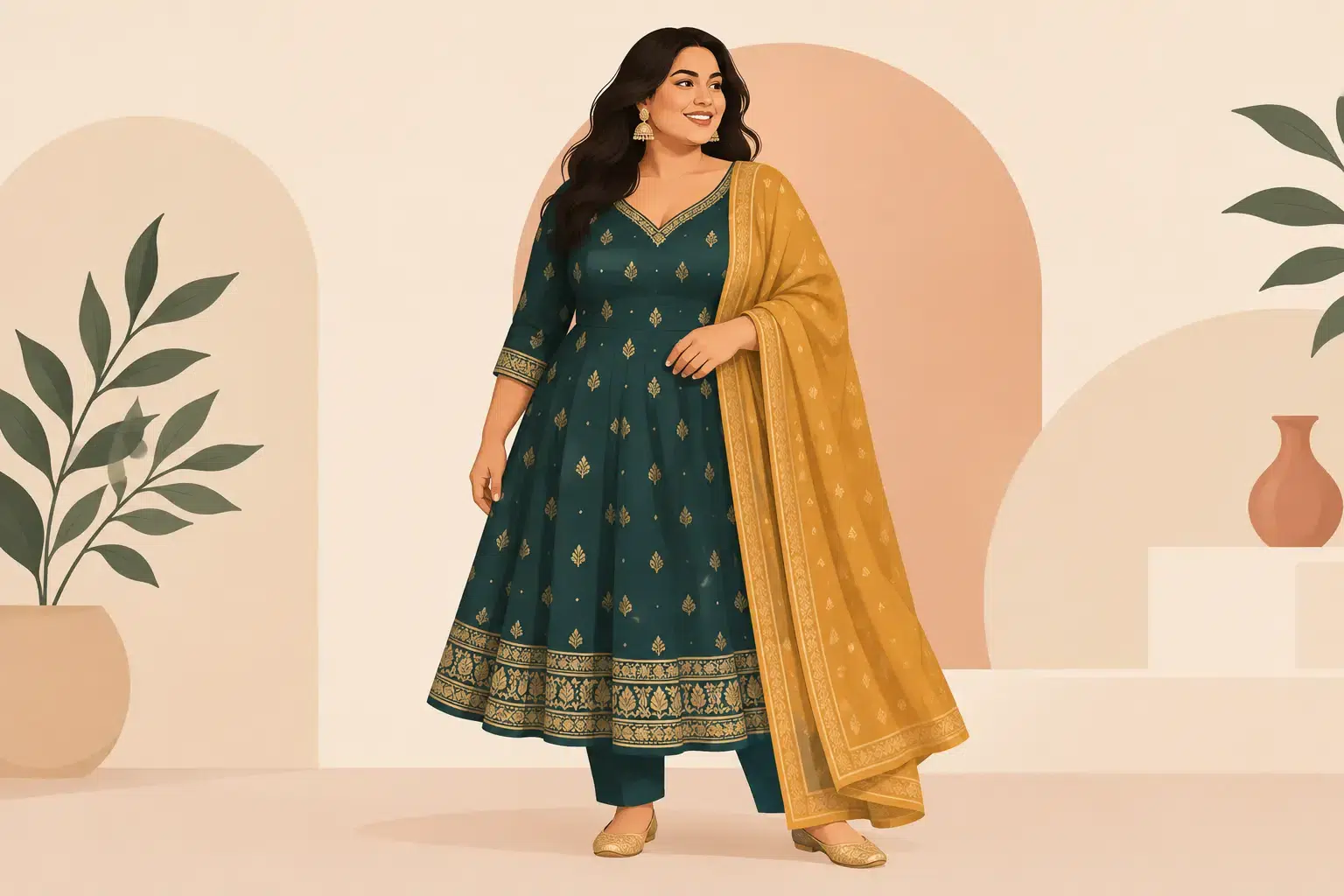
The right outfit should let you greet every relative, move through every dance floor, and sit comfortably through a long celebration without adjusting your dupatta all evening. Plus size ethnicwear deserves the same rich embroidery, elevated fabrics, and current silhouettes as every other collection – with thoughtful proportions and a fit that feels made for you.
From an elegant salwar kameez for a religious function to a statement lehenga for a wedding reception, the most flattering choice is not about hiding your shape. It is about selecting a silhouette, fabric, and finish that make you feel poised, comfortable, and beautifully dressed for the occasion.
What Makes Plus Size Ethnicwear Feel Better
Fit is where an outfit becomes personal. A suit can feature exquisite threadwork and a beautiful color, but if the shoulder sits too wide, the armhole pulls, or the kameez is the wrong length, the overall look loses its ease. Well-fitted ethnicwear follows your natural proportions while leaving enough room to walk, sit, dance, and celebrate freely.
Pay close attention to the bust, upper arms, waist, hips, and shoulder line. These areas influence how a kameez drapes and how confidently you feel in it. A garment that fits well through the shoulders often looks more polished immediately, while carefully placed side seams and darts can provide shape without making the suit feel restrictive.
Made-to-measure stitching is especially valuable when ready-made sizing does not reflect your proportions. Expert tailoring can adjust the neckline depth, sleeve width, kameez length, and pant shape to suit both your body and your event. At Punjabi Threads, personalized fitting and alterations help turn a fabric or ready-made design into an outfit that feels distinctly yours.
Choose a Silhouette That Suits the Occasion
There is no single best silhouette for every body or celebration. The ideal choice depends on your personal style, comfort level, height, and how formal the occasion is. The goal is to create balance, not follow a rulebook.
A-line suits for easy elegance
An A-line kameez gently widens from the bust or waist toward the hem, creating graceful movement without clinging at the hips. It is a versatile choice for family events, festivals, and daytime functions, particularly when paired with straight pants or slim cigarette pants. Choose a fabric with enough structure to hold the shape, such as silk blends, jacquard, or a premium cotton silk.
A longer A-line suit can look especially refined with a lightly embellished dupatta. If you prefer a more defined waist, ask for subtle shaping through princess seams rather than a tight, high-contrast belt effect.
Straight-cut kameez for a polished look
A straight-cut Punjabi or Pakistani suit creates a clean vertical line. This style works beautifully when the side slits are placed at a comfortable height and the kameez is cut with sufficient ease through the hips. It can be styled for everyday ethnic dressing in softer fabrics or elevated with zari, sequins, or detailed embroidery for an evening celebration.
Straight silhouettes are a lovely option with wide-leg palazzo pants, but proportion matters. A longer kameez often pairs well with a straighter bottom, while a shorter kurti can balance the volume of a palazzo or sharara.
Anarkalis and flared styles for celebration
For weddings, sangeet nights, Eid gatherings, and festive dinners, an Anarkali offers movement and drama. The key is the placement of the flare. A flattering Anarkali usually begins to open below the bust or at the natural waist, rather than adding bulk at the widest part of the torso.
Look for a bodice that is comfortably fitted, then let the skirt create the statement. A V-neck, soft scoop neck, or gently squared neckline can add length through the upper body, while three-quarter sleeves offer elegant coverage without overwhelming the design.
Lehengas with considered proportions
A lehenga can be wonderfully flattering when the blouse, skirt, and dupatta are styled as one balanced look. A longer blouse, peplum top, or softly draped cape-style layer can feel more comfortable than a cropped choli, especially if you want coverage without losing the festive impact.
For the skirt, a flowing A-line lehenga is often easier to wear than a heavily gathered style. Embroidery concentrated near the hem creates visual richness while allowing the upper portion of the skirt to fall smoothly. If the blouse is detailed, consider a lighter dupatta drape so the overall outfit still feels effortless.
Fabric Changes the Way an Outfit Falls
Fabric is just as important as size. Stiff materials can add volume where you do not want it, while overly thin fabrics may cling and require more lining or careful layering. The best choice depends on the silhouette and the season.
Georgette, chiffon, crepe, and soft silk blends create fluid drape for partywear suits, sarees, and layered Anarkalis. They move beautifully and work well with embroidery, although a quality lining is essential for structure and comfort. Cotton silk and muslin are excellent for daytime functions and festive wear when you want breathability with a more polished finish.
Velvet and brocade bring instant richness to winter weddings and evening functions, but they are more substantial fabrics. Rather than choosing heavy embellishment everywhere, consider a velvet kameez with embroidery at the neckline and cuffs, or a brocade blouse paired with a smoother lehenga skirt. This keeps the outfit luxurious without making it feel overly weighted.
Details That Create a Flattering Finish
Small design decisions make a meaningful difference. Necklines, sleeves, embroidery placement, and dupatta styling can draw attention to the features you love while preserving the cultural beauty of the garment.
Vertical embroidery panels, a centered neckline motif, and borders that run down the front of a kameez can create a graceful elongated effect. For sleeves, a three-quarter length with a detailed cuff is timeless, while a relaxed full sleeve in sheer fabric offers lighter coverage for formal events. Avoid choosing a sleeve only for coverage – make sure you can lift your arms comfortably and that the cuff does not feel tight when you sit.
Color is personal, and every shade can be worn beautifully. Deep jewel tones such as emerald, wine, royal blue, and plum bring a rich occasionwear mood, while blush, sage, powder blue, and ivory can feel fresh for daytime events. If you love a lighter color but prefer more definition, choose a design with a darker border, contrast dupatta, or embroidery that frames the neckline.
Your dupatta should complement the outfit, not become a source of stress. A lightweight net, organza, or chiffon dupatta is often easier to manage than a very heavy embellished piece. For weddings and photos, a polished shoulder drape can look elegant. For a religious function or busy family event, secure it with discreet pins so you can move naturally.
Tailoring Is Part of the Style
Buying the right size is a starting point. Fine tailoring is what creates the finished look. Hem length should work with the footwear you plan to wear, whether that is a traditional Punjabi jutti, heel, or embellished sandal. Sleeve length should complement your bangles, and the pant hem should sit cleanly rather than bunching at the ankle.
When ordering or booking a stitching service, share how and where you will wear the outfit. A suit for a full wedding day needs more movement than an outfit for a short dinner. A high-slit kameez may feel perfect with leggings for one customer and less comfortable for another. Clear preferences help a tailor create a result that reflects your real life, not just a mannequin image.
For special occasions, leave time for a fitting before the event. Bring the shoes and undergarments you intend to wear, especially with a lehenga, saree blouse, or fitted suit. Even a small adjustment to the shoulder, hem, or bust can make the entire outfit sit more elegantly.
Build a Complete Look With Confidence
Plus size ethnicwear is most beautiful when it feels intentional from head to toe. Pair a detailed suit with refined earrings and a coordinated jutti, or let a heavily embroidered lehenga lead the look with simpler jewelry. If your dupatta is dramatic, keep the neckline accessories lighter. If your suit has a clean, minimal neckline, statement earrings or a necklace can provide the finishing touch.
Most importantly, choose garments that allow you to participate fully in the moments that matter. A celebration is not the place to feel confined by a waistband, distracted by a slipping sleeve, or unsure about your fit. When the fabric drapes well, the tailoring supports your shape, and the details feel like you, traditional dress becomes more than occasionwear – it becomes part of the memory you are there to make.