
Blog
How to Size Kurtis for a Flattering Fit

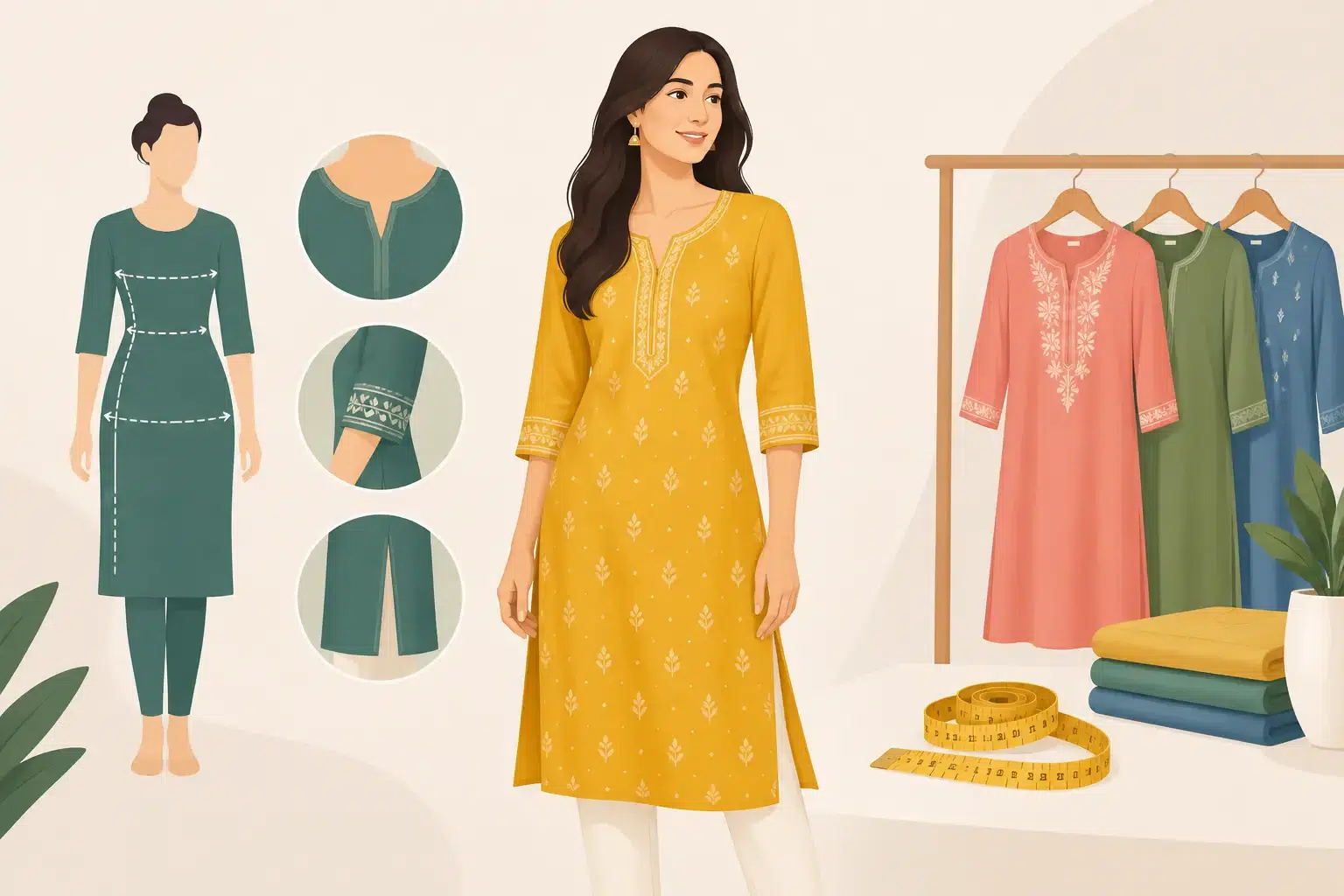
A kurti can be beautifully embroidered, made from premium fabric, and perfectly styled with a dupatta or palazzo pants – but if the fit is off at the bust, shoulders, or hips, it will never feel quite right. Knowing how to size kurtis helps you choose ready-made pieces with confidence and recognize when a few expert alterations will create the polished finish your outfit deserves.
Unlike a T-shirt, a kurti is designed around both comfort and silhouette. It needs enough room to sit, move, and celebrate in, while still falling cleanly from the shoulder and flattering the body beneath. Whether you are choosing a simple cotton kurti for daily wear or an embellished style for a wedding, festival, or family function, the right size begins with accurate measurements.
Start With Your Body Measurements
Do not rely only on the size you usually wear in Western clothing. Sizing can vary between designers, and South Asian garments often follow their own measurement charts. A medium in one kurti may fit like a small in another, particularly when the fabric has no stretch or the design has a fitted bust.
Measure over light clothing or close-fitting undergarments, keeping the tape level and comfortably snug rather than pulled tight. If possible, ask someone to help with shoulder and length measurements. Record your measurements in inches, as many kurti size charts use inches even when shopping online.
For a reliable starting point, note these five measurements:
- Bust: Measure around the fullest part of the bust, with the tape straight across the back.
- Waist: Measure around your natural waist, usually the narrowest point of your torso.
- Hips: Measure around the fullest part of the hips and seat.
- Shoulders: Measure from one shoulder point to the other across the upper back.
- Length: Measure from the highest point of the shoulder down to where you want the kurti to end.
Sleeve length and armhole measurements matter too, especially for a fitted festive kurti. If you often find sleeves tight at the upper arm, measure around the fullest part of your bicep and compare it with the garment details when available.
How to Size Kurtis Using a Size Chart
Once you have your measurements, compare them with the garment’s chart rather than selecting a size from habit. Focus first on the bust, shoulders, and hips. These areas are the hardest to alter without changing the shape of the garment.
If your bust measurement is 38 inches and the listed garment bust is 40 inches, that usually provides comfortable ease for a woven kurti. Ease is the extra room built into a garment beyond your body measurement. It allows you to breathe, lift your arms, sit comfortably, and maintain a graceful drape.
The amount of ease depends on the style. A relaxed cotton A-line kurti may look best with 2 to 4 inches of room at the bust. A more structured straight-cut kurti may need only 1 to 2 inches, provided the fabric and armhole are comfortable. For heavily embroidered fabrics, avoid a very tight fit. Embellishment can make a garment less flexible, and pulling across the chest may strain the embroidery or distort the design.
If you fall between sizes, choose based on the most fitted area. For example, if a smaller size fits your waist but feels close at the bust or hips, take the larger size and have the waist shaped if needed. It is usually easier for an expert tailor to take in a kurti than to let it out, especially when seam allowance is limited.
Choose the Fit for the Kurti Silhouette
A good kurti size is not only a number. The intended silhouette changes how the garment should sit on your body.
Straight-Cut Kurtis
A straight kurti should skim the body without clinging. Check that the shoulder seam sits at your natural shoulder point and that the side seams hang straight. If the front pulls across the bust, the hem rides up, or the side slits spread open while standing, you likely need more room through the bust or hips.
Straight cuts are elegant with cigarette pants, churidars, or narrow palazzos. They are often favored for office wear, religious functions, and refined evening looks, where a neat shoulder line makes a noticeable difference.
A-Line and Flared Kurtis
A-line kurtis are fitted or semi-fitted at the shoulders and bust, then widen toward the hem. Because the lower portion has more volume, the bust and shoulder fit become the priority. Do not size down simply because the waist and hips feel roomy – that ease is part of the silhouette.
These styles are forgiving and comfortable for long celebrations, particularly when paired with leggings, palazzos, or a flowing dupatta. They also work beautifully in soft fabrics such as rayon, georgette, and lightweight cotton blends.
Anarkali and Panelled Styles
Anarkali kurtis may have a fitted yoke or bodice with a full skirt below. Measure carefully around the bust, high waist, and armhole. The flare should begin naturally below the fitted area, not pull upward from it.
For a wedding or festive event, consider how much movement you want. A generous flare creates drama and elegance, but it also means the right length matters. A hem that is too long can catch under sandals or heels, while one that is too short can interrupt the graceful line of the outfit.
Short Kurtis
Short kurtis typically end around the hip or upper thigh and are often worn with jeans, pants, or Patiala salwars. Hip measurement is especially important here. A short hem that grips the hip will ride up as you walk, even if the bust feels comfortable.
Fabric Changes the Way a Kurti Fits
The same measurement can feel entirely different in cotton, silk, georgette, or knit fabric. Cotton and linen tend to have little stretch, so they require enough ease for movement. They may also shrink slightly after washing if the fabric has not been prewashed.
Rayon can drape beautifully but may cling depending on its weight. Georgette and chiffon often feel more forgiving through the body, although the lining underneath may be less flexible. Silk blends and brocade are often structured, making precise bust, shoulder, and armhole sizing essential.
If a kurti includes a lining, size according to the lined garment, not only the outer fabric. The lining determines the actual comfort at the bust and hips. For summer wear, a slightly easier fit in breathable fabric usually feels more elegant than a close, restrictive one.
Check the Length Before You Buy
Kurti length is personal, but it should also suit the design and the bottoms you plan to wear. A mid-thigh kurti has a youthful, versatile look with slim pants or jeans. Knee-length styles are classic for everyday Punjabi suits. Longer kurtis and Anarkali styles create a more formal presence for festivals, parties, and wedding events.
Use your shoulder-to-hem measurement as a guide, then think about your height and footwear. If you are petite, an overly long straight kurti can shorten your frame. If you are tall, a cropped length may feel more casual than intended. When styling with heels for an event, bring or wear shoes of a similar height during a fitting.
Also check the placement of design details. A border, embroidery panel, or side slit should sit where it flatters your proportions. If you are having a piece stitched, these details can often be adjusted to make the final outfit feel more balanced.
Know When Tailoring Is Worth It
Ready-made kurtis are convenient, but a personalized fit can transform the way an outfit looks and feels. Tailoring is particularly valuable if your bust, waist, and hips fall across different standard sizes, if you have narrow or broad shoulders, or if you are purchasing occasionwear with detailed embroidery.
Common alterations include taking in the side seams, adjusting shoulders, refining sleeve width, shortening the hem, and changing the neckline depth. Shoulder fit should be handled carefully: when the shoulders sit correctly, the neckline, bust darts, sleeves, and overall drape all tend to fall better.
For made-to-measure suits and special outfits, share how you plan to wear the kurti. A client attending a sangeet may want comfortable arm movement for dancing, while someone selecting a polished suit for a religious function may prefer a more modest neckline and relaxed sleeve. At Punjabi Threads, expert tailoring can help turn fabric, measurements, and your preferred silhouette into a look crafted with love.
Do a Simple Fit Test at Home
When your kurti arrives, try it on with the bottoms and undergarments you plan to wear. Stand naturally, then sit, raise your arms, and take a few steps. The garment should not pull across the bust, pinch at the armhole, ride up at the hips, or twist around the side seams.
Look in a mirror from the side as well as the front. A kurti that appears fine from the front may be too tight across the back or too loose at the neckline. For a festive piece, check whether the embroidery lies flat and whether the dupatta sits comfortably over the shoulders without constantly shifting the neckline.
A well-sized kurti should make you feel composed before you add jewelry, jutti, or a statement dupatta. Trust the fit that lets you move freely, carries the fabric beautifully, and leaves you ready to enjoy every moment the occasion brings.