
Blog
Embroidered Dress Materials for Every Celebration

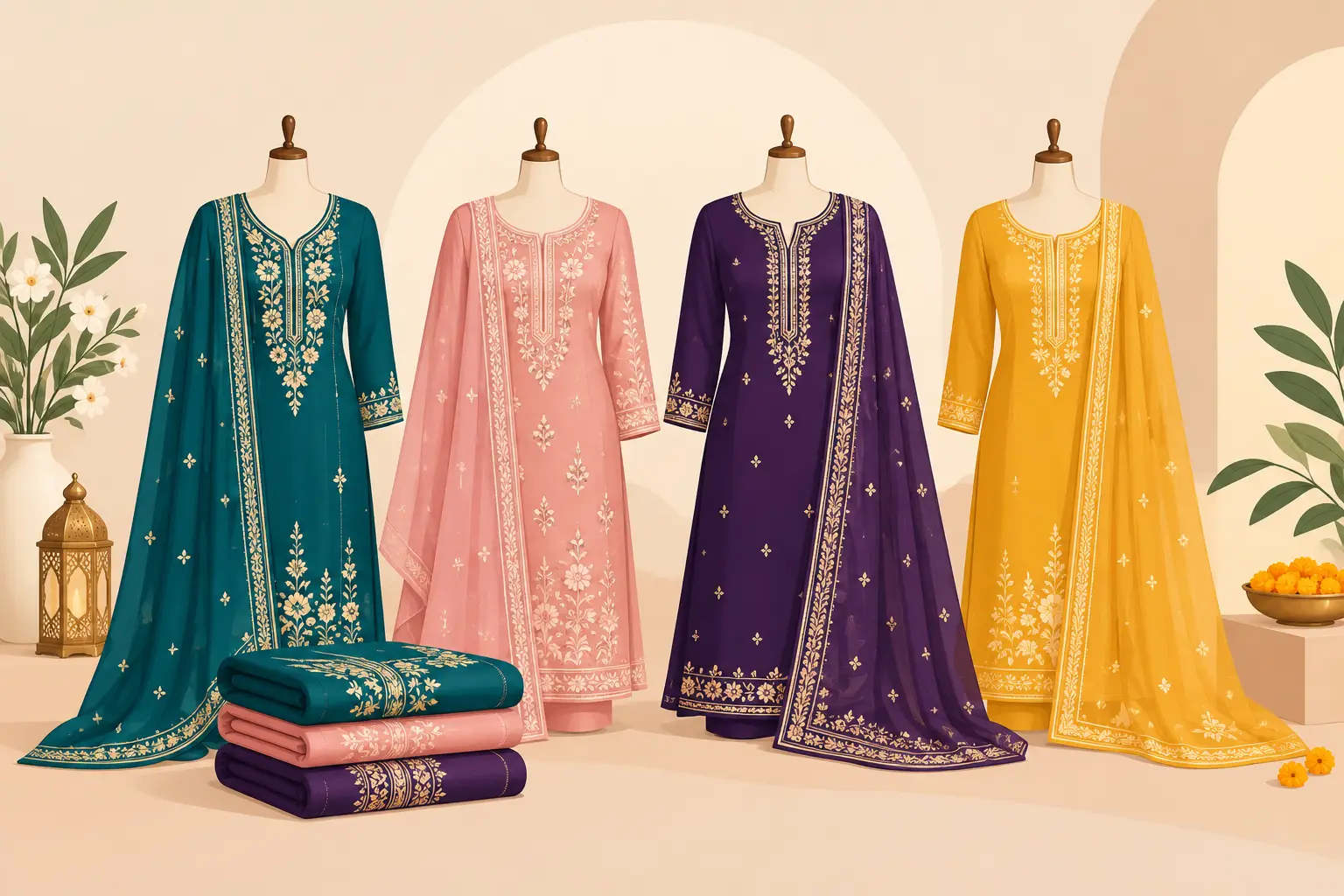
A beautifully finished suit begins long before the first stitch. Embroidered dress materials give you the freedom to choose the fabric, silhouette, neckline, sleeve length, and fit that feel right for your occasion and your personal style. Whether you are dressing for a wedding, a festive dinner, a religious function, or a family celebration, an unstitched embroidered set can become an outfit that feels distinctly yours.
For many women, the appeal is not only the embroidery. It is the chance to create a Punjabi or Pakistani suit that sits comfortably at the shoulders, falls gracefully through the kameez, and has the right amount of movement for a full day of celebration. A ready-made outfit can be convenient, but a well-chosen dress material paired with expert stitching offers something more personal: Perfect Fit, Every Time.
Why embroidered dress materials feel special
Embroidery brings depth, texture, and occasion-ready polish to a fabric. A simple lawn, cotton silk, georgette, chiffon, or jacquard base can look entirely different once it is finished with threadwork, zari, sequins, beads, mirror work, or delicate appliqué. The best choice depends on where you plan to wear it, how much embellishment you enjoy, and how you want the outfit to photograph and feel.
For daytime functions, soft thread embroidery and subtle floral motifs often look refined without appearing overdone. Pastels, ivory, powder blue, sage green, peach, and soft pink work beautifully for intimate celebrations, Eid gatherings, and daytime wedding events. For evening wear, richer shades such as maroon, emerald, royal blue, black, plum, and wine create a stronger presence, especially when paired with gold zari, sequins, or detailed hand-finished borders.
The advantage of dress material is balance. You can choose a heavily embroidered kameez with a lighter dupatta for a graceful result, or keep the shirt elegant and let a richly detailed dupatta become the centerpiece. This flexibility is especially useful when you want festive style without the weight of a fully embellished outfit.
Choose fabric for the occasion, not just the look
A design may catch your eye first, but fabric determines much of the comfort, drape, and final shape of the suit. The same embroidery can look formal on one fabric and relaxed on another.
Cotton and lawn for polished daily wear
Cotton and lawn embroidered dress materials are a thoughtful choice for casual gatherings, religious events, workwear, and warm-weather dressing. They feel breathable and easy to move in, particularly when stitched into a straight-cut kurti, an A-line kameez, or a classic salwar kameez.
Choose finer embroidery rather than very dense embellishment on these fabrics. Heavy work can pull on a lightweight base or make the outfit feel less comfortable for long wear. A printed or lightly embroidered dupatta can add color while keeping the overall look effortless.
Silk blends and jacquard for festive elegance
Silk blends, Banarasi-inspired fabrics, jacquard, and woven textures hold their structure well and naturally look more dressed up. They suit engagement parties, festive dinners, Diwali celebrations, and formal family occasions. Their slight sheen gives embroidery extra dimension, even when the threadwork itself is restrained.
These fabrics work well for straight-cut suits, panelled kameez styles, and elegant palazzo sets. If the fabric has a bold weave or pattern, consider simpler embroidery placement. Too many competing details can make a garment appear busy rather than luxurious.
Georgette, chiffon, and net for party wear
For an airy, fluid look, georgette and chiffon are favorites for Pakistani-style suits, anarkalis, and draped dupatta sets. Net offers a more glamorous finish and is often chosen for formal party wear and wedding functions. These fabrics can carry sequins, beads, and ornate borders beautifully, but they require careful stitching and lining.
A softer fabric can be less forgiving than cotton or silk blends. The right lining, precise measurements, and experienced handling make a noticeable difference to how the outfit sits on the body. For garments with heavy work, comfort matters just as much as visual impact.
Let the embroidery guide the silhouette
Before settling on a design, look at where the embroidery is placed. A neckline motif, hem border, sleeve detail, and dupatta edge each influence how the finished garment should be cut.
A vertical embroidered panel can visually lengthen the body and looks striking on a straight kameez. A wide border at the hem suits an A-line or flared silhouette, where the embroidery has space to be seen. Dense work across the front creates a more formal statement, while scattered motifs feel lighter and can be styled for several occasions.
For a traditional Punjabi look, a shorter kameez with Patiala salwar offers movement and personality, particularly when the kameez has detailed sleeves or a decorated neckline. For a more contemporary look, pair an embroidered kurti with straight pants or palazzos. A long kameez with cigarette pants creates a clean, elegant line for dinners and formal functions.
The dupatta deserves equal attention. A plain dupatta can calm a heavily embellished shirt, while a bordered chiffon or organza dupatta can elevate a simpler suit. When the kameez, bottom fabric, and dupatta are considered as one design, the outfit feels intentional from every angle.
Stitching turns fabric into your outfit
Dress material gives you choice, but stitching determines whether that choice feels exceptional when you wear it. Neck depth, shoulder placement, armhole comfort, sleeve shape, kameez length, and bottom style should all be decided with your body shape and event in mind.
If you prefer fuller coverage, a higher neckline with sheer embroidered sleeves can still feel festive. If you want a more contemporary finish, a square neck, V-neck, or boat neck may suit the fabric and embroidery placement. For wedding events, a slightly longer shirt or a softly flared cut can feel grand without restricting movement.
It is worth discussing practical details before stitching begins. Consider whether you will be sitting for a long ceremony, dancing at a sangeet, carrying children at a family event, or moving between indoor and outdoor spaces. A fitted suit can look beautiful, but it should still allow you to breathe, walk, and celebrate comfortably.
At Punjabi Threads, embroidered dress materials can be paired with personalized stitching and alterations, so the finished suit reflects both the design and the woman wearing it. Expert tailoring is especially valuable for embellished fabrics, where every seam and motif placement needs careful attention.
Styling an embroidered suit with confidence
Once your suit is stitched, accessories should complement the embroidery rather than compete with it. If the neckline is heavily worked, choose smaller earrings and let the garment remain the focus. If the kameez is simpler, jhumkas, a statement maang tikka, or stacked bangles can bring more celebration to the look.
Footwear should suit the occasion and the length of the outfit. Embroidered Punjabi jutti is a natural match for a salwar suit and offers comfort for long events. Heeled sandals can add height to a formal straight suit or anarkali, but make sure the kameez length is finalized with your preferred footwear in mind.
Color coordination makes an outfit look complete. Gold embroidery pairs naturally with warm metallic accessories, while silver threadwork often looks fresh with crystal, pearl, or cool-toned jewelry. A contrasting dupatta can be beautiful, but repeat one of its colors in your bangles, jutti, or clutch to create harmony.
Care for embroidery so it stays beautiful
Embroidered fabrics need gentler handling than plain materials. Before stitching, keep the fabric folded neatly and away from rough surfaces that may catch sequins or threads. After the outfit is made, dry cleaning is usually the safer choice for heavily embellished pieces, while lightly embroidered cotton may be suitable for careful hand washing depending on its detailing.
Store formal suits in a breathable garment cover rather than tightly packed plastic. Avoid hanging very heavy outfits from delicate shoulder seams for extended periods. If a dupatta has embellished borders, fold it loosely so the work is not crushed. Small habits help preserve the finish for future celebrations and family occasions.
The right embroidered dress material does more than fill a wardrobe space. It gives you a starting point for a garment shaped around your celebration, your comfort, and your sense of style. Choose the fabric that feels good, the embroidery that feels like you, and the tailoring that lets you walk into every special moment with ease.