
Blog
How to Tie a Sikh Turban Respectfully at Home

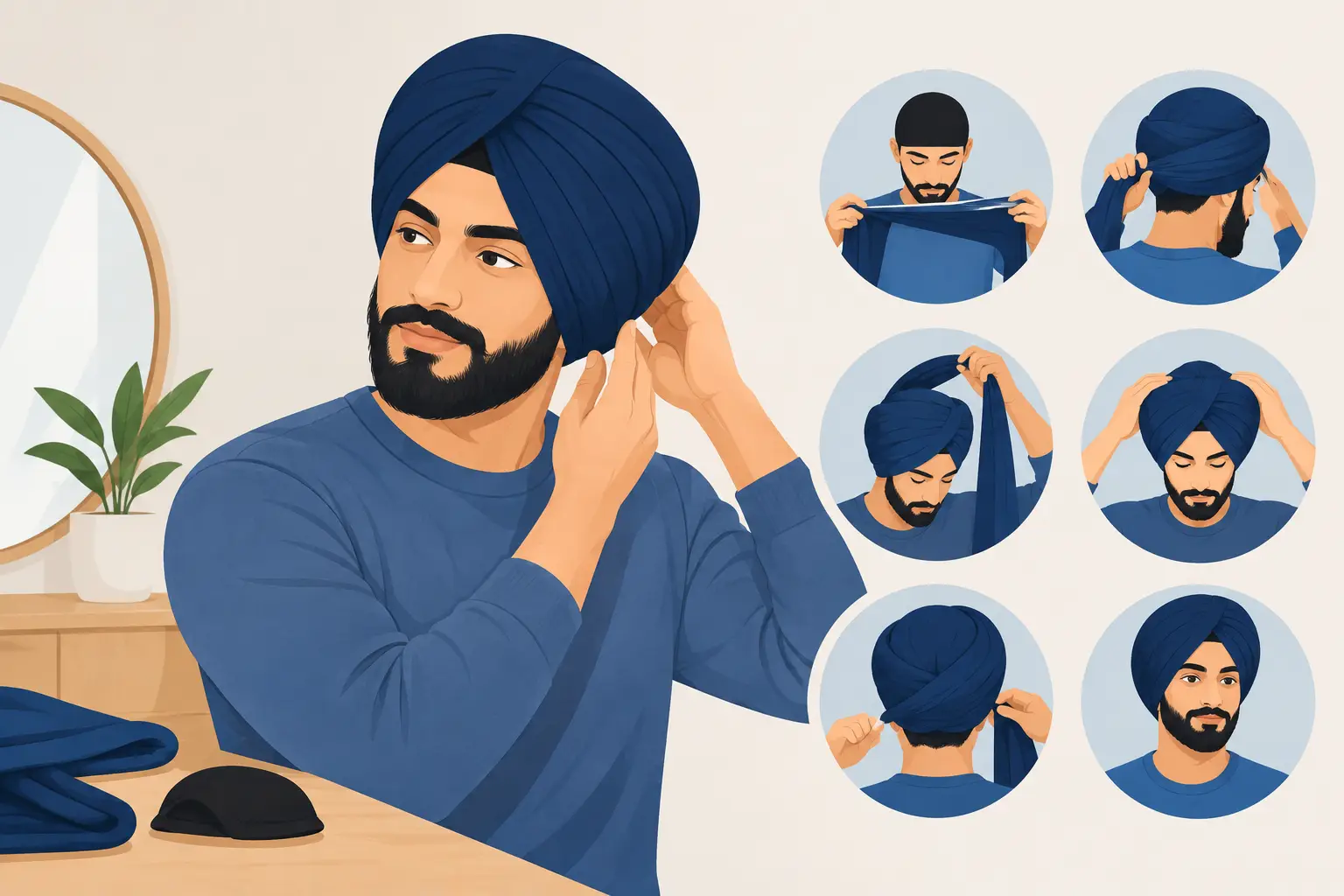
A Sikh turban, often called a dastar or pagri, is more than a finishing touch to traditional dress. For many Sikhs, it is a visible expression of faith, identity, discipline, and respect for uncut hair. Learning how to tie a Sikh turban takes practice, patience, and an understanding that there is no single “correct” look. Families, regions, and personal preferences all shape the style, color, and method.
Whether you are preparing for gurdwara, a wedding, Vaisakhi, a family celebration, or daily wear, the goal is a turban that feels secure, comfortable, and true to the wearer. A neat tie should never come at the cost of tension, headaches, or disrespect for the meaning it carries.
Before You Tie a Sikh Turban
Start with a clean, pressed turban cloth. The right fabric makes a noticeable difference: lightweight cotton voile is popular for its breathability and crisp folds, while fuller cotton fabrics can create more structure. Turban lengths vary widely. A smaller keski or youth turban may use less fabric, while a full dastar often uses several meters. Choose a length that you can handle comfortably rather than assuming more fabric will always create a better result.
Hair preparation matters as much as the outer layers. Sikhs who maintain kesh, or uncut hair, commonly gather it neatly into a joora, or topknot. The joora should sit securely at the crown without pulling too tightly. Many people first wear a patka, small under-turban, or keski to hold the hair in place and create a smooth base.
If you are helping someone else, ask before touching their hair, turban, or religious articles. A turban is personal, and the wearer should guide the process. This is especially meaningful when dressing for a religious service or milestone event.
What You Need for a Neat, Comfortable Tie
You need a suitable turban cloth, a mirror, and a stable place to sit or stand. A comb and hair tie may help when preparing a joora. Beginners also benefit from practicing near a full-length mirror, as the side profile often reveals loose folds or uneven coverage that are harder to see from the front.
Before beginning, fold one end of the cloth into a narrow, clean edge. This is often called the larh or border. The exact width depends on the style you are creating, but a consistent edge gives the front of the turban its polished appearance. Smooth the cloth as you work. Twisted fabric tends to create bulky layers and can make the turban feel uncomfortable after an hour or two.
How to Tie a Sikh Turban Step by Step
The method below is a practical foundation for a simple, everyday dastar. It is not a replacement for family teaching or a style-specific lesson, but it gives beginners a respectful place to start.
Build a secure base
Place the prepared edge of the cloth across the forehead, keeping it level and comfortably above the eyebrows. Bring the fabric around the back of the head and over the crown, covering the joora or under-turban. Keep the first wrap firm but not tight. You should be able to breathe easily, move your forehead naturally, and feel no sharp pressure at the temples.
As you return to the front, check that both sides are balanced. This first layer anchors the rest of the turban, so it is worth adjusting now rather than trying to correct it after several wraps.
Create even layers around the head
Continue wrapping the cloth in overlapping layers, moving gradually upward and backward with each pass. Each new layer should cover part of the previous one, creating a clean fan-like effect from the front. Keep the cloth flat with one hand while guiding it around the head with the other.
A common beginner mistake is to pull harder with every round. Instead, aim for consistent tension. If the layers become too tight, the turban may shift upward or cause discomfort. If they are too loose, it may lose its shape during the day. The right tension feels supportive, not restrictive.
Pay close attention to the front. The visible layers should be neat and evenly spaced, but they do not need to be perfectly identical. Hand-tied turbans have character. A balanced shape and comfortable fit matter more than creating a machine-perfect finish.
Shape the crown and side profile
As the fabric reaches the upper portion of the head, guide it over the crown so the joora is covered without creating a sharp bump. Some styles are more rounded, while others have a higher, more structured silhouette. Let the wearer’s preference, face shape, and occasion guide the final shape.
Check both sides in the mirror. The turban should sit evenly from left to right, with no large gaps at the temples or loose fabric near the ears. If one side looks bulky, unwrap one layer rather than forcing the fabric into place. Small corrections during the tie make a much cleaner result.
Finish and tuck the remaining cloth
When you reach the end of the cloth, fold the final section neatly and tuck it into a secure layer, usually toward the back or side. Avoid pushing the end in so deeply that it creates pressure. The tuck should hold when you gently move your head, but it should still be easy to remove at the end of the day.
Take a moment to test the fit. Look down, turn your head, and lift your chin. If the turban slips, feels uneven, or causes a headache, unwrap and try again. Re-tying is part of learning, not a failure.
Choosing the Right Turban Style for the Occasion
Sikh turban styles are wonderfully diverse. Some people prefer a compact keski for daily wear, while others choose a fuller dastar with prominent front layers. The Dumalla is a distinct, often larger style associated with Sikh martial heritage and commonly seen in religious settings. It requires its own technique and should be learned with guidance from someone experienced in that style.
Color also carries meaning and personality. Deep navy, royal blue, white, saffron, black, maroon, and other shades may be chosen for faith observance, family tradition, personal taste, or coordination with formal clothing. At weddings and celebrations, a carefully selected turban can complement a men’s kurta pajama, achkan, or sherwani without competing with the embroidery or richness of the outfit.
For a polished occasion look, choose fabric that suits the season. Fine cotton is comfortable for long ceremonies and warm weather, while a slightly more structured fabric can hold its shape beautifully for photographs. A tailored kurta pajama and a well-tied turban create a refined silhouette because both are built around proportion, comfort, and confident wear.
Common Problems and Simple Fixes
If the front layers keep slipping, the base may be too loose or the cloth may be too smooth for your preferred style. Rebuild the first wrap with slightly firmer tension and ensure the under-turban is secure. If the turban feels painfully tight, do not simply loosen the final tuck. Start again with softer tension around the forehead and temples.
If the crown looks uneven, use smaller adjustments between layers rather than trying to cover the entire top in one broad pass. And if the fabric looks wrinkled, take the time to press it before tying. Crisp fabric is easier to guide and gives each layer a more elegant definition.
New learners often find that the first few attempts take 20 minutes or more. That is completely normal. With regular practice, you begin to understand how your chosen fabric responds, where your joora sits best, and how much tension creates the shape you prefer.
Wear It With Pride and Care
A turban should feel as considered as the rest of your traditional wardrobe. When selecting a turban cloth to pair with a festive suit or formal menswear, Punjabi Threads can help bring together color, fabric, and fit for religious functions, weddings, and family celebrations.
The most beautiful turban is not necessarily the tallest or most elaborate one. It is the one tied with care, worn comfortably, and carried with the respect this enduring Sikh tradition deserves.