
Blog
How to Choose Banarasi Silk Sarees in Australia

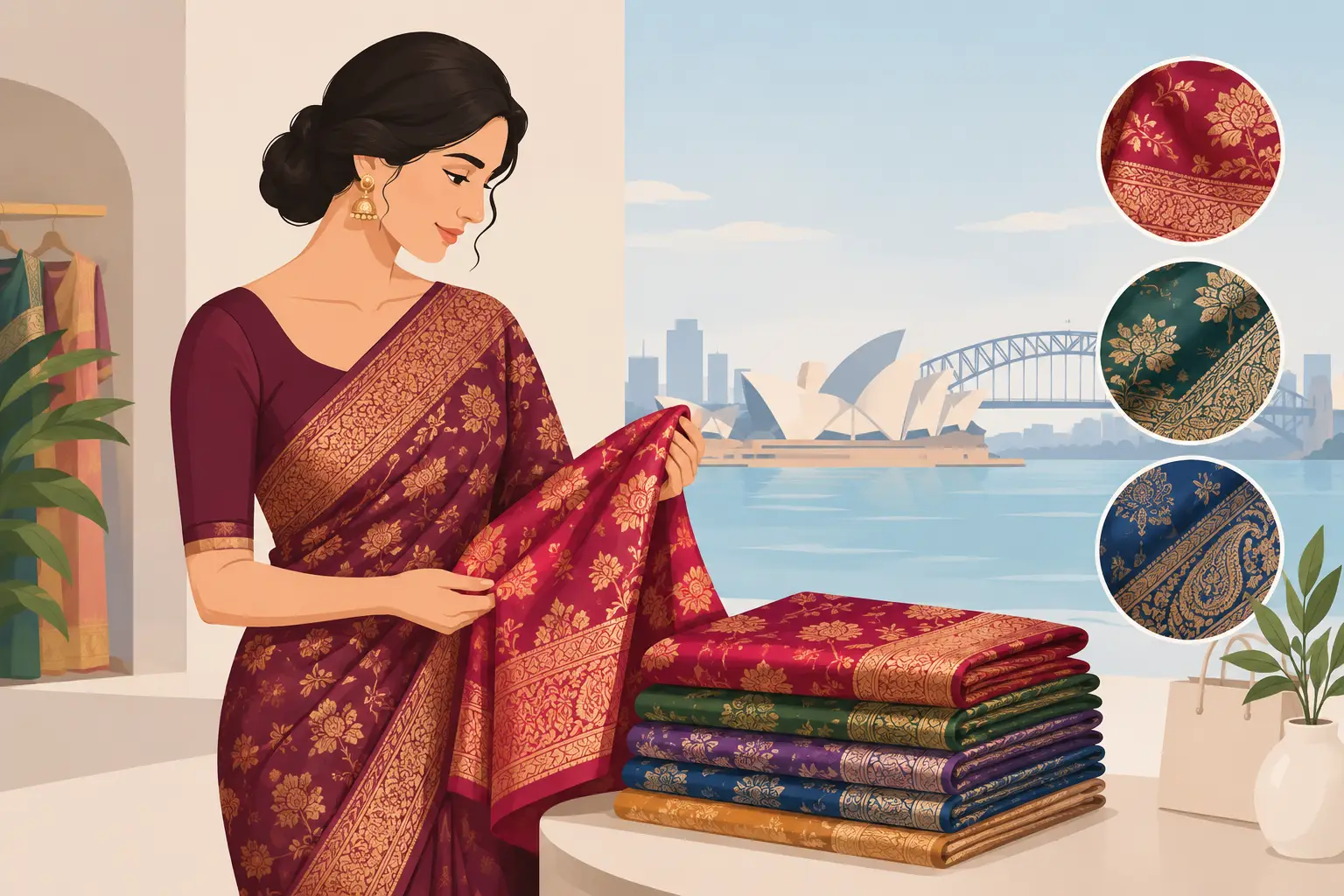
A Banarasi saree does more than complete an outfit. Its rich weave, detailed zari work, and graceful fall bring a sense of occasion the moment it is draped. For shoppers seeking Banarasi silk sarees Australia wide, the right choice comes down to more than a beautiful photo: fabric feel, weaving detail, weight, color, blouse fit, and the event all matter.
Whether you are dressing for a wedding, Diwali celebration, religious function, engagement, or a family milestone, a Banarasi saree can feel traditional while still looking strikingly current. The key is choosing a piece that reflects the occasion and feels comfortable enough to wear with confidence.
Why Banarasi Silk Sarees Remain Special
Banarasi silk is associated with the historic weaving traditions of Varanasi, where ornate textiles have long been created for celebrations and bridal wardrobes. Classic designs often feature floral vines, butis, paisley motifs, jaal patterns, or architectural-inspired borders. Zari – metallic thread work in gold or silver tones – gives the saree its recognizable festive richness.
The appeal is in that balance of heritage and versatility. A deep red, maroon, or wine Banarasi silk saree has the presence expected at a traditional wedding. A soft blush, ivory, sage, or powder-blue version can feel elegant for a daytime event, reception, or festive lunch. The same craftsmanship can suit different generations when the styling is right.
Not every saree described as Banarasi will have the same silk content, weight, or level of workmanship. Some are luxurious pure-silk pieces designed for major occasions, while others use silk blends or lighter woven bases that are easier to drape and more practical for repeated wear. Neither is automatically the better choice. It depends on what you need from the saree.
Choosing Banarasi Silk Sarees Australia Shoppers Can Wear Confidently
Before falling in love with a color or border, think about where and when you will wear the saree. A grand bridal function calls for a different level of detail than a puja, dinner, or school cultural event. Australia’s warm summers and long wedding days also make fabric weight a practical part of the decision.
Start with the fabric and weight
A heavier silk saree with dense zari work offers structure, shine, and a formal drape. It is beautiful for wedding ceremonies, evening receptions, and occasions where photographs are central. However, it may feel warm after several hours, especially at a summer event or a crowded dance floor.
For greater ease, consider a silk blend, tissue-style weave, or a saree with a lighter body and concentrated work on the pallu and border. These designs retain the Banarasi look while allowing more movement. If you do not wear sarees often, a manageable weight can make a significant difference to how relaxed you feel throughout the occasion.
A quality saree should have a balanced fall rather than feeling stiff or slippery. Look closely at the zari motifs and border. The design should appear clean and intentional, with no obvious loose threads or uneven pattern placement. A refined finish is what makes even a simple Banarasi saree look polished.
Match the color to the moment
Color sets the mood quickly. Traditional bridal and wedding guest shades such as red, rani pink, emerald green, royal blue, mustard, and maroon offer strong festive presence. Jewel tones are particularly flattering for evening events because they hold their depth under indoor lighting and camera flash.
For daytime celebrations, lighter tones can look equally luxurious. Champagne, beige, peach, lilac, pastel pink, mint, and ivory create a softer statement, especially when paired with antique gold weaving. If the event is outdoors, consider how the saree will look in natural light. Fine zari catches daylight beautifully, while very high-shine fabric can appear brighter than expected.
Your skin tone matters, but so does the blouse color. A contrasting blouse can give a classic saree a contemporary edge. Think of a red saree with a deep pink blouse, an ivory saree with bottle green, or a navy Banarasi with an antique gold blouse. For a more understated finish, choose a blouse that echoes the border instead.
Let the border guide the level of formality
A wide, heavily woven border and ornate pallu naturally create a grander look. This style works well for a bride’s trousseau, close family weddings, and formal receptions. A narrower border, scattered butis, or subtle tonal weaving is easier to style for smaller festivals and special dinners.
This is also where proportions matter. A petite wearer may prefer a medium border that does not overwhelm the frame, while a taller wearer can carry a wider statement border with ease. There is no fixed rule, but trying the saree with the intended heels and blouse gives a far clearer picture than viewing fabric alone.
The Blouse Is Where the Fit Comes Together
Even the most beautiful saree can lose its impact if the blouse pulls at the shoulders, sits too loose at the bust, or feels restrictive around the arms. Ready-made blouses can be convenient, but made-to-measure stitching is often worth considering for a special Banarasi saree.
A well-fitted blouse should allow you to sit, greet guests, lift your arms, and dance comfortably. Necklines, sleeve lengths, back details, and padding should be selected around your comfort, not only a trend. A classic elbow sleeve and modest back can feel timeless; a sleeveless cut, square neckline, or statement tie-back may suit a modern reception look.
At Punjabi Threads in Thomastown, shoppers can pair occasionwear with personalized stitching and alterations, helping the blouse and saree work as one complete look. Bring your saree, your preferred design reference, and the footwear you plan to wear. Small adjustments in length and fit create a much more refined result.
Styling a Banarasi Saree Without Overdoing It
Banarasi weaving already provides texture and detail, so accessories should support the saree rather than compete with it. For a saree with dense gold zari, traditional jhumkas, a bracelet or bangles, and a structured potli bag may be all you need. If the saree is more minimal, a statement necklace or layered kundan set can add celebration without overwhelming the look.
Hair and drape change the overall feel too. A low bun with fresh flowers creates a traditional silhouette, while soft waves or a sleek ponytail feel more contemporary. For a secure, flattering drape, make sure the saree is pinned at the shoulder and waist with care. The pallu should display its design, not bunch awkwardly around the arm.
Choose shapewear or a petticoat that supports the saree without adding bulk. The color should be close to the saree base, particularly with lighter or translucent fabrics. Comfortable heels or embellished flats are both suitable – the best choice is the one you can wear confidently for the full event.
Caring for Your Saree Between Celebrations
Banarasi silk deserves thoughtful care. After wearing it, allow the saree to air out in a shaded room before folding it. Avoid leaving it in direct sunlight, where silk and metallic threads may fade over time. Store it in a breathable cotton or muslin cloth rather than plastic, and refold it occasionally so permanent creases do not settle along the same lines.
For cleaning, use a specialist dry cleaner familiar with silk and embellished Indian garments. Do not spray perfume directly onto the saree, as it can mark delicate fibers. If you notice a loose zari thread, resist pulling it. A careful tailor can assess the issue before a small snag becomes visible damage.
Make the Saree Part of the Memory
A Banarasi saree is a beautiful choice because it does not feel disposable. It can return for weddings, festivals, anniversaries, and family celebrations, styled differently each time with a new blouse, jewelry set, or drape. Choose the one that makes you stand taller, move comfortably, and feel connected to the occasion. That is the saree you will be happy to reach for again.