
Blog
Indian Wedding Guest Outfits That Feel Just Right

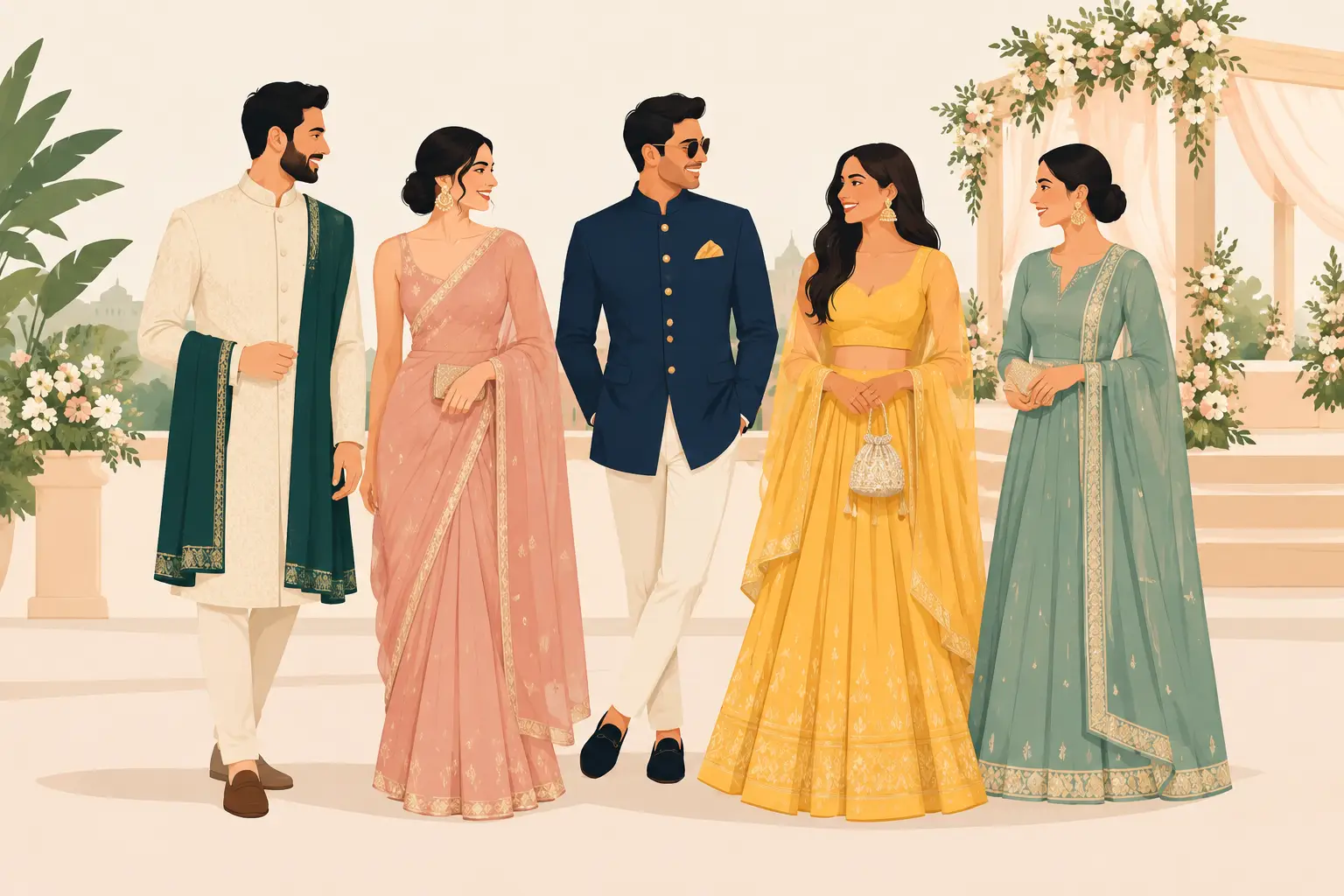
A wedding invitation can name one event, but most South Asian celebrations ask for several looks. Your outfit may need to move from a bright daytime mehndi to a formal evening reception, sit comfortably through long family photos, and still look polished after hours of celebration. The best Indian wedding guest outfits balance the dress code, the couple’s culture, the venue, and your own comfort without competing with the bridal party.
For many guests, the easiest place to begin is not with the latest trend. Begin with the function. A richly embroidered velvet suit may be beautiful for a winter reception, but it can feel too heavy for an outdoor haldi. A light, flowing lehenga may be perfect for sangeet dancing, while an elegant silk saree brings the right presence to a formal ceremony. When the occasion leads the choice, the final outfit feels considered rather than overdone.
Choosing Indian Wedding Guest Outfits by Function
Wedding events each have their own mood. You do not need a completely new wardrobe for every invitation, but choosing a silhouette and fabric that suits the moment makes a noticeable difference.
Mehndi and haldi: bright, light, and easy to move in
Mehndi and haldi celebrations are joyful, colorful, and often held during the day. Think fresh yellow, lime, coral, fuchsia, turquoise, or soft floral prints. A straight-cut kurti with wide-leg pants, a Punjabi suit with a light dupatta, or a printed sharara set feels festive while leaving room to sit, mingle, and dance.
Choose cotton silk, georgette, chiffon, or a lightweight crepe for warm weather. Heavy sleeves, floor-sweeping hems, and delicate fabrics that stain easily can be less practical around henna and turmeric. A well-fitted Patiala suit is a particularly lovely option for guests who want traditional Punjabi character with all-day comfort.
Sangeet: color, movement, and a little sparkle
The sangeet is where expressive color and playful embellishment come into their own. Lehengas with mirror work, sequins, thread embroidery, or a beautifully finished border photograph well under evening lights. An anarkali suit or embellished sharara set can offer the same celebratory impact with a more relaxed feel.
Movement matters here. Look for a dupatta that stays securely on the shoulder, a lehenga waistband that does not pinch, and sleeves that let you raise your arms comfortably. If you expect to dance, avoid saving the outfit’s first fitting for the wedding day. A small alteration at the waist, shoulder, or hem can transform how confidently you wear it.
Wedding ceremony: polished and respectful
For the main ceremony, elegance usually takes priority. Sarees, silk suits, formal anarkalis, embroidered lehengas, and classic kurta pajama sets are all appropriate choices, depending on the family and venue. Jewel tones such as emerald, wine, royal blue, plum, and deep teal bring a refined feel, while rose pink, peach, and powder blue work beautifully for a daytime ceremony.
Guests should generally avoid wearing red that closely resembles traditional bridal attire, particularly at North Indian and Punjabi weddings. That does not mean red is always forbidden. A muted red, rust, or wine-toned outfit may be perfectly acceptable if the invitation or family style suggests a more relaxed dress code. When in doubt, select a color that feels celebratory but lets the bride remain unmistakably central.
Reception: refined glamour
Evening receptions usually welcome richer fabrics and more detailed finishing. A sequin saree, velvet lehenga, embroidered gown-style anarkali, or a silk suit with a statement dupatta can feel right at home. Men can choose a tailored kurta pajama with a Nehru jacket, bandhgala, or coordinating turban for added formality.
The trade-off is comfort. A heavily embellished outfit does not have to be uncomfortable, but the construction matters. Lining, sleeve fit, fabric weight, and the placement of embroidery all affect how the garment wears through a long evening. Prioritize finishing that feels as good as it looks.
Fabric and Fit Make the Outfit
An occasion outfit earns its place in your wardrobe when it looks elegant from every angle and feels natural to wear. Fabric plays a major role. Silk and jacquard bring structure and richness. Georgette and chiffon create a lighter drape. Velvet adds depth for cooler-weather events, while cotton silk offers a polished option for daytime celebrations.
Fit is just as important as fabric, especially with South Asian garments. A suit should sit smoothly at the shoulders, allow comfortable arm movement, and fall cleanly through the torso. A lehenga should rest securely at the waist without digging in, and its hem should clear the floor when worn with your chosen shoes. Saree blouses deserve particular attention: the bust, armhole, and back opening need to feel secure without restricting movement.
Ready-to-wear is convenient, but tailoring is what makes an outfit feel personal. Hemming pants to the right length, refining the neckline, adjusting the sleeves, or reshaping a blouse can elevate even a simple design. For special events, book fittings early so there is time for considered alterations rather than rushed changes.
How to Build a Coordinated Look
The finishing pieces should support the outfit rather than compete with it. If your suit has elaborate zari work or a heavily embroidered dupatta, choose simpler earrings and a sleek clutch. If your outfit is understated, jewelry can provide the focal point. Jhumkas, chandbalis, bangles, and a delicate maang tikka can add traditional detail without making the look feel crowded.
Footwear deserves more attention than it often gets. Punjabi jutti pairs beautifully with suits, lehengas, and even some sarees, while low block heels can offer extra height without sacrificing stability. Break in new shoes before the event, especially if you will be standing for ceremonies or dancing at the sangeet. Carrying a small backup pair is sensible for a long wedding day.
Your dupatta also changes the overall impression. A sheer dupatta with a fine border keeps a look light and modern. A heavily embroidered or phulkari-style dupatta can turn a simple suit into something more ceremonial. Drape it over one shoulder for ease, or pin it neatly for a more formal silhouette. The right drape is one you do not need to adjust every five minutes.
Dressing Well Without Overshadowing the Couple
Wedding guest dressing is celebratory, not cautious, so there is no need to disappear into neutral colors. The goal is simply to match the scale of the event. For a close family wedding with multiple formal functions, elevated fabrics and embellishment are expected. For a smaller ceremony or daytime gathering, a beautifully tailored suit with thoughtful accessories may be more appropriate than a fully sequined lehenga.
If the couple has shared a color palette, theme, or regional dress preference, take it as useful guidance. A Punjabi wedding may inspire phulkari, Patiala silhouettes, parandi details, or vibrant jewel tones. A more formal reception might lean toward sleek sarees, structured lehengas, and deeper colors. Cultural traditions vary widely, and asking a family member about expectations is always welcome when you are unsure.
For guests shopping in Melbourne, Punjabi Threads brings ready-to-wear occasion pieces, accessories, and expert tailoring together, making it easier to create a complete look with a fit that feels right. Whether you are choosing a softly embroidered suit for an intimate ceremony or a statement lehenga for the reception, allow time for fitting and finishing details.
The most memorable wedding outfit is not necessarily the heaviest or brightest one in the room. It is the one that lets you greet elders with ease, join every dance, appear beautifully in photographs, and feel fully part of the celebration.