
Blog
Custom Pakistani Suit Stitching for Your Best Fit

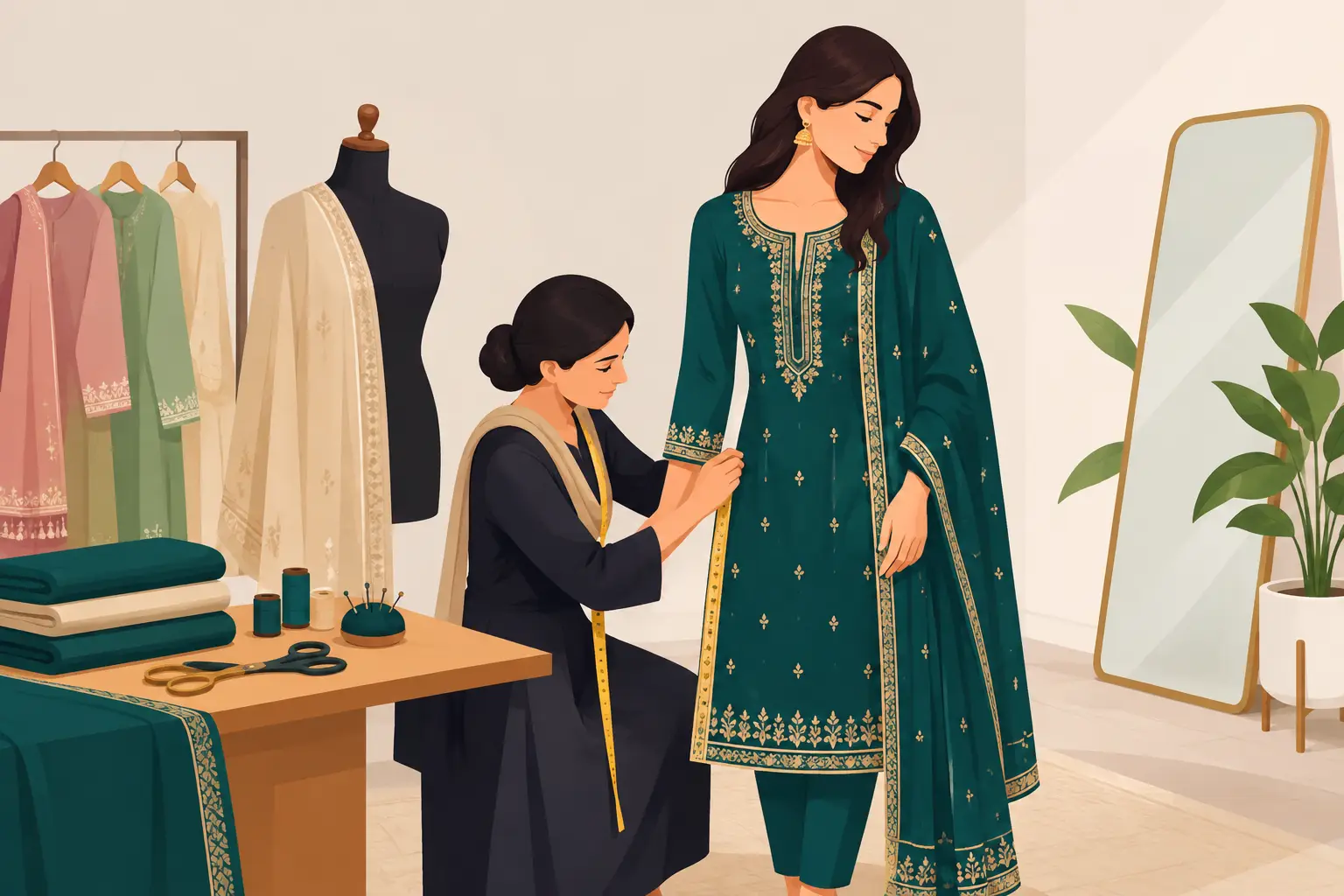
A beautifully chosen Pakistani suit can still feel unfinished until it fits the person wearing it. Custom Pakistani suit stitching turns fabric, embroidery, and inspiration into an outfit that sits comfortably at the shoulders, falls gracefully through the kameez, and moves easily through every celebration. Whether you are dressing for a wedding, Eid dinner, religious function, or a family gathering, the right tailoring gives traditional style its confidence.
At Punjabi Threads, our approach is simple: honor the detail in the fabric while creating a silhouette that feels like you. From delicate chikankari and classic lawn to richly embroidered net, velvet, and silk blends, every material asks for a slightly different stitching approach.
Why Custom Pakistani Suit Stitching Changes the Whole Look
Pakistani suits are known for their graceful lines, detailed embellishment, and versatile styling. A straight-cut kameez with cigarette pants creates a clean, contemporary profile, while an Anarkali or panelled frock brings movement and occasionwear drama. The design may look beautiful on a hanger, but proportions are what make it flattering in real life.
Ready-made sizing can be convenient, particularly for simple everyday kurtis or last-minute events. However, it often means compromising somewhere: a shoulder that sits too wide, sleeves that feel restrictive, a neckline that is too high or too deep, or trousers that do not fall at the right length. Made-to-measure stitching allows those details to be decided around your body, your comfort, and the way you want to wear the outfit.
The benefit is not only appearance. A well-stitched suit should let you greet guests, sit for a long dinner, dance at a sangeet, attend prayers, and move through a busy event without constantly adjusting your dupatta or kameez. Perfect fit, every time, is built through thoughtful measurements and careful finishing, not just a number on a size label.
Start With the Fabric and the Occasion
The most successful stitched suit begins with a clear purpose. A soft cotton lawn or printed cambric suit is ideal for relaxed daytime wear, work gatherings, and warm-weather occasions. These fabrics usually suit clean cuts, comfortable sleeves, and lighter finishing. Heavy lining or overly structured tailoring can take away the easy feel that makes lawn so loved.
For evening events, embroidered chiffon, organza, net, satin, silk, velvet, or jacquard can carry more shape and embellishment. These fabrics may need lining, extra support at the neckline, or careful placement of borders to keep the outfit balanced. A bridal or formal suit deserves special attention because every detail is visible in photographs, from the fall of the dupatta to the finishing at the cuffs.
It also helps to be realistic about the event. A heavily embellished long kameez may be perfect for a wedding reception, but a simpler straight suit can be the smarter choice for a daytime mehndi or a family lunch. The best design is not always the most ornate one. It is the one that suits the moment and still feels natural when you wear it.
Let Embroidery Guide the Cut
Embroidery should never be treated as an afterthought. A dense front panel, embroidered neckline, scalloped border, or statement sleeves can influence where seams, darts, and hemlines should sit. Cutting through a motif carelessly can make even premium fabric look less refined.
If your fabric has a wide border, consider whether it belongs at the hem, sleeves, or trouser edge. A border at every point can feel heavy, especially on a shorter frame. Sometimes keeping the kameez hem detailed and the sleeves cleaner creates a more elegant result. Your dupatta should support the suit rather than compete with it, whether it is a lightly scattered chiffon piece or a richly finished organza dupatta.
Choosing a Silhouette That Feels Like You
There is no single “best” Pakistani suit style. The right silhouette depends on your personal taste, the fabric, and how much structure you enjoy wearing.
A straight kameez is a polished favorite for women who want a timeless shape. It can be made to knee length, calf length, or longer depending on the look you prefer, and it pairs beautifully with straight pants, cigarette pants, or a classic shalwar. A slightly relaxed cut offers ease, while subtle shaping at the waist keeps the look defined without being tight.
Aline and panelled suits create a softer, flowing silhouette. They work especially well with lighter fabrics and can give a more festive feel without the volume of a full Anarkali. If you love traditional elegance, a flared Anarkali, frock-style suit, or angrakha cut can make a memorable choice for formal celebrations. The trade-off is that these styles use more fabric and need careful length planning, particularly if you will be wearing heels.
The trouser shape matters just as much as the kameez. Cigarette pants keep the outfit sleek and modern. Wide palazzo pants can add movement to a long shirt or short peplum-style top. A traditional shalwar brings comfort and cultural character, while a gharara or sharara creates a stronger partywear statement. Think about balance: a wide, flared bottom often looks best with a more fitted or shorter top, while a long flowing kameez can pair beautifully with a narrower trouser.
Measurements That Make the Difference
Professional measurements are the foundation of custom tailoring. A complete fitting should account for the bust, waist, hips, shoulder width, armhole, bicep, sleeve length, kameez length, trouser length, and the rise of the bottom. For fitted styles, the placement of darts and the amount of ease are equally important.
Comfort should be discussed openly. Some clients prefer a close, shaped fit; others want room for movement, layering, or long event days. Neither is wrong. A suit for a formal dinner may be more structured than one for daily wear, but it should never feel difficult to sit, reach, or breathe in.
Bring the shoes you are likely to wear if length is important. Even a small heel can change how a long kameez, gharara, or wide trouser falls. If you are planning to wear a particular bra or shapewear with the outfit, that can also help create a more accurate fit for a special-occasion suit.
Necklines and Sleeves Deserve Attention
Necklines frame the face, which is why a small adjustment can change the entire look. A modest round neck, soft V-neck, square neck, boat neck, or keyhole neckline each creates a different mood. Heavier jewelry often pairs well with a simpler neckline, while a refined embroidered neck can be enough of a statement on its own.
Sleeves should match both the style and the season. Three-quarter sleeves are versatile for day-to-evening dressing. Full sleeves can look regal in velvet or embroidered net, while shorter sleeves may suit warm-weather cotton suits. For embellished fabrics, consider whether the sleeve detail will feel comfortable against your arms throughout the event.
Finishing Details That Look Premium
Fine stitching is visible in the quiet details. A clean lining prevents transparency and helps certain fabrics fall better. Neat seam finishing keeps the inside comfortable. Well-attached trims, balanced tassels, secure hooks, and an even hem all contribute to an outfit that looks polished from every angle.
Dupatta finishing is equally worth considering. A simple narrow edging may preserve the lightness of chiffon or organza, while a lace, gota, or embellished border can elevate a formal ensemble. The key is proportion. If the kameez and trousers already feature heavy work, a restrained dupatta finish often looks more luxurious than adding detail everywhere.
Plan your stitching early for weddings and festival seasons. Intricate designs, handwork, and fitting adjustments need time, and rushing can limit your options. A fitting appointment is also the moment to check the drape, sleeve comfort, length, and neckline before the final details are completed.
From Fabric to a Look You Will Reach For
Custom stitching is especially valuable when you have fallen in love with a fabric but are unsure how to turn it into a complete outfit. Bring your design reference, or simply share the occasion, colors you enjoy wearing, and the level of coverage and comfort you prefer. Expert tailors can help translate those preferences into practical choices that suit the material.
For Melbourne clients, an in-person consultation at the Thomastown boutique offers the benefit of professional measuring, fabric guidance, and personalized styling in one place. If you are building a full look, coordinate your suit with bangles, Punjabi jutti, jewelry, or a complementary dupatta so the final outfit feels considered rather than assembled at the last minute.
The finest Pakistani suit is not defined only by its embroidery or label. It is the one that carries your personality comfortably through the occasion, with every stitch helping you feel elegant, prepared, and completely yourself. Book Stitching Service when you are ready to give a beautiful fabric the fit it deserves.